Kitten Feeding Schedule by Age: A Vet's Chart from Week 1 to 12 Months
Feline vet Dr. Priya Anand, DVM gives you one kitten feeding chart by age, from bottle-feeding newborns through weaning to the switch to adult food, plus the calorie math behind why every chart online disagrees.
Updated
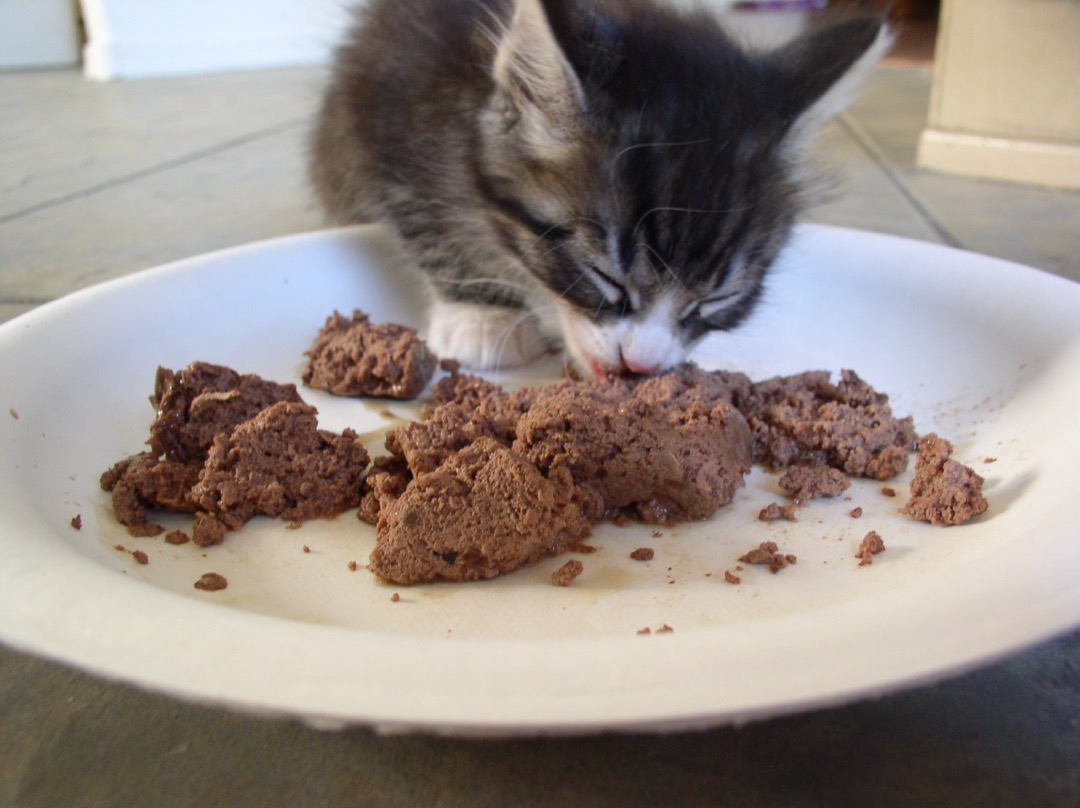
The most common way I meet a new kitten is with its owner holding a phone in one hand, showing me four different feeding charts that all say different things. One says a three-month-old needs 200 calories a day. Another says 225. A third gives amounts in cups without naming a food. The owner is not confused because they failed to read carefully. They are confused because the sources genuinely disagree, and none of them explain why.
I want to fix that here. This is the kitten feeding schedule I give clients in my feline practice, laid out week by week from a two-day-old orphan on a bottle through to the twelve-month-old who is ready for adult food. You will get a single chart you can screenshot, the bottle-feeding volumes for hand-rearing, the weaning sequence, and the calorie math underneath all of it so you can tell when a chart is wrong for your kitten. Kittens are the one life stage where underfeeding is the bigger risk, so the tone of this guide is different from my adult cat feeding guide: feed generously, feed often, and do not try to slim a growing kitten down.
Every number on this page is keyed to age, which is fine if you raised the kitten and awkward if it turned up in your garden. If you are not sure how old yours is, our kitten age chart estimates it from the teeth, eyes, ears and weight in about thirty seconds, then send yourself back here with a number to feed against. The same age drives the shots: our kitten vaccination schedule turns a birthday into the dates of every vaccine, so the feeding plan and the vet visits line up.
One thing before the chart. Every number below assumes a food formulated for growth. A kitten eating an adult maintenance diet can be given a mathematically perfect number of calories and still grow poorly, because the calcium, phosphorus, protein, and taurine levels are wrong for building a skeleton. If you take nothing else from this page, take that. My roundup of the best kitten food covers which formulas actually carry a growth statement, and the label section further down teaches you to check it yourself in five seconds.
The Quick Answer: Kitten Feeding Chart by Age
Here is the whole first year on one screen. Weights are averages for a mixed-breed domestic kitten, and calorie figures are daily totals to be divided across the meals in the next column.
| Age | Typical weight | Daily calories | Meals per day | What to feed |
|---|---|---|---|---|
| Newborn (0–1 wk) | ~4 oz | ~31 kcal | Every 2 hours | Queen’s milk or kitten milk replacer only |
| 2 weeks | ~8 oz | ~52 kcal | Every 2–3 hours | Milk replacer only |
| 4 weeks | ~12 oz | ~88 kcal | Every 4–5 hours | Milk replacer plus first gruel |
| 6 weeks | ~1 lb | ~104 kcal | 4–5 | Mostly wet gruel, dry offered |
| 2 months | ~2 lbs | ~162 kcal | 4 | Wet and/or dry kitten food |
| 3 months | ~3 lbs | ~225 kcal | 3–4 | Wet and/or dry kitten food |
| 4 months | ~4 lbs | ~272 kcal | 3 | Wet and/or dry kitten food |
| 5 months | ~5 lbs | ~327 kcal | 3 | Wet and/or dry kitten food |
| 6 months | ~6 lbs | ~369 kcal | 2–3 | Kitten food, meals now scheduled |
| 7 months | ~7 lbs | ~419 kcal | 2–3 | Kitten food, watch post-neuter weight |
| 8 months | ~8 lbs | ~457 kcal | 2–3 | Kitten food |
| 9 months | ~9 lbs | ~504 kcal | 2 | Kitten food |
| 10 months | ~10 lbs | ~541 kcal | 2 | Kitten food, begin planning adult transition |
| 12 months | Adult weight | Adult maintenance | 2 | Transition to adult food over 7–10 days |
Read the assumptions before you trust a row. Every figure carries an individual variance of roughly plus or minus 50 percent, which is not a hedge, it is the actual biological spread. Two healthy four-month-old kittens from the same litter can genuinely need 200 and 350 calories respectively. Weight is the more useful anchor than age, so if your five-month-old weighs four pounds, feed nearer the four-pound row and have your vet confirm the growth curve looks right. And a kitten’s calorie target is a hypothesis you test against its body over the following two weeks, not a prescription.
Why Every Kitten Feeding Chart Disagrees
This is the section no consumer article writes, and it is the reason you can stop chasing charts.
The authoritative framework is the 2021 AAHA/AAFP Feline Life Stage Guidelines, which express a kitten’s needs per kilogram of body weight rather than as a flat daily number. Under those guidelines a kitten around 10 weeks old needs roughly 200 calories per kilogram of body weight per day, and that figure falls to about 80 calories per kilogram by 10 months. The whole first year, in one sentence: a kitten’s per-kilogram energy demand collapses by more than half while its absolute intake climbs, because it is getting much bigger at the same time as it is getting proportionally less hungry per unit of body mass.
Run the chart above through the same per-kilogram lens and you can watch that curve directly. At 2 months (about 0.9 kg on 162 kcal) it works out near 178 kcal per kilogram. At 4 months, roughly 150. At 6 months, about 136. At 10 months, about 119. Same shape as the AAHA curve, consistently higher absolute values, which tells you these popular consumer charts are built on a generous, actively growing reference kitten. That is a defensible choice for a growth diet. It is also exactly why you weigh the kitten instead of trusting the table.
The other layer is the arithmetic. Veterinary nutritionists start from Resting Energy Requirement, the calories an animal burns simply staying alive:
RER = 70 × (body weight in kg)^0.75
Then they multiply by a growth factor: roughly 2.5 to 3 times RER for kittens under 4 months, and about 2 times RER from 4 months to adulthood. I walk through this formula in more detail in the adult feeding guide, so here I will just do one worked example, because it dissolves the contradiction that sent you looking in the first place.
Take a three-month-old kitten weighing 3 pounds (1.36 kg). RER is 70 × 1.36^0.75, which comes to about 88 calories. Now apply the growth multiplier. At 2.3 times RER you get roughly 200 calories a day. At 2.55 times, roughly 225. Those are the two numbers you saw on two different websites. Neither is wrong. One assumed a slightly calmer kitten, the other a slightly more energetic one, and the gap between them is a rounding decision inside a multiplier range that veterinary nutrition itself defines as a range. Chewy publishes 225 for that kitten, PetMD publishes 200, and both are sitting comfortably inside the same recommendation from the NRC Nutrient Requirements of Dogs and Cats.
So stop trying to find the one correct chart. Pick a reasonable starting number, feed it for two weeks, and let the kitten’s weight gain and body condition tell you whether to move up or down.
Weeks 0 to 4: Bottle Feeding and the Milk Question
Most people never do this stage, because kittens should stay with their mother until at least eight weeks. But orphans and rejected singletons happen, and hand-rearing is where mistakes are fastest and most dangerous.
A neonatal kitten needs kitten milk replacer (KMR) and nothing else. Here are the volumes and intervals:
| Age | Volume per feeding | Frequency | Meals per day |
|---|---|---|---|
| 0–1 week | 2–6 ml | Every 2 hours, day and night | ~8 |
| 1–2 weeks | 6–10 ml | Every 2–3 hours | ~5 |
| 2–3 weeks | 10–14 ml | Every 3–4 hours | ~4 |
| 3–4 weeks | 14–18 ml | Every 4–5 hours | ~4 |
| 4–5 weeks | 18–22 ml | Every 5–6 hours, plus gruel | 3–4 |
| 5–8 weeks | Tapering | Roughly every 6 hours, mixed feeding | 3–4 |
Warm the formula to body temperature, feed the kitten belly-down on a towel rather than on its back (a kitten fed face-up can aspirate formula into its lungs, which is often fatal), and burp gently afterwards. Kittens under about three weeks cannot urinate or defecate on their own, so you stimulate the genital area with a warm damp cloth after each feed. That reflex is also the reason litter training slots in naturally once weaning starts, which I cover in the guide on how to litter train a kitten.
Never give cow’s milk. This is not squeamishness, it is a specific mechanism. Kittens produce lactase to digest their mother’s milk, and lactase production falls off sharply after weaning. Cow’s milk carries far more lactose than a kitten can process, so the undigested sugar passes into the colon, ferments, and osmotically pulls water into the bowel. The result is watery diarrhoea in an animal that weighs half a pound. Dehydration at that size can become life-threatening within a day. The same logic applies to goat’s milk, almond milk, and the “cat milk” novelty products: use a proper kitten milk replacer, which is formulated to match feline milk’s protein, fat, and lactose profile.
Weigh a hand-reared kitten daily, on a kitchen gram scale, at the same time each day. A healthy neonate gains roughly 0.5 to 0.75 ounces (15 to 20 grams) per day. A kitten that fails to gain for two consecutive days needs a vet the same day, not next week. Failure to gain is the earliest and most reliable red flag in neonatal medicine.
Weeks 4 to 8: Weaning onto Solid Food
Weaning begins around 3 to 4 weeks and finishes between 6 and 8 weeks. It is a gradual handover, not a switch you flip.
Start by making a gruel: mix a canned kitten food with warm water or milk replacer at roughly three parts food to one part liquid, and offer it in a shallow saucer that a kitten can reach without climbing in. Most kittens will walk through it, sit in it, and wear it before they eat it. That is normal and not a sign the process is failing.
Over the next two to four weeks, thicken the gruel by stepping down the added liquid until the kitten is eating wet food at its normal consistency. Around 5 to 6 weeks, put down a small amount of dry kitten kibble alongside, moistened at first if the kitten ignores it. By 8 weeks, most kittens are eating solid food entirely and nursing (or bottle-feeding) only for comfort.
Keep milk replacer available through the transition. The most common weaning mistake I see is cutting the liquid feeds the moment a kitten shows interest in gruel, which produces several days of underfeeding at the age a kitten can least afford it. Overlap the two. Choose a wet food from the best wet cat food picks with a growth statement on the label, and when you introduce kibble, pick a small-kibble growth formula from the best dry cat food roundup rather than downsizing an adult food. A six-week-old’s jaw and deciduous teeth cannot manage an adult-sized piece.
Fresh water goes down when the gruel does. Kittens inherited a weak thirst drive from desert ancestors, and building the habit early pays off for kidney and urinary health for life. A shallow wide bowl away from the food works, though some kittens drink noticeably more from moving water, which is what a cat water fountain is for.
2 to 6 Months: The Growth Sprint
This is the hungriest stretch of a cat’s life and the one where owners most often underfeed by accident, usually because they are applying adult instincts to a growing animal.
A kitten in this window is growing bone, laying down muscle, building an immune system, and playing at an intensity that would exhaust an adult cat. Per pound of body weight it needs about two to three times what an adult needs. It should be lean and leggy, visibly hungry between meals, and not portion-restricted.
Feed three to four small meals a day through 6 months. Small and frequent matters more than the exact count: a kitten’s stomach is tiny and its blood glucose drops faster than an adult’s, so one or two large meals leaves real gaps. If your schedule cannot cover a midday feed, this is the most legitimate use of an automatic cat feeder I know of, and it beats compressing the day’s food into breakfast and dinner.
Treats still count. The 10 percent rule applies to kittens as it does to adults, because anything that is not a complete growth diet displaces the balanced nutrition a growing skeleton needs. For a three-month-old on 225 calories that ceiling is about 22 calories, which is only a few small pieces. Pick something small and soft from the best cat treats list and spend them on training and handling practice rather than a snack habit.
Weigh the kitten weekly through this stretch. A weight that plateaus for more than a week or two during the growth sprint deserves a phone call.
6 to 12 Months: Slowing Down and the Neuter Trap
Somewhere around six months the curve bends. Growth slows, the per-kilogram calorie requirement keeps falling, and your kitten stops being an unfillable pit. Move to two or three meals a day and start actually measuring portions rather than topping the bowl up.
And then there is the trap, which is the single most useful piece of timing advice on this page.
Most kittens are spayed or neutered somewhere between four and six months. The metabolic consequence is abrupt and asymmetric. Royal Canin’s research puts the change at roughly a 30 percent drop in energy expenditure alongside a 26 percent rise in food intake in the period following the procedure. Your kitten needs meaningfully less and wants meaningfully more, starting almost immediately. If you keep feeding at the pre-surgery rate because the kitten is asking loudly for it, weight gain follows on a schedule, and the six-to-twelve-month window is where a large share of the overweight adult cats in my practice were quietly made.
The practical response: at the spay or neuter appointment, switch from free-feeding to measured meals. Do not wait for a problem. Reduce the daily total by roughly a quarter and then adjust by body condition over the following month. Keep feeding a growth diet (the kitten is still growing, just less urgently) but control the amount. Expect vocal protest and do not feed to the enthusiasm. More frequent smaller meals help with the begging without adding calories.
Burning energy helps too. A kitten in this window has a great deal of it, and vertical space plus daily play converts some of that appetite into muscle instead of fat. A cat tree is not a nutrition intervention, but it is a real part of the same equation.
Wet, Dry, or Both
Both work. A complete kitten food with the right AAFCO statement will grow a healthy cat in either format, and consistency and total calories matter more than the argument.
Wet food brings about 75 percent moisture, which supports hydration in an animal that will never drink as much as it should, and it is more palatable and easier for a small mouth. Dry food is convenient, keeps safely in the bowl for hours, and is more calorie-dense, which helps a kitten that struggles to take in enough volume.
Mixed feeding is what I recommend most often, with one warning: split it by calories, not by volume. Dry food is far denser, so a scoop of kibble that looks like a modest side dish can carry more calories than the can beside it. Set the daily target, decide the split in calories, then read the kcal figure on the can and the kcal-per-cup figure on the bag to convert each half into a real portion. I work through that arithmetic in how much wet food to feed a cat and wet versus dry cat food.
Leave wet food down no longer than 20 to 30 minutes. Kitten immune systems are still developing, so food sitting at room temperature is a bacterial risk, not just a spoilage nuisance.
Free-Feeding vs Scheduled Meals
Free-feeding is reasonable up to about six months and is often the easiest way to make sure a fast-growing kitten gets enough, since dry kibble left out lets it graze on its own rhythm. The cost is that you cannot tell how much any individual kitten is eating, which matters the moment there is more than one.
Make the switch to scheduled measured meals at spay or neuter, for the metabolic reasons above. That gives you a clean trigger instead of a vague “sometime later.” Portion the day’s ration, feed at set times, and lift the bowl between meals.
If work hours make a midday feed impossible, a programmable feeder solves it properly. The picks in my automatic cat feeder roundup include models that portion by weight rather than volume, which is the feature that matters here, since kibble density varies enough between formulas to make volume dispensing imprecise.
Feeding Kittens in a Multi-Kitten Household
Two kittens are more than twice the feeding complexity of one, and almost nobody warns you about it.
Litters sort themselves into eaters. There is usually one confident kitten who finishes its own portion and then walks over to finish its littermate’s, and one slower or smaller kitten who cedes the bowl without complaint. From a communal bowl this looks fine. Nobody is fighting. Meanwhile one kitten is drifting above the growth curve and the other below it, and you will not see it for weeks unless you are weighing them separately.
What actually works:
- Separate feeding stations, ideally in different rooms or at least well apart with clear sightlines, so no kitten has to eat with another one looming.
- Supervise the first few meals and simply watch. Five minutes tells you which kitten is which.
- Weigh each kitten weekly and record it. Individual weights are the only reliable evidence about who is eating what, and diverging curves within a litter is a common early sign of a health problem in the smaller one.
- Microchip or selective feeders for households where one cat needs a different diet or portion. These open only for a registered chip or collar tag and are the one genuinely reliable way to enforce separate diets in a shared space.
- A runt or slow eater may need to be fed in a closed room for ten minutes. Do not rely on goodwill between littermates.
Feed the same number of stations as cats, plus one where you can. It is the same principle as litter boxes and for the same reason: resource competition in cats is usually silent.
How to Read a Kitten Food Label
This is a two-minute skill that outranks every brand recommendation, including mine.
Find the AAFCO nutritional adequacy statement, which is legally required on any complete cat food and usually printed in small type on the back or side. It will say one of three things:
- “Formulated to meet the AAFCO Cat Food Nutrient Profiles for growth” or “for growth and reproduction.” This is what a kitten needs.
- “…for all life stages.” Also fine, because all life stages includes growth. This is why an all-life-stages food can be shared across a mixed-age household.
- “…for maintenance” or “for adult maintenance.” Not adequate for a kitten. Do not use it as the main diet.
That last case is a real nutritional shortfall, not a marketing distinction. Growth profiles carry higher minimums for protein, fat, calcium, phosphorus, and several amino acids, and they constrain the calcium-to-phosphorus ratio because getting it wrong during skeletal development causes lasting orthopaedic problems. A kitten raised on adult maintenance food can eat plenty of calories and still build a poor skeleton.
Two more lines worth finding. The statement may add “by feeding trials” rather than “formulated to meet,” which means the food was fed to real cats under an AAFCO protocol rather than only calculated on paper. That is the stronger claim, and the WSAVA Global Nutrition Guidelines treat feeding-trial substantiation and employing a qualified nutritionist as markers of a serious manufacturer. And find the calorie content statement, printed as kcal per cup or per can, because without it every portion instruction on this page is unusable. Kibble runs anywhere from roughly 350 to 600 calories per cup, so “half a cup” is not a dose.
My best kitten food picks are filtered on exactly these criteria: a growth or all-life-stages statement, a published calorie figure, and a manufacturer that meets the WSAVA questions.
Is My Kitten Growing Right?
Three tools, in order of usefulness.
Weight, tracked over time. A gram scale and a weekly note beats everything else. Neonates should gain 15 to 20 grams a day. Older kittens should gain steadily rather than in the exact increments of any published table. The trend line matters, not the individual reading.
Growth curves. The WALTHAM Kitten Growth Charts, developed by the WALTHAM Petcare Science Institute, are the feline equivalent of the paediatric growth charts your doctor uses on a child: percentile curves from about 8 weeks onward that let you plot your kitten and see whether it is tracking its own percentile consistently. A kitten sitting steadily at the 25th percentile is fine. A kitten that drops from the 75th to the 25th over a month is not, even though both readings are “in range.” Your vet can plot these at wellness visits, and it is a reasonable thing to ask for.
Body condition, adjusted for age. This is where owners get it wrong, because kitten body condition does not look like adult body condition. A healthy kitten looks lean and leggy. Ribs are easy to feel under a thin layer of cover, there is an obvious waist behind the ribs when you look from above, and the belly tucks up when viewed from the side. Legs look slightly too long for the body. That is correct, not undernourished, and the plump round kitten in the greetings card is over-conditioned.
What actually indicates too thin in a kitten: ribs, spine, and hip bones that are sharply visible rather than just palpable, a knobbly feel along the spine, no muscle over the shoulder blades, a dull or unkempt coat, and lethargy between meals rather than the normal play-crash-play cycle. Any of those, plus any failure to gain weight, is a vet visit.
When to Call Your Vet
Kittens deteriorate fast, and feeding problems are often the first visible sign of something else. Call the same day for:
- No weight gain over two days in a kitten under 8 weeks, or any weight loss at any age.
- Refusing food for more than 12 hours in a kitten under 6 months. Adult cats have reserves; kittens do not, and prolonged anorexia risks hypoglycaemia and hepatic lipidosis.
- Diarrhoea lasting more than 24 hours, or any diarrhoea in a kitten under 8 weeks. Dehydration at this size is measured in hours.
- Repeated vomiting, especially with lethargy, or vomiting immediately after every feed.
- A pot-bellied kitten that is thin over the spine and ribs. This combination is classic for intestinal parasites, which are extremely common and easily treated. The Merck Veterinary Manual notes that roundworms are frequently transmitted through the queen’s milk, so a wormy kitten is not a hygiene failure.
- Ravenous appetite with poor growth. Eating well and not gaining points at parasites, malabsorption, or a congenital problem, and it is one of the more informative complaints an owner can bring me.
- Weakness, cold to the touch, or hard to rouse. This is an emergency in a young kitten, not a wait-and-see.
Nothing on this page substitutes for a wellness exam. Kittens should be seen several times in the first few months anyway for vaccines and deworming, and those visits are the natural place to check the growth curve.
Switching to Adult Food
The standard timing is around 12 months, with a window of 10 to 12 months for kittens who have clearly finished growing. The signals are a weight that has held steady for several weeks and a body that has filled out proportionally rather than continuing to lengthen.
Large breeds are the exception. Maine Coons, Ragdolls, Norwegian Forest Cats and similar slow-maturing breeds keep growing well past a year, and many should stay on a growth diet until 15 to 18 months. Switching a Maine Coon at twelve months cuts the nutrition off partway through skeletal development, so ask your vet to make the call from the growth curve rather than the calendar.
Transition over 7 to 10 days: roughly a quarter new food to start, half and half around day four, three quarters new by day seven. Abrupt diet changes cause diarrhoea and, worse, food refusal, since cats form durable aversions to a food they associate with feeling unwell.
The portion drops at the same time, and this catches people out. An adult needs far less per pound than a kitten did, so the bowl your cat has associated with mealtime for a year is about to look meaner. Recalculate from scratch using ideal adult weight: how much to feed a cat has the chart and the math, and the best cat food roundup covers the adult formulas worth transitioning into.
Frequently Asked Questions
How much should I feed an 8-week-old kitten?
An 8-week-old kitten typically weighs around 2 pounds and needs roughly 160 calories a day, divided into about four small meals. In practical terms that is usually three to four small cans of wet kitten food, or a comparable amount of kitten kibble read off the bag’s kcal-per-cup figure, or a mix of both split by calories rather than by volume. Expect a wide individual range: a bigger or more energetic 8-week-old may need noticeably more. At this age the kitten should be fully weaned onto solid food and eating a diet with an AAFCO growth or all-life-stages statement.
Can kittens eat adult cat food?
An occasional stolen mouthful is harmless, but adult cat food should not be a kitten’s main diet. Foods labelled for adult maintenance carry lower minimums for protein, fat, several amino acids, and critically for calcium and phosphorus, and they are not held to the calcium-to-phosphorus ratio limits that growth profiles require. A kitten fed adult maintenance food can take in enough calories and still develop poorly, particularly in the skeleton. Check the AAFCO statement on the bag: “growth,” “growth and reproduction,” or “all life stages” are all suitable, and “adult maintenance” is not.
Should I leave food out all day for a kitten?
Up to about six months, yes, free-feeding dry kitten food is reasonable and helps a fast-growing kitten meet its high calorie needs. Wet food should never be left out for more than 20 to 30 minutes. The transition to measured, scheduled meals should happen at spay or neuter, because energy expenditure drops by around 30 percent while appetite rises by around 26 percent at exactly that point, and a kitten left free-feeding through that shift reliably gains weight. In a multi-kitten household, free-feeding also makes it impossible to know who is eating what.
When do kittens stop eating kitten food?
Most kittens switch to adult food at around 12 months, with 10 to 12 months a reasonable window once growth has clearly stopped and weight has been stable for several weeks. Large slow-maturing breeds such as Maine Coons, Ragdolls, and Norwegian Forest Cats often stay on a growth diet until 15 to 18 months. Make the change gradually over 7 to 10 days by mixing increasing proportions of the new food, and recalculate the portion at the same time, since an adult needs considerably fewer calories per pound than a kitten did.
Why is my kitten always hungry?
Constant hunger is usually normal in a kitten between about two and six months, because it needs two to three times the calories per pound that an adult does and its stomach is too small to hold much at once. Feed three to four small meals rather than one or two large ones. Hunger becomes a medical question when it comes with poor growth, a pot-bellied appearance over a thin spine, diarrhoea, or a dull coat, all of which point toward intestinal parasites or malabsorption. Ravenous appetite plus failure to gain weight is one of the clearest reasons to book a vet visit.
Related Articles
About the Reviewer

Dr. Priya Anand, DVM, ABVP (Feline)
DVM, Cornell University College of Veterinary Medicine
Dr. Priya Anand is a veterinarian board-certified by the ABVP in Feline Practice, with over a decade caring for cats in a feline-exclusive clinic. She has guided thousands of cat owners through nutrition, litter-box troubleshooting, enrichment, and senior-cat care. She founded House of Mittens in 2026 to cut through pet-aisle marketing and recommend the food, litter, and gear that actually keep cats healthy and happy — judged the way she'd advise her own patients.