9 Best Dry Cat Foods of 2026
Feline veterinarian Dr. Priya Anand, DVM ranks the 9 best dry cat foods of 2026 -- overall, budget, high-protein, indoor, sensitive-stomach, weight, urinary, grain-free, and grocery picks judged on protein quality, AAFCO substantiation, carbs, and taurine.
Updated
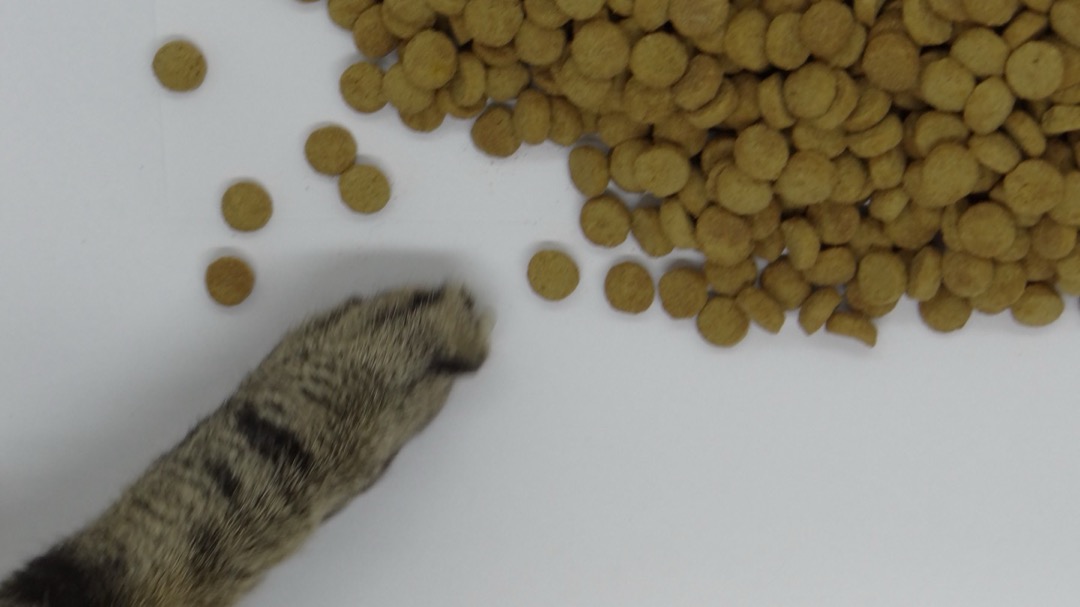
Dry food is what most cats in America actually eat, and for good reason: it is affordable, convenient, easy to measure, and it does not spoil in the bowl on a hot afternoon. It also carries a fair amount of noise — some corners of the internet will tell you kibble is harming your cat, while the bag itself promises to clean their teeth. Neither extreme is true. As a feline veterinarian, my job across the exam table is to cut through that: a good dry food is a genuinely sound choice built on a named animal protein, complete-and-balanced AAFCO nutrition, and taurine, fed in measured portions alongside a real plan for water. Get those pieces right and kibble serves a cat well for a lifetime.
For this roundup I evaluated dry foods on the factors that actually protect feline health: the AAFCO statement and how it was substantiated, protein quality and source, carbohydrate load, taurine, and life-stage fit — then filtered everything through what I see in practice, from overweight indoor cats to hairball-prone shedders to sensitive stomachs. The nine picks below deliberately span every real household and budget, from a research-backed everyday chicken kibble to a grain-free high-protein upgrade, targeted indoor, weight, urinary, and sensitive-stomach formulas, and an honest look at the grocery-store bag many owners are already feeding. If you want the bigger picture beyond kibble, our general guide to the best cat food covers dry and wet together, and because moisture is dry food’s one real weakness, the companion guide to the best wet cat food is worth reading alongside this one.
Find the Best Dry Cat Food for Your Need
Jump straight to the dry food that matches your cat:
- Best dry cat foods overall
- Best dry cat food for indoor cats
- Best high-protein dry cat food
- Best grain-free dry cat food
- Best dry cat food for sensitive stomachs
- Best dry cat food for weight management
- Best dry cat food for hairball & urinary health
- Best cheap dry cat food
How We Chose These Dry Cat Foods
Every food in this roundup was selected on a verified, active Amazon listing with real owner-review volume, and each was judged first on the things that protect feline health rather than the things that market well. I started with the AAFCO adequacy statement on every product — confirming the life stage and, where the manufacturer discloses it, whether the food is substantiated by feeding trials or by formulation on paper. From there I weighted a named animal protein at the top of the ingredient list, a sensible carbohydrate load for an obligate carnivore, and confirmed added taurine. I read owner reviews for what matters clinically: palatability and whether cats actually finished the food, stool quality, and coat condition. Then I filtered everything through what I see in practice — the overweight indoor cats, the chronic shedders, the sensitive stomachs, and the dehydration risk that comes with any dry-only diet. The result is nine foods chosen to cover the real range of cat households and budgets, each with honest notes on its trade-offs.
Best Dry Cat Foods Overall
These are the full reviews, starting with the dry food I recommend most and working through the budget, premium, and specialty picks. Every food below is reviewed once here; the use-case sections that follow simply point you back to the right pick for your cat.
Best Overall: Purina Pro Plan Complete Essentials Chicken & Rice
Purina Pro Plan Complete Essentials is the dry food I name most often when an owner wants one dependable recommendation, and it earns the top spot on substance rather than marketing. It leads with real chicken and runs high in animal protein, which is exactly what an obligate carnivore needs from a food eaten every day. Just as important to me is the pedigree behind it: Purina substantiates this line through AAFCO feeding trials, employs veterinary nutritionists, owns its manufacturing, and has decades of clinical data — so the protein and digestion claims rest on real research rather than a nutrient chart calculated on paper.
The practical case is just as strong. The recipe includes guaranteed live probiotics that support digestion and stool quality, and across thousands of reviews the kibble is reliably palatable — which matters more than any spec sheet, because the healthiest food in the world does nothing if your cat walks away from the bowl. It is a food that quietly does its job: consistent, research-backed nutrition a cat actually wants to eat.
The honest caveats are narrow. It contains rice and corn gluten meal, so it is not the pick for an owner set on a grain-free or minimal-carb label, and it is priced above grocery kibble, a genuine consideration for a large multi-cat home. For the overwhelming majority of healthy cats, though, this is the high-protein, research-backed everyday dry food I would start with.
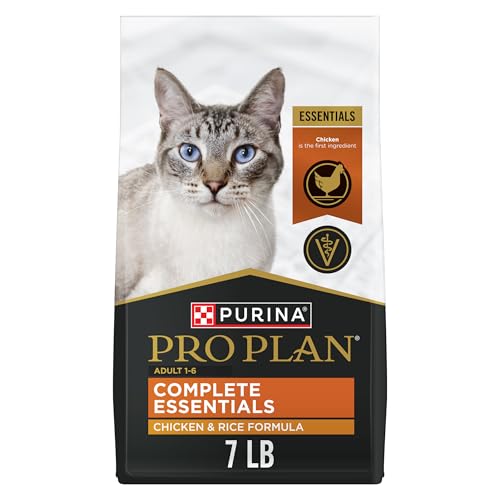
Purina Pro Plan Complete Essentials High Protein Chicken & Rice Dry Cat Food with Probiotics
by Purina Pro Plan
My top overall dry pick -- a high-protein, probiotic-fortified chicken kibble from a feeding-trial brand with real research behind it, palatable enough that cats reliably finish the bowl.
Pros
- Real chicken is the first ingredient and the recipe runs high in animal protein, which is exactly what I want in the food an obligate carnivore eats every single day
- Purina substantiates this line through AAFCO feeding trials rather than paper formulation -- the food was actually fed to cats and their health measured, which is the gold-standard quality signal most premium bags cannot claim
- Guaranteed live probiotics support digestion and stool quality, and across thousands of reviews the kibble is reliably palatable, so cats actually eat it
- Backed by a manufacturer with veterinary nutritionists on staff, its own manufacturing, and decades of clinical data -- the research pedigree is the reason I name it first
Cons
- Contains rice and corn gluten meal, so it is not the pick for an owner set on a grain-free or minimal-carb label
- Priced above grocery kibble, a real consideration for a large multi-cat home
Budget Pick: Purina ONE Tender Selects With Real Chicken
Purina ONE Tender Selects is my budget recommendation because it proves you do not have to overspend to feed a cat well. Real chicken leads the ingredient list at a genuinely affordable price — an unusual combination — and because it comes from Purina, the low cost does not mean giving up the feeding-trial substantiation that is the profession’s most-trusted quality signal. That pairing of real-meat-first nutrition and a grocery-tier price is exactly what most owners are actually looking for.
Cats simply eat it, which is half the battle. A 4.8-star average across roughly nineteen thousand reviews reflects unusually consistent palatability, and it is complete and balanced for adult maintenance with added taurine and widely stocked, so you can reliably rebuy the same food without hunting. For the purpose that matters most — keeping a healthy adult cat on quality, affordable nutrition indefinitely — it is the most cost-effective food on this list that still leads with real chicken.
I want to be honest about the trade-off. It includes corn gluten meal and soybean meal, so the carbohydrate load is higher than a premium meat-forward kibble, and it is an adult-maintenance formula only, so it is not the pick for a growing kitten. For a healthy adult cat and a budget that has to stretch, though, it delivers real-chicken nutrition and feeding-trial backing at a price you can sustain.

Purina ONE Tender Selects Blend With Real Chicken Dry Cat Food
by Purina ONE
The best value on this list -- real-chicken-first kibble from a feeding-trial brand at a grocery-tier price, the food I recommend when quality and budget both have to work.
Pros
- Real chicken leads the ingredient list at a genuinely affordable price -- an unusual combination that makes this the best-value complete kibble I can point owners to
- Comes from Purina, which substantiates its foods through feeding trials, so the low price does not mean skipping the gold-standard AAFCO quality signal
- A 4.8-star average across roughly nineteen thousand reviews reflects unusually consistent palatability and cats that actually eat it
- Complete and balanced for adult maintenance with added taurine, and widely stocked so you can reliably rebuy the same food
Cons
- Includes corn gluten meal and soybean meal, so the carbohydrate load is higher than a premium meat-forward kibble
- Adult-maintenance formula only, so it is not the pick for a growing kitten
Upgrade Pick: ORIJEN Original Grain-Free High-Protein
ORIJEN Original is the upgrade I point owners toward when they want the highest ingredient quality in a bag of kibble. It is built on a WholePrey blend of chicken, turkey, and fish, with deboned chicken leading the list and more named meats and organs behind it — roughly 90 percent of the recipe comes from animal ingredients. For an obligate carnivore, that is about as close as a dry food gets to a biologically appropriate profile, and it is grain-free and notably low in carbohydrate for kibble.
That density is the whole point. Where grocery foods lean on corn and plant proteins to hit their numbers, ORIJEN gets its protein from animals, which is exactly what a cat is built to digest and use. Its all-life-stages formulation is a practical bonus, letting a single bag suit both kittens and adults in a multi-age household, and reviewers with picky or protein-loving cats consistently report strong acceptance.
The trade-offs are cost and richness. It is the most expensive food per pound in this roundup — the price of that whole-animal protein — and it is substantiated by formulation rather than feeding trials, which is the near-universal norm among premium grain-free brands. Its richness also means some cats need a slow seven-to-ten-day transition to avoid loose stool. For an owner who wants maximum ingredient quality and a carnivore-appropriate diet, it is the premium pick worth the spend.

ORIJEN Original Grain-Free High-Protein Dry Cat Food
by ORIJEN
The premium upgrade -- a grain-free, ultra-high-protein WholePrey kibble that comes closer than any other dry food here to a cat's natural carnivore diet, for owners who want maximum ingredient quality.
Pros
- One of the highest animal-protein kibbles you can buy, built on a WholePrey blend of chicken, turkey, and fish that mirrors what a cat is biologically built to eat
- Grain-free and very low in carbohydrate for a dry food, with roughly 90 percent of the recipe from animal ingredients -- the closest a kibble gets to a carnivore-appropriate profile
- Deboned chicken leads the list, followed by more named meats and organs rather than plant-protein concentrates or fillers
- Formulated for all life stages, so a single bag suits kittens and adults in a multi-age household
Cons
- The most expensive food per pound in this roundup -- the price of that whole-animal protein density
- Substantiated by formulation rather than feeding trials, and its richness means some cats need a slow transition to avoid loose stool
Runner-Up: Hill’s Science Diet Sensitive Stomach & Skin
Hill’s Science Diet Sensitive Stomach & Skin is my runner-up overall and the dry food I most often suggest for a cat with a temperamental gut or itchy skin that is otherwise healthy. It is formulated with highly digestible ingredients and prebiotic fiber to support a settled digestive system, and it is substantiated through Hill’s feeding trials and developed with the company’s veterinary nutritionists — so the sensitive-stomach claim rests on real research rather than a label promise. Hill’s has since revised the recipe, and the bag you receive today is the updated formula, which broadens the support to the immune system alongside the stomach and skin; the core highly-digestible, prebiotic-fiber approach I recommend it for is unchanged.
The results show up where owners can see them. Added vitamin E and omega-3 and omega-6 fatty acids visibly improve coat quality, and owners of cats with chronic loose stool frequently report firmer, more regular output after switching. For a household worn down by cleaning up after a queasy cat, that change alone can be transformative, and because it leads with real chicken and is complete and balanced for adult maintenance, it works as a full daily diet rather than a temporary fix.
Two honest notes. It sits among the priciest bags here, the trade-off for the targeted formulation and clinical pedigree. And more importantly, an over-the-counter sensitive-stomach food is a reasonable first step, not a diagnosis: a cat with serious or persistent vomiting, diarrhea, or weight loss needs a veterinary work-up and possibly a therapeutic diet. For mild, chronic digestive fussiness in an otherwise healthy cat, though, it is a thoughtful, well-targeted choice.

Hill's Science Diet Adult Sensitive Stomach & Skin Chicken & Rice Dry Cat Food
by Hill's Science Diet
The best dry food for touchy digestion -- a feeding-trial-backed, highly digestible chicken kibble with prebiotic fiber that many owners credit with calming chronic loose stool and improving coat.
Pros
- Formulated specifically for cats with a temperamental gut or itchy skin, with highly digestible ingredients and prebiotic fiber -- the dry food I most often suggest for a queasy but otherwise healthy cat
- Substantiated through Hill's feeding trials and developed with the company's veterinary nutritionists, so the sensitive-stomach claim rests on real research
- Added vitamin E and omega-3 and omega-6 fatty acids visibly improve coat quality, and owners of cats with chronic loose stool frequently report firmer output after switching
- Real chicken first, complete and balanced for adult maintenance, and backed by tens of thousands of consistent reviews
Cons
- Among the priciest bags here, the trade-off for the targeted formulation and clinical pedigree
- An over-the-counter sensitive formula is a reasonable first step, not a diagnosis -- persistent vomiting or diarrhea needs a veterinary work-up
Best for Indoor Cats: IAMS Proactive Health Indoor Weight Control & Hairball Care
IAMS Proactive Health Indoor is the dry food I reach for when the patient is a classic house cat — lower-activity, prone to putting on weight, and shedding hair it swallows all day. It targets both problems directly: calorie control paired with L-carnitine, which supports the metabolism of fat rather than simply starving the cat, plus a proprietary beet-pulp fiber blend that moves swallowed hair through the gut rather than letting it come back up as a hairball. Those are the two issues I see most in indoor cats, and this food is purpose-built for them.
It also delivers unusual value. Real chicken is the first ingredient, and at this price a targeted indoor formula that leads with real meat is a genuinely strong buy — reflected in a 4.8-star average across more than thirty-seven thousand reviews, one of the most trusted and widely fed indoor kibbles on the market.
The caveats are the same ones that apply to any indoor food. It contains corn and other grains, so the carbohydrate content is higher than a meat-forward premium kibble, and the calorie reduction only works if you actually measure meals — free-feed it and you defeat the entire purpose. Fed in portions, for a sedentary, hairball-prone indoor cat, it is the best-value everyday food here.

IAMS Proactive Health Indoor Weight Control & Hairball Care Dry Cat Food with Chicken & Turkey
by IAMS
The best indoor pick -- an affordable, real-chicken kibble that trims calories for lower-activity cats and adds fiber for hairballs, the two things indoor life demands most.
Pros
- Purpose-built for the sedentary indoor cat: calorie control plus L-carnitine to help burn fat, alongside a beet-pulp fiber blend that moves swallowed hair through the gut -- the two problems I see most in house cats
- Real chicken is the first ingredient, and at this price it is a genuinely strong value for a targeted indoor formula
- A 4.8-star average across more than thirty-seven thousand reviews -- one of the most trusted and widely fed indoor kibbles on the market
- Complete and balanced for adult maintenance with a fiber blend that owners of chronically shedding, hairball-prone cats consistently praise
Cons
- Contains corn and other grains, so the carbohydrate content is higher than a meat-forward premium kibble
- The calorie reduction only works if you actually measure meals -- free-feeding it defeats the purpose
Best for Weight Management: Hill’s Science Diet Adult Perfect Weight
Hill’s Science Diet Perfect Weight is the dry food I reach for first for an overweight cat, because it is one of the few weight foods with published data behind the claim: in Hill’s testing, most cats lost weight within ten weeks of switching. Feline obesity affects the majority of US cats and quietly shortens lives, so a food that actually helps reverse it — without moving to a prescription diet — is a genuinely useful tool.
The formulation is smart about how a cat should lose weight. It keeps protein high while cutting calories and fat, so a cat sheds fat rather than lean muscle, and it includes L-carnitine to support healthy metabolism. Just as important, cats stay satisfied on a controlled portion, which is what makes weight loss sustainable rather than a nightly battle at the bowl. Real chicken leads the recipe, and it is feeding-trial substantiated like the rest of the Hill’s line.
The honest limits are about the owner, not the food. It only delivers results with measured meals and no free-feeding — the bag’s math assumes portion control — and a cat with a large amount to lose should have a vet set a realistic target weight and rate rather than going it alone, because cats must lose weight slowly to avoid serious liver complications. Used correctly, it is the most effective over-the-counter weight tool here.

Hill's Science Diet Adult Perfect Weight Chicken Dry Cat Food
by Hill's Science Diet
The best dry food for an overweight cat -- a clinically tested, high-protein, calorie-controlled chicken kibble that helps a cat lose fat while staying full, without moving to a prescription diet.
Pros
- Clinically formulated for weight loss, with published data showing most cats lost weight within ten weeks -- the dry food I reach for first for an overweight cat
- Keeps protein high while cutting calories and fat, so a cat sheds fat rather than lean muscle, and stays satisfied on a controlled portion
- Real chicken first, feeding-trial substantiated, and formulated with the L-carnitine that supports healthy metabolism
- Lets an owner manage a very common, very serious problem -- feline obesity affects most US cats -- with a measured bowl rather than a prescription diet
Cons
- Only delivers results with measured meals and no free-feeding; the bag's math assumes portion control
- A cat with a large amount to lose should have a vet set a target weight and rate rather than going it alone
Best for Hairball & Urinary Health: Hill’s Science Diet Urinary & Hairball Control
Hill’s Science Diet Urinary & Hairball Control earns its place because it tackles a pairing I see constantly in the same cat: recurring hairballs and minor urinary grumbles. It supports urinary health by controlling the mineral levels that contribute to crystal formation, while a natural fiber blend helps reduce hairballs — a genuinely useful two-in-one for a wellness-focused daily food, and a niche almost no competitor fills with a standalone dry pick.
Like the rest of the Hill’s line, it leads with real chicken, is feeding-trial substantiated, and was developed by the company’s veterinary nutritionists rather than marketed on a claim alone. Owners of cats prone to both problems report it quietly resolves them, and the palatability holds up across thousands of reviews, so it works as an everyday food rather than a chore.
The important caveat is scope. This is a wellness maintenance food, not a treatment: a cat with a diagnosed urinary blockage, crystals, or stones needs a veterinary therapeutic diet, not an over-the-counter wellness formula. And like any dry food, its urinary benefit is limited by low moisture, so pairing it with deliberate water intake matters more here than almost anywhere. For a healthy cat prone to hairballs and minor urinary sensitivity, it is a thoughtful daily choice.

Hill's Science Diet Adult Urinary & Hairball Control Chicken Dry Cat Food
by Hill's Science Diet
The best dry food for hairball- and urinary-prone cats -- a feeding-trial-backed chicken kibble with controlled minerals and a fiber blend that supports both, for daily wellness maintenance.
Pros
- Formulated to support urinary health by controlling mineral levels while a natural fiber blend helps reduce hairballs -- a genuinely useful two-in-one for a common house-cat pairing
- Real chicken first, feeding-trial substantiated, and developed by Hill's veterinary nutritionists rather than marketed on a claim alone
- Owners of cats prone to both hairballs and minor urinary grumbles report it quietly resolves both, and the palatability holds up across thousands of reviews
- Complete and balanced for adult maintenance with antioxidants and controlled minerals that make sense for a wellness-focused daily food
Cons
- This is a wellness maintenance food, not a treatment -- a cat with a diagnosed urinary blockage, crystals, or stones needs a veterinary therapeutic diet
- Like any dry food, its urinary benefit is limited by low moisture, so pairing it with water intake matters
Best Natural Grain-Free: Blue Buffalo Wilderness High-Protein
Blue Buffalo Wilderness is my pick for the owner who wants a clean, natural, grain-free label without stepping up to boutique-brand prices. It leads with deboned chicken in a high-protein recipe inspired by the diet of a cat’s wild ancestors, with no corn, wheat, or soy, and — notably — no chicken by-product meal or artificial colors, flavors, or preservatives. For a label-conscious owner, it reads cleanly from top to bottom.
The signature touch is the LifeSource Bits, a separate blend of antioxidants, vitamins, and minerals selected with input from animal nutritionists and cold-formed to preserve potency. Combined with the meat-forward base, it makes for a natural food that keeps animal protein up front while sitting well below the premium boutique tier on price — a sensible middle ground for owners drawn to grain-free.
The trade-offs are the usual grain-free ones. It is substantiated by formulation rather than feeding trials, the near-universal norm in this category, and it uses peas and potato as grain replacements, so while it is meaningfully carb-lighter than grocery kibble, it is not carb-free. For an owner who specifically wants a clean, high-protein grain-free food at a reasonable price, it is the natural pick I would choose.

Blue Buffalo Wilderness High-Protein Grain-Free Chicken Dry Cat Food
by Blue Buffalo
The best natural grain-free kibble -- deboned-chicken-first, high in protein, and free of corn, wheat, soy, and by-products, for owners who want a clean meat-forward label at a sensible price.
Pros
- Deboned chicken first in a high-protein, grain-free recipe inspired by the diet of a cat's wild ancestors -- a clean, meat-forward label without corn, wheat, or soy
- The signature LifeSource Bits add a precise blend of antioxidants, vitamins, and minerals selected with input from animal nutritionists
- No chicken by-product meal and no artificial colors, flavors, or preservatives, which makes it easy to recommend to a label-conscious owner
- A natural, widely available grain-free option that sits below boutique brands on price while keeping animal protein up front
Cons
- Substantiated by formulation rather than feeding trials, the near-universal trade-off among grain-free boutique kibbles
- Uses peas and potato as grain replacements, so it is meaningfully carb-lighter than grocery kibble but not carb-free
Best Ultra-Budget: Meow Mix Original Choice
Meow Mix Original Choice is on this list for a reason most review sites avoid: it is what a great many cats are actually eating, and an honest guide should tell you the truth about it rather than pretend it does not exist. It is the lowest cost per pound here by a wide margin, which makes complete-and-balanced nutrition realistic in a large or multi-cat home where the bags empty fast, and it is complete and balanced for adult maintenance with added taurine — so the rock-bottom price does not skip the amino acid cats cannot live without.
Cats also famously love it. A 4.7-star average across more than fifty thousand reviews reflects the near-universal palatability that keeps even finicky eaters at the bowl, and it is stocked everywhere, so rebuying is effortless.
Here is the honest veterinary take. Ground yellow corn is the first ingredient and the protein leans on poultry by-product meal, which is lower ingredient quality than anything else on this list, with a correspondingly high carbohydrate load, and it contains artificial colors that serve the human shopper rather than the cat. It is not the food I would choose if the budget allowed better. But it is a legitimate floor — complete, balanced, and taurine-added — and if it is what you can afford, feeding it alongside some wet food to add protein and moisture is a genuinely reasonable way to care for a cat well within real limits.

Meow Mix Original Choice Dry Cat Food
by Meow Mix
The honest ultra-budget pick -- a corn-first grocery kibble that is complete, balanced, taurine-added, and endlessly palatable; not premium nutrition, but a legitimate floor for a tight budget when paired with some wet food.
Pros
- The lowest cost per pound on this list by a wide margin, which makes complete-and-balanced nutrition realistic in a large or multi-cat home where the bags empty fast
- Complete and balanced for adult maintenance with added taurine, so the rock-bottom price does not skip the amino acid cats cannot live without
- Cats famously love it -- a 4.7-star average across more than fifty thousand reviews reflects the near-universal palatability that keeps finicky eaters at the bowl
- Widely stocked everywhere, so you can reliably rebuy the same food without hunting for it
Cons
- Ground yellow corn is the first ingredient and protein leans on poultry by-product meal -- lower ingredient quality than any other food here, and a high carbohydrate load
- Contains artificial colors that serve the human shopper, not the cat; I would pair it with wet food and see it as a floor, not a goal
Best Dry Cat Food for Indoor Cats
Indoor cats face two problems their outdoor cousins mostly avoid: they burn far fewer calories, so weight creeps on, and they groom constantly in a clean home, so they swallow a lot of hair. The best indoor dry foods address both with reduced calories and added fiber — and it helps to keep protein up so a lower-calorie food still satisfies.
| Product | Price | Buy |
|---|---|---|
| IAMS Proactive Health Indoor Weight Control & Hairball Care Dry Cat Food with Chicken & TurkeyBest indoor value Real-chicken indoor formula that trims calories and adds fiber for hairballs at a standout price | $16.97 | View on Amazon |
| Purina Pro Plan Complete Essentials High Protein Chicken & Rice Dry Cat Food with ProbioticsBest high-protein everyday A research-backed, high-protein everyday kibble that keeps a portion-fed indoor cat satisfied and lean | $27.08 | View on Amazon |
| Hill's Science Diet Adult Urinary & Hairball Control Chicken Dry Cat FoodBest for indoor hairballs Controls minerals and adds fiber for the indoor cat prone to both hairballs and minor urinary issues | $24.97 | View on Amazon |
Best High-Protein Dry Cat Food
For an obligate carnivore, elevated animal protein is a genuine benefit — it supports lean muscle and suits a cat’s metabolism far better than the carbohydrate kibble tends to carry. These deliver the most animal protein per bite, from a whole-prey premium bag to a research-backed everyday option.
| Product | Price | Buy |
|---|---|---|
| ORIJEN Original Grain-Free High-Protein Dry Cat FoodBest whole-prey protein Roughly 90 percent animal ingredients in a grain-free, low-carb WholePrey recipe -- the most carnivore-appropriate kibble here | $32.99 | View on Amazon |
| Blue Buffalo Wilderness High-Protein Grain-Free Chicken Dry Cat FoodBest grain-free high-protein Deboned-chicken-first, grain-free, and free of by-products, for high protein with a clean natural label | $28.98 | View on Amazon |
| Purina Pro Plan Complete Essentials High Protein Chicken & Rice Dry Cat Food with ProbioticsBest feeding-trial high-protein High animal protein from a feeding-trial brand with probiotics -- the research-backed everyday choice | $27.08 | View on Amazon |
Best Grain-Free Dry Cat Food
Grain-free is a preference rather than a medical necessity for most cats, and it does not carry the canine heart-disease concern — that FDA investigation centered on dogs, and every complete cat food adds taurine regardless of grain. If you want grain-free, choose one that still leads with real animal protein.
| Product | Price | Buy |
|---|---|---|
| ORIJEN Original Grain-Free High-Protein Dry Cat FoodBest premium grain-free A grain-free, ultra-high-protein WholePrey kibble that leads with deboned chicken and named meats -- the cleanest label here | $32.99 | View on Amazon |
| Blue Buffalo Wilderness High-Protein Grain-Free Chicken Dry Cat FoodBest value grain-free Deboned-chicken-first, high-protein, and free of corn, wheat, soy, and by-products at a sensible mid-tier price | $28.98 | View on Amazon |
Best Dry Cat Food for Sensitive Stomachs
A cat with chronic mild vomiting, loose stool, or itchy skin often does better on a highly digestible food with prebiotic fiber and a clean, consistent recipe. The goal is a complete daily diet the gut tolerates well — and if problems persist, a veterinary work-up rather than another bag.
| Product | Price | Buy |
|---|---|---|
| Hill's Science Diet Adult Sensitive Stomach & Skin Chicken & Rice Dry Cat FoodBest for sensitive stomach & skin A feeding-trial-backed, highly digestible chicken formula with prebiotic fiber that calms loose stool and improves coat | $38.99 | View on Amazon |
| Purina Pro Plan Complete Essentials High Protein Chicken & Rice Dry Cat Food with ProbioticsBest high-protein with probiotics Guaranteed live probiotics in a research-backed high-protein kibble -- a strong option for a mild, occasionally sensitive gut | $27.08 | View on Amazon |
Best Dry Cat Food for Weight Management
Feline obesity is one of the most common and most damaging problems I treat, and the fix is a high-protein, calorie-controlled food fed in measured meals — so a cat loses fat, not muscle, while staying full. The bag is only half of it; portion control is the rest.
| Product | Price | Buy |
|---|---|---|
| Hill's Science Diet Adult Perfect Weight Chicken Dry Cat FoodBest clinical weight formula Clinically tested for weight loss, high in protein and controlled in calories so a cat sheds fat while staying satisfied | $24.97 | View on Amazon |
| IAMS Proactive Health Indoor Weight Control & Hairball Care Dry Cat Food with Chicken & TurkeyBest budget weight & indoor A calorie-reduced indoor formula that helps a lower-activity cat hold a healthy weight at a lower price | $16.97 | View on Amazon |
Best Dry Cat Food for Hairball & Urinary Health
Hairballs and minor urinary sensitivity often turn up in the same indoor cat, and a wellness food that controls minerals while adding fiber can quietly help both. These are maintenance foods for healthy cats — a diagnosed urinary condition needs a therapeutic diet from your vet.
| Product | Price | Buy |
|---|---|---|
| Hill's Science Diet Adult Urinary & Hairball Control Chicken Dry Cat FoodBest urinary & hairball Controls minerals for urinary health and adds a fiber blend for hairballs -- a feeding-trial-backed two-in-one | $24.97 | View on Amazon |
| IAMS Proactive Health Indoor Weight Control & Hairball Care Dry Cat Food with Chicken & TurkeyBest budget hairball control A real-chicken indoor formula with added fiber that helps move swallowed hair through, at a standout price | $16.97 | View on Amazon |
Best Cheap Dry Cat Food
You do not have to overspend to feed a cat complete, balanced nutrition. These deliver taurine-added, complete-and-balanced diets a tight or multi-cat budget can sustain — with the honest trade-offs in ingredient quality spelled out, and wet food a smart pairing where you can manage it.
| Product | Price | Buy |
|---|---|---|
| Meow Mix Original Choice Dry Cat FoodBest ultra-budget The lowest cost per pound here -- complete, balanced, and taurine-added; an honest floor best paired with some wet food | $8.99 | View on Amazon |
| Purina ONE Tender Selects Blend With Real Chicken Dry Cat FoodBest quality budget Real chicken first from a feeding-trial brand at a grocery-tier price -- the best value that still leads with meat | $17.46 | View on Amazon |
| IAMS Proactive Health Indoor Weight Control & Hairball Care Dry Cat Food with Chicken & TurkeyBest budget indoor An affordable, real-chicken indoor formula with calorie control and fiber for hairball-prone house cats | $16.97 | View on Amazon |
Buyer's Guide
After years in feline practice fielding nutrition questions across the exam table, these are the factors I actually walk owners through when they ask which dry food to buy -- ordered by how much they affect your cat's long-term health, and written for the specific strengths and weaknesses of kibble.
The AAFCO Statement: Feeding Trials vs. Meets Profile
Before anything else, find the AAFCO adequacy statement on the bag -- it is the single most useful line on the label, and almost no competitor explains what it really tells you. It confirms two things: the life stage the food is complete for, and how that completeness was substantiated. There are two substantiation methods, and the difference is real. 'Animal feeding tests using AAFCO procedures' means the food was actually fed to cats and their health measured over time -- the gold standard. 'Formulated to meet the AAFCO nutrient profiles' means the recipe was calculated on paper to hit target nutrient levels, without a live trial. Both can produce a good food, but a feeding trial is a higher bar, and the major research brands -- Purina and Hill's among them -- run them. When two foods look otherwise similar, the feeding-trial statement is the tiebreaker I use, because it means real cats thrived on it, not just a spreadsheet.
Named Animal Protein First -- and the Kibble Carb Trade-Off
Cats are obligate carnivores, biologically required to eat meat, so read the first few ingredients and look for a named animal protein -- chicken, salmon, turkey -- at the very top, not a grain, a vague 'meat meal,' or a plant-protein concentrate. This is where dry food has an honest weakness worth understanding: kibble needs some starch to hold its shape, so every dry food contains more carbohydrate than a cat's natural prey, typically somewhere from the mid-teens in a premium meat-forward bag up past 30 percent in grocery kibble on a dry-matter basis. Cats have no real dietary need for that carbohydrate. You cannot get a dry food to zero carbs, but you can choose one that leads with real meat and keeps starch as low as the format allows -- which is exactly why a high-protein, grain-free option like ORIJEN sits near the top for ingredient quality, and why a corn-first grocery food sits at the bottom.
Taurine: The Non-Negotiable Amino Acid
Taurine is the nutrient that makes cat food fundamentally different from dog food. Cats cannot synthesize it in adequate amounts, so it must come from the diet, and a deficiency causes two devastating, often irreversible conditions: dilated cardiomyopathy, a weakening of the heart muscle, and retinal degeneration leading to blindness. Any food carrying a complete-and-balanced AAFCO statement for cats contains added taurine -- you will usually see it spelled out near the end of the ingredient list, and its presence is one quick confirmation that a food was formulated for cats specifically rather than repurposed. This is also the reason you should never feed a cat dog food, even briefly: dog formulas are not required to supplement taurine. On any dry food you are considering, confirm taurine appears on the label; on the complete-and-balanced foods in this roundup, it does.
Life Stage and Body Condition
Match the food to your cat's life stage and current body condition, both of which change what 'best' means. Kittens need a growth or all-life-stages formula with higher protein, fat, calories, and DHA; adults need maintenance nutrition with careful calorie control; seniors do better with high protein to preserve muscle in an easy-to-chew form. Layered on top of life stage is body condition, and this is where most owners go wrong: the majority of US cats are overweight, driven heavily by free-feeding kibble and by trusting the bag's feeding guide, which assumes an intact, active animal. A spayed or neutered indoor cat needs roughly 20 to 30 percent fewer calories than that guide suggests. Choosing a lower-calorie indoor or weight-management kibble helps, but measured meals matter more than any label -- weigh out the portion, feed set meals rather than a constantly full bowl, and adjust to keep your cat lean.
Water: Dry Food's One Real Weakness
The honest downside of any dry food is moisture. A cat's natural prey is roughly 70 percent water, and cats evolved a low thirst drive because they were built to get most of their moisture from food rather than a bowl. Dry kibble at about 10 percent moisture asks a cat to make up an enormous deficit by drinking, and many simply do not -- which is why a dry-only diet is a recognized risk factor for the urinary blockages and kidney disease I treat constantly. This does not mean avoid kibble; it means feed it with a hydration plan. The most effective step is adding some wet food to the routine, even one can a day. Beyond that, offer a cat water fountain, since many cats drink more from moving water, and place several fresh bowls around the home. A dry-fed cat can stay well hydrated -- it just takes deliberate effort, and building that habit is the most valuable thing a kibble-feeding owner can do.
The Dental Myth: Kibble Does Not Clean Teeth
One belief deserves direct correction, because owners routinely choose a dry food for the wrong reason: standard kibble does not clean your cat's teeth. The notion that crunching scrubs the teeth sounds logical, but most cats swallow kibble nearly whole or shatter it at the tip, so the crunch never reaches the gumline where plaque and tartar build. The only exception is a specific class of dental diets -- larger, fibrous kibbles engineered to envelop the whole tooth, often carrying the Veterinary Oral Health Council seal -- and an ordinary adult maintenance food is not one of them. Choose your everyday dry food on protein quality, AAFCO substantiation, life stage, and palatability, not on an imagined dental benefit. Real oral care is tooth brushing, VOHC-accepted products, and professional cleanings. Feeding is nutrition; it is not a substitute for dental hygiene, and conflating the two lets real dental disease progress unnoticed.
The Bottom Line on Dry Cat Food
Dry food is a genuinely sound way to feed a cat — it is affordable, convenient, and easy to portion — as long as you choose it on the things that matter and feed it with a plan for its one real weakness, water. For most cats, my top recommendation is Purina Pro Plan Complete Essentials: high in protein, probiotic-fortified, and backed by real feeding-trial research. If budget is the priority, Purina ONE Tender Selects delivers real-chicken nutrition and feeding-trial substantiation at a grocery-tier price, and if you want the cleanest, most carnivore-appropriate bag, ORIJEN Original is about as close as kibble gets to a cat’s natural diet.
Whatever you choose, hold on to the principles that outrank any brand: an AAFCO complete-and-balanced statement you have actually read, ideally substantiated by a feeding trial; a named animal protein among the first ingredients; taurine on the label; and a carbohydrate load kept as low as the format allows. Then feed measured meals rather than a constantly full bowl, and support water intake with a fountain and, ideally, some daily wet food — our cat diet calculator turns your cat’s weight into an exact daily portion. Do that, and the debate over whether kibble is ‘good’ or ‘bad’ mostly dissolves: a quality dry food, fed thoughtfully, keeps a cat thriving. And if your cat’s appetite, weight, or eating habits change suddenly, treat that as a medical question first and have them examined — in cats, a shift in eating is one of the most important early signals that something needs attention.
Frequently Asked Questions
Is dry food bad for cats?
What dry cat food do most vets recommend?
What should I look for on a dry cat food label?
Can dry food alone clean my cat's teeth?
How do I keep my cat hydrated if they eat mostly dry food?
What is the best dry cat food for kittens and senior cats?
Related Articles
About the Reviewer

Dr. Priya Anand, DVM, ABVP (Feline)
DVM, Cornell University College of Veterinary Medicine
Dr. Priya Anand is a veterinarian board-certified by the ABVP in Feline Practice, with over a decade caring for cats in a feline-exclusive clinic. She has guided thousands of cat owners through nutrition, litter-box troubleshooting, enrichment, and senior-cat care. She founded House of Mittens in 2026 to cut through pet-aisle marketing and recommend the food, litter, and gear that actually keep cats healthy and happy — judged the way she'd advise her own patients.