13 Best Hairball Control Cat Foods of 2026
Feline veterinarian Dr. Priya Anand, DVM ranks the 13 best hairball control cat foods of 2026 -- dry, wet, indoor, senior, urinary, weight-control and grain-free picks, judged on crude fiber and whether the blend uses insoluble fiber alone or adds psyllium.
Updated
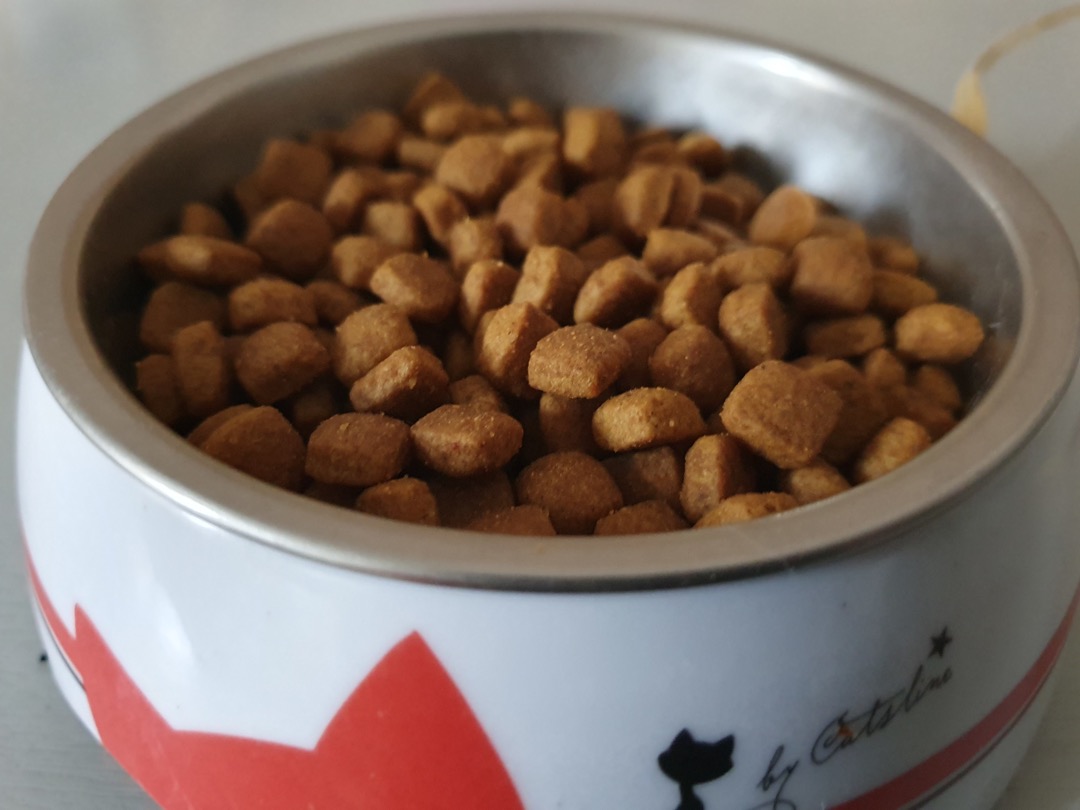
Every cat swallows hair. The barbs on a cat’s tongue work like a comb, so grooming inevitably sends loose fur down the throat, and most of it passes through unremarkably. A hairball is what happens when it does not. As a feline veterinarian, the conversation I have most often about them starts in the wrong place: owners treat hairballs as a normal cat quirk and shop for a food to manage the mess. The better framing, and the one the veterinary literature actually supports, is that a hairball is a symptom — reasonable to address with more fiber, but not something to accept indefinitely without asking why.
Which is exactly what a hairball control cat food does, and all it does: it raises the fiber content well above an ordinary adult food so that swallowed hair keeps moving through the gut and leaves in the litter box instead of collecting in the stomach. That single mechanism is why these foods work beautifully for some cats and do nothing for others. For this roundup I read the back of every bag rather than the front, and judged each food on the two things that decide whether it can work: how much fiber it carries, and which kind. The thirteen picks below cover dry and wet, budget through premium, indoor, senior, urinary, weight, and grain-free needs. If your cat needs help right now rather than at the next bag change, our guide to the best cat hairball treats covers the gels and chews that work on a shorter timescale, and for the broader question of what to feed day to day, start with the best cat food.
Find the Best Hairball Control Cat Food for Your Need
Jump straight to the food that matches your cat:
- Best hairball control cat foods overall
- Best dry cat food for hairball control
- Best wet cat food for hairball control
- Best urinary and hairball control cat food
- Best hairball and weight control cat food
- Best indoor cat food for hairball control
- Best grain-free hairball control cat food
- Best senior cat food for hairball control
- Hairball control cat food by brand
How We Chose These Hairball Control Cat Foods
Every food here sits on a verified, active Amazon listing that I checked myself for a live buy box and a real owner-review base. From there the selection ran on mechanism rather than marketing. I read each product’s actual ingredient list to identify its fiber sources and sort them into insoluble fiber, which mechanically sweeps hair along, and psyllium seed husk, which gels and keeps the mass soft and moving. I then tracked down the guaranteed-analysis crude fiber figure for every single food, which took some doing: almost no Amazon listing in this category prints one, so the numbers in the table come from each manufacturer’s own published analysis or the retailer data feeds carrying it. That exercise produced the most useful finding on this page. Veterinary guidance from PetMD puts the target at roughly eight to ten percent crude fiber for a dry hairball food, and several popular products sold on hairball control come in well under it — two of the dry foods here sit near five percent and one sits at four and a half, barely above ordinary adult kibble. I have said so plainly on each of those picks rather than quietly leaving it out. Beyond the fiber, each food had to be complete and balanced for a stated life stage, with taurine on the label, since a hairball claim says nothing about nutritional adequacy.
Then I read the reviews for what matters clinically rather than what flatters the product: whether cats actually ate it, what happened to stool quality, and whether owners reported fewer hairballs after a few weeks rather than a few days. One pattern is worth flagging upfront because it is universal in this category and not a defect of any single brand: every food here has a visible thread of owners whose cats refused it. Palatability is the most common way a hairball food fails, well ahead of the fiber not working. Several products also share their review score across bag sizes, so a large count can reflect a whole product family rather than the exact bag you are buying — I have weighted those accordingly.
Best Hairball Control Cat Foods Overall
These are the full reviews, starting with the food I recommend most and working through the budget, premium, and specialty picks. Every food is reviewed once here; the use-case sections that follow point you back to the right pick for your cat.
Best Overall: Hill’s Science Diet Adult 1-6 Hairball Control
This is the bag I hand most healthy adult cats, and it earns that on substance rather than shelf presence. It leads with real chicken, so the fiber is layered onto a food an obligate carnivore is genuinely happy to eat every day, and the hairball work is done by a blend of powdered cellulose and dried beet pulp rather than a vague “natural fiber” claim. It also carries the highest crude fiber ceiling of any food on this page. Hill’s guarantees fiber as a range rather than a single maximum, and that range reaches into the band veterinary guidance actually recommends for a dry hairball food, which more than half the products in this roundup never get near. Behind it sits the deepest research pedigree in the category: Hill’s employs veterinary nutritionists, owns its manufacturing, and substantiates its diets through feeding trials rather than paper formulation. When a food makes a functional claim, I want to know the company making it has actually fed it to cats and measured what happened.
The formula also does something owners consistently overlook. Added vitamin E and omega-6 fatty acids support skin and coat quality, and a healthier coat sheds less loose hair in the first place — so the food works on both ends of the problem, reducing what goes in as well as moving along what already has. Across a large and consistent review base, the recurring theme is a visible drop in hairball frequency over the first few weeks, which is the correct timescale for a fiber mechanism.
Two honest caveats. Palatability is the recurring complaint here, as it is nearly everywhere in this category, and a real minority of cats simply refuse it. And there is no psyllium in the blend, so it works on fiber volume rather than the water-holding gel mechanism — worth noting that because the guarantee is a range, the lower bound sits under the recommended band even though the ceiling is the highest here. For an average adult cat with an occasional hairball that is exactly right. For a long-haired heavy shedder, one of the psyllium formulas further down this page is the better starting point.

Hill's Science Diet Adult 1-6 Hairball Control Dry Cat Food
by Hill's Science Diet
The hairball food I would start a healthy adult cat on: real chicken first, a genuine insoluble fiber blend, and the strongest research pedigree in the category, held back only by the palatability lottery every food here plays.
Pros
- Carries the highest crude fiber ceiling of any food on this page, guaranteed as a range rather than a single number, which puts it squarely inside the eight to ten percent band veterinary guidance suggests for a dry hairball food
- Real chicken leads the ingredient list, so the fiber sits on top of a food an obligate carnivore is happy to eat every day rather than a filler-heavy base
- Hill's employs veterinary nutritionists, owns its manufacturing, and substantiates its diets through feeding trials -- the research pedigree behind the hairball claim is the reason I start here
- Added vitamin E and omega-6 fatty acids support skin and coat, which matters more than owners expect: a healthier coat sheds less loose hair for a cat to swallow in the first place
Cons
- Palatability is the recurring complaint in its review base -- a real minority of cats simply refuse it, which is a category-wide problem but worth knowing before you commit to a bag
- Not grain-free, and whole grain wheat and corn gluten meal sit high in the ingredient list
- No psyllium in the blend, so it works on fiber volume rather than the water-holding gel mechanism, and its fiber is guaranteed as a range whose lower bound sits under the recommended band
Budget Pick: Meow Mix Hairball Control
I want to be straightforward about what this bag is and why it is still on the page. It is the cheapest food here by a wide margin, and that matters more than ingredient purists tend to allow: a hairball food only works if you can afford to keep feeding it, and the owner choosing between this and no hairball control at all is better served by this. Critically, it is a genuine hairball formula rather than ordinary kibble with a claim on the front — soybean hulls and powdered cellulose sit in the ingredient list doing real insoluble-fiber work. The multi-flavor blend of chicken, turkey, salmon, and ocean fish is also a deliberate palatability play, which helps with cats that reject single-protein foods.
The trade-offs are real and I would not soften them. Chicken by-product meal leads the ingredient list rather than named chicken. It contains artificial dyes and BHA, and the dyes are worth a moment’s thought: cats do not choose food by color, so those exist purely for the human looking at the bowl. And digestive tolerance is genuinely split in the reviews, with some cats settling on it and others vomiting more.
That last point is how I would use this food: treat the first two weeks as a trial and watch closely. If your cat does well, you have hairball control at the lowest sustainable cost on this page. If not, trade up rather than persisting.

Meow Mix Hairball Control Dry Cat Food, 6.3 Pound Bag
by Meow Mix
The honest budget floor: a real fiber blend at the lowest cost per bag here, with artificial colors and by-product meal as the price of admission -- better than skipping hairball control entirely.
Pros
- The cheapest food on this page by a wide margin, which matters more than ingredient purists allow -- a hairball food only works if you can afford to feed it every day for years
- Carries a real insoluble fiber blend of soybean hulls and powdered cellulose, so it is a genuine hairball formula rather than a standard kibble with a claim on the front
- Blends chicken, turkey, salmon, and ocean fish flavors in one bag, which is a deliberate palatability strategy and helps with cats that reject single-protein foods
- Complete and balanced for adult maintenance and stocked almost everywhere, so rebuying the same food is easy
Cons
- Contains artificial dyes and BHA -- the colors exist entirely for the human buying the bag, since cats do not select food by color, and that is a fair reason to trade up if you can
- Chicken by-product meal leads the ingredient list rather than named chicken
- Digestive tolerance is genuinely split in the reviews: some cats stop vomiting on it and some vomit more, so watch the first two weeks closely
Upgrade Pick: Royal Canin Feline Care Nutrition Hairball Care
When hairballs are a recurring problem rather than an occasional nuisance, this is the bag I escalate to, and the reason is the fiber package. It is the most deliberately engineered blend in the category: psyllium seed husk alongside pea fiber and dried beet pulp. Psyllium is the ingredient that separates it — it is mucilaginous, absorbing water and forming a gel, so it does not merely sweep hair along, it keeps the mass soft and moving rather than letting it compact. Only a handful of foods on the market include it, and this is the most purpose-built of them.
The owner evidence is also the most specific I encountered anywhere in this category. Where most hairball foods attract general praise, repeat buyers of this one describe vomiting episodes roughly halving after the switch — a concrete, mechanism-consistent outcome rather than a vague improvement. There is a practical bonus too: Royal Canin makes a wet formula using the same psyllium mechanism, so you can run one consistent hairball strategy across both food types instead of stacking two different approaches and guessing which is working.
The cost is the obvious objection, and it is the most expensive dry food on this page. Chicken by-product meal as the first ingredient is a fair criticism for owners who want a named whole protein leading the list, and it is not grain-free. For a cat with a genuine, documented hairball problem, I still think the mechanism justifies the premium. For a cat with the occasional hairball, it is more food than the problem requires.
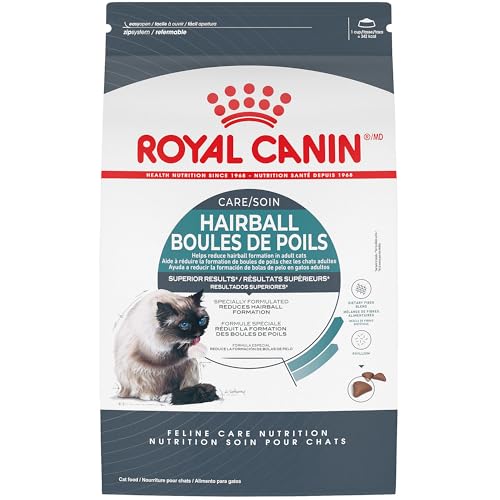
Royal Canin Feline Care Nutrition Hairball Care Adult Dry Cat Food, 6 lb Bag
by Royal Canin
The upgrade worth paying for when hairballs are a real, recurring problem rather than an occasional nuisance: the most purpose-engineered fiber blend here, with psyllium doing work plain cellulose cannot.
Pros
- One of only two dry foods here that add psyllium seed husk to the fiber blend -- psyllium holds water and forms a gel, so it does not just sweep hair along, it keeps the mass moving and softer
- The fiber package is the most deliberate in the category: psyllium seed husk plus pea fiber plus dried beet pulp, engineered specifically for cats prone to hairballs rather than bolted onto an indoor formula
- Owner reports of efficacy are the most specific I found anywhere in this category, with repeat buyers describing vomiting episodes roughly halving after the switch
- Has a matching wet formula with the same psyllium mechanism, so you can run a consistent hairball strategy across both food types instead of mixing approaches
Cons
- The most expensive dry food on this page, and the per-pound gap widens further on the small bag
- Chicken by-product meal is the first ingredient, which is a legitimate objection for owners who want a named whole protein leading the list
- Not grain-free, with corn and wheat in the base
Best Value: IAMS Proactive Health Hairball, Chicken and Salmon
This is the food I end up recommending most often in practice, because it lands closest to where most households actually need to be. Real chicken leads the list with salmon added, at a price much nearer the grocery shelf than the premium one, and the fiber work is handled by a conventional but genuinely effective blend of dried beet pulp and powdered cellulose. Nothing about it is exotic; everything about it is sound.
What tips it over comparable bags is the depth of its owner evidence. It rests on one of the largest review bases on this page, which for a food a cat will eat for years is precisely the kind of proof I want — not a small enthusiastic sample but a large, boring, consistent one. Read through it and a second theme emerges alongside the hairball reports: owners repeatedly credit it with settling sensitive digestion generally. The tailored omega-6 to omega-3 ratio also supports skin and coat, which feeds back into less shedding.
Chicken by-product meal appears further down the list, which some owners screen out on principle, and corn is the primary carbohydrate, so this is not a low-carb or grain-free option. And like almost everything here, the reviews disagree sharply on whether cats will eat it. If you want one bag that balances ingredient quality, price, and evidence, this is the most defensible choice on the page.

IAMS Proactive Health Hairball Dry Cat Food, Chicken & Salmon, 7 lb
by IAMS
The value pick I recommend most often: chicken-first, salmon-boosted, a proper fiber blend, and one of the deepest owner-review bases on this page -- at a mid-shelf price.
Pros
- Real chicken first with salmon added, at a price that sits closer to the grocery shelf than the premium one -- the best balance of ingredient quality and cost on this page
- Rests on a far deeper owner-review base than most of the premium bags here, which is exactly the kind of evidence I want for a food a cat will eat for years
- Fiber comes from dried beet pulp and powdered cellulose, a conventional but genuinely effective insoluble blend
- Reviewers repeatedly credit it with settling sensitive digestion, not just reducing hairballs, and the tailored omega-6 to omega-3 ratio supports skin and coat
Cons
- Chicken by-product meal appears further down the ingredient list, which some owners screen out on principle
- Corn is the primary carbohydrate, so it is not a low-carb or grain-free option
- Like almost everything in this category, a real share of cats will not eat it -- the reviews disagree sharply on palatability
Best for Indoor Cats: Purina Cat Chow Naturals Hairball, Indoor
This bag has the deepest owner-review base of any food on this page, and the rating has held up across all of it. That combination of volume and consistency is genuinely rare and tells you something a spec sheet cannot: an enormous number of cats have eaten this for a long time without their owners souring on it.
It also matches the cat most people are actually shopping for. It is built as a combined indoor, hairball, and healthy-weight formula, which describes the typical patient in my exam room almost exactly: a house cat who over-grooms out of boredom and is carrying a little extra weight from a bowl that is always full. Real turkey and chicken lead it, there are no artificial flavors, and a powdered cellulose and soybean hulls blend does the hairball work. It is also the largest bag here at one of the lowest prices, which makes it the single easiest food on this list to sustain in a multi-cat household — and in a multi-cat house, sustainability is the whole game.
Now the caveat that matters, and it is a real one: its guaranteed crude fiber comes in at around five percent, which is well below the eight to ten percent range veterinary guidance suggests for a dry hairball food. For a product whose front label sells hairball control, that is a genuine shortfall, and there is no psyllium to compensate. Ingredient quality is also mid-shelf, with corn in the base. I keep it on the page because for a multi-cat household the economics are decisive and a modest fiber lift fed reliably beats a better formula fed for two weeks. But if your cat is a heavy long-haired shedder, buy fiber rather than value and start higher up this page.

Purina Cat Chow Naturals Hairball, Indoor Dry Cat Food, 13 lb Bag
by Purina Cat Chow
The practical indoor pick and the most-reviewed food here: a combined hairball, indoor, and weight formula in the biggest bag at one of the lowest prices, which is why so many multi-cat homes stay on it.
Pros
- The deepest owner-review base of any food on this page, and the rating has held up across it -- that combination of volume and consistency is rare and genuinely informative
- Built as a combined indoor, hairball, and healthy-weight formula, which matches the actual cat most owners are shopping for: a house cat who over-grooms and is carrying a little extra
- Real turkey and chicken with no artificial flavors, and a powdered cellulose plus soybean hulls fiber blend that does the hairball work
- The largest bag here at one of the lowest prices, which makes it the easiest food on this list to sustain in a multi-cat household
Cons
- Ingredient quality is mid-shelf: the fiber and protein are fine, but this is a value formula rather than a premium one
- Not grain-free, with corn in the base
- Its guaranteed crude fiber sits well below the eight to ten percent range veterinary guidance suggests for a dry hairball food, and there is no psyllium, so a heavy long-haired shedder will likely need more than this provides
Best for Sensitive Stomachs: Purina Pro Plan Hairball, Healthy Weight, Indoor
If your cat has both hairballs and an unreliable gut, this is the one food here doing both jobs deliberately. It is the only pick on this page that pairs hairball fiber with guaranteed live probiotics, and its review base reflects that design: owners write about resolved diarrhea and firmer stool at least as often as they write about hairballs. The fiber blend itself is layered rather than simple, adding dried chicory root, a prebiotic, to powdered cellulose and soybean hulls — so it feeds beneficial gut bacteria as well as moving hair along.
Salmon leads the ingredient list, which is quietly useful: cats that have gone off chicken formulas will often accept a fish-forward food, and a cat’s willingness to eat is the constraint that decides everything else. The recipe runs high in protein to protect lean muscle while carrying less fat than Pro Plan’s standard adult formula, so it serves the lower-activity indoor cat who needs calorie control and hairball help from the same bag rather than from two.
It sits at the upper end of the mainstream price tier and the bag is smaller than the value options here, so the cost per pound is a real consideration. It is not grain-free, with rice and wheat flour in the base. And the palatability reviews split, which is the category pattern rather than a flaw specific to this food. For a queasy indoor cat, I would still start here.

Purina Pro Plan Hairball, Healthy Weight, Indoor Dry Cat Food, Focus Indoor Care Salmon & Rice
by Purina Pro Plan
The pick for a queasy indoor cat: hairball fiber plus live probiotics and a prebiotic, with a review base that talks about stool quality as much as hairballs -- the only food here doing both jobs deliberately.
Pros
- The only food here that pairs hairball fiber with guaranteed live probiotics, and the review base reflects it -- owners describe resolved diarrhea and firmer stool alongside fewer hairballs
- Adds dried chicory root, a prebiotic, to the powdered cellulose and soybean hulls, so the blend feeds gut bacteria as well as moving hair
- Salmon leads the ingredient list, which helps with cats that have soured on chicken formulas, and the recipe runs high in protein to protect lean muscle
- Carries less fat than Pro Plan's standard adult formula, so it works for the indoor cat who needs calorie control and hairball help in one bag
Cons
- Priced at the upper end of the mainstream tier, and the bag is smaller than the value options here
- Not grain-free, with rice and wheat flour in the base
- Reviews split on palatability, which is the pattern across this whole category rather than a flaw unique to this bag
Best Grain-Free: Blue Buffalo Wilderness Indoor Hairball and Weight Control
Two things make this the grain-free pick rather than merely a grain-free option. The first is that its Amazon listing prints a guaranteed analysis at all, which no other brand on this page bothers to do for a shopper reading the page. It comes with a caveat worth knowing, and it is the kind of thing you only find by checking both sources: the analysis on the Amazon listing does not match the one Blue Buffalo currently publishes on its own site, which shows a higher fiber figure and a slightly lower protein figure. The listing appears to carry an older formulation’s numbers. The table above uses Blue Buffalo’s current published figure, because that is the food that will arrive at your door.
The second is the fiber blend. It combines powdered cellulose with psyllium seed husks and pea fiber, making it the only grain-free formula here with the psyllium mechanism — the gel-forming fiber that keeps a hair mass soft and moving rather than just bulking it. Deboned chicken leads the list, it is genuinely grain-free on tapioca starch rather than corn, wheat, or soy, and the dual claim on hairballs and weight is backed by review accounts with real before-and-after detail on the weight half.
The honest reads against it: a small bag for the price, so cost per pound is high for a daily food. Digestive tolerance is polarized, praised for sensitive stomachs by some owners and blamed for vomiting and loose stool by others. And even on the manufacturer’s own higher number, its crude fiber still sits below the range usually recommended for a dry hairball food, which means the psyllium is carrying more of the load here than fiber volume is. That is a legitimate design choice rather than a flaw, but it is worth understanding what you are buying.

Blue Buffalo Wilderness Indoor Hairball & Weight Control Dry Cat Food, 5 lb
by Blue Buffalo
The grain-free pick, and the only bag here transparent enough to print its guaranteed analysis on the listing: deboned chicken, psyllium in the blend, and a real dual claim on hairballs and weight.
Pros
- The only food on this page whose Amazon listing prints a guaranteed analysis at all, which is more than any other brand here offers a shopper reading the page
- Deboned chicken leads the list and it is genuinely grain-free, using tapioca starch instead of corn, wheat, or soy
- The fiber blend combines powdered cellulose with psyllium seed husks and pea fiber, making it the only grain-free option here with the psyllium mechanism
- Explicitly dual-purpose for hairballs and weight, and the review base backs the weight half with real before-and-after accounts
Cons
- A small bag for the price, so the cost per pound is high for a food you feed daily
- Digestive tolerance is polarized in the reviews -- praised for sensitive stomachs by some owners and blamed for vomiting and loose stool by others
- Its crude fiber sits below the eight to ten percent range veterinary guidance suggests for a dry hairball food, so the psyllium is carrying more of the load here than fiber volume is
Best for Senior Cats: Hill’s Science Diet Adult 7+ Hairball Control
Older cats need their own formula here, and this is effectively the only dedicated one. The clinical logic is straightforward: older cats groom less efficiently, arthritis and stiffness change how thoroughly they can reach, and they are a documented higher-risk group for hairballs — while simultaneously needing age-appropriate nutrition that an adult-maintenance hairball bag will not provide. Feeding a senior cat a food designed for a three-year-old to solve a hairball problem trades one issue for another.
The formulation reflects that. It adds oat fiber to the powdered cellulose and dried beet pulp blend, and includes L-carnitine to help an aging cat hold lean muscle mass, which is the thing that quietly slips away in older cats. Real chicken leads it, with the same feeding-trial pedigree and veterinary nutritionist involvement behind the rest of the Hill’s line, and owners specifically report reduced vomiting after switching an older cat onto it.
One caveat deserves weight rather than a footnote, because it lands in exactly the group this food targets: kibble size draws consistent complaints from owners of older cats with worn or painful teeth. Dental disease is common in senior cats, and a cat who cannot comfortably chew a kibble will not eat it. If your older cat has any dental history, consider the slices-in-gravy option below instead, or alongside. It also costs meaningfully more than the standard adult Hill’s hairball formula, and carries no psyllium.

Hill's Science Diet Adult 7+ Hairball Control Dry Cat Food
by Hill's Science Diet
The senior pick, and effectively the only dedicated one: age-appropriate nutrition with L-carnitine layered onto a proper hairball fiber blend, with kibble size the one thing to watch in an older mouth.
Pros
- The only food on this page formulated specifically for cats seven and over, which matters because older cats groom less efficiently and are a documented higher-risk group for hairballs
- Adds oat fiber to the powdered cellulose and beet pulp blend, and includes L-carnitine to help an aging cat hold lean muscle
- Real chicken first, with the same feeding-trial pedigree and veterinary nutritionist involvement behind the rest of the Hill's line
- Owners specifically report reduced vomiting after switching an older cat onto it, which is the outcome this formula exists to deliver
Cons
- Kibble size draws consistent complaints from owners of older cats with worn or sore teeth, which is a real problem in exactly the age group this food targets
- Costs meaningfully more than the standard adult Hill's hairball formula
- Not grain-free, and the fiber blend contains no psyllium
Best Urinary and Hairball Control: Hill’s Science Diet Adult Urinary and Hairball Control
This food solves the single most common overlap I see across the exam table. The indoor, lower-activity, slightly overweight house cat who over-grooms is very often the same cat with a urinary history, and without a combination formula that owner is stuck choosing which problem to feed for. This bag runs the same powdered cellulose and dried beet pulp fiber blend as the standard Hill’s hairball formula while additionally controlling dietary magnesium, calcium, and phosphorus to make the urine a less hospitable environment for crystals to form.
It is backed by one of the deepest review bases on this page and priced close to the plain hairball formula despite doing two jobs, which makes it an easy recommendation for the cat who genuinely has both. Real chicken leads it, from the same feeding-trial line, so the dual claim rests on the same research foundation as the rest of the Hill’s range.
The caveat here is the most important on the page, and it is clinical rather than commercial. An over-the-counter urinary formula is supportive nutrition, not treatment. A cat with a diagnosed stone type, a previous blockage, or active urinary signs needs a therapeutic diet chosen by your veterinarian for that specific stone, because the wrong urinary diet can worsen the wrong stone. Use this for the cat with a mild or historical urinary tendency alongside hairballs. Do not use it to manage diagnosed urinary disease. And if your cat has never had a urinary problem, the plain hairball formula is the right choice and this adds nothing.

Hill's Science Diet Adult Urinary & Hairball Control Dry Cat Food
by Hill's Science Diet
The one food here that handles two problems at once: hairball fiber plus controlled minerals for urinary support, for the very common indoor cat who has both -- with the honest caveat that it is support, not treatment.
Pros
- Solves the single most common overlap I see across the exam table: the indoor cat who both coughs up hairballs and has a urinary history, who would otherwise need two incompatible foods
- Controls dietary magnesium, calcium, and phosphorus to support a healthy urinary environment while running the same powdered cellulose and beet pulp fiber blend as the standard Hill's hairball formula
- Backed by one of the deepest review bases on this page, and priced close to the plain hairball formula despite doing two jobs
- Real chicken first, from the same feeding-trial line, so the dual claim rests on the same research foundation
Cons
- An over-the-counter urinary formula is supportive nutrition, not treatment -- a cat with a diagnosed stone type or a history of blockage needs a prescription diet chosen by your veterinarian
- Not grain-free, and no psyllium in the fiber blend
- Like every food here, some cats refuse it, and switching a urinary-history cat off a food it likes is a harder decision than usual
Best Chicken-First Everyday Kibble: Purina ONE Natural Hairball Control
Real chicken as the first ingredient at a price that undercuts most of the premium bags here is an unusually good trade, and it is the reason this food keeps a place on the page. The fiber work is straightforward — powdered cellulose and soybean hulls — and it adds four antioxidant sources for immune support. It comes from Purina, which substantiates its foods through feeding trials rather than paper formulation, so you get the gold-standard nutritional quality signal at a mid-shelf price. It is also stocked almost everywhere, which sounds trivial until you have had to change a cat’s food because a formula vanished from your usual shop.
Two caveats I want to name plainly rather than bury. The first is the fiber: this bag carries the lowest guaranteed crude fiber of any dry food on this page, meaningfully under the range veterinary guidance suggests, which is a real limitation for a product sold on hairball control. It is a good everyday chicken-first kibble that happens to carry a hairball claim, rather than a serious hairball intervention. The second belongs on a page about vomiting: a specific, recurring thread in its reviews describes cats vomiting shortly after eating it. Any food does this to some cats, but it appears often enough here to deserve your attention before you commit to a large bag. Corn gluten meal, rice flour, and whole grain corn also sit high in the list, so the carbohydrate load runs above a meat-forward premium bag.
Treat it as a strong everyday option with a known failure mode. Buy the smaller bag first, transition gradually over a week to ten days, and see how your cat handles it.

Purina ONE Natural Hairball Control Dry Cat Food, 7 lb Bag
by Purina ONE
Real-chicken-first hairball kibble from a feeding-trial brand at a mid-shelf price -- an easy everyday choice, with one honest caveat: a recurring thread of owners reporting post-meal vomiting.
Pros
- Real chicken is the first ingredient at a price that undercuts most of the premium bags here, which is an unusually good trade on ingredient quality per dollar
- Carries a straightforward powdered cellulose and soybean hulls fiber blend, plus four antioxidant sources for immune support
- Backed by a large, consistent review base and stocked almost everywhere, so you can rebuy the identical formula without hunting
- Comes from Purina, which substantiates its foods through feeding trials rather than paper formulation -- the gold-standard nutritional quality signal, at a mid-shelf price
Cons
- A specific and recurring complaint in its reviews is cats vomiting shortly after eating it, which is worth naming plainly on a page about vomiting
- Corn gluten meal, rice flour, and whole grain corn sit high in the list, so the carbohydrate load is above a meat-forward premium bag
- Carries the lowest guaranteed crude fiber of any dry food on this page, well under the range veterinary guidance suggests, which is a real limitation for a product sold on hairball control
Best Wet Food: Purina Pro Plan Hairball Control Pate
The wet hairball category is genuinely thin — only two brands make a canned product with a real on-label hairball claim — and this is the more palatable of the two. That matters a great deal, because refusal is how hairball foods fail most often, and the standout theme in this product’s reviews is that cats reliably finish it.
Wet food also does something no kibble can, and it is not a marginal benefit. Canned food runs vastly wetter than dry, and hydration supports the gut motility that actually carries a hair mass along. A dehydrated cat with a sluggish gut gives its fiber much less to work with. So for a cat that will not eat kibble, or for any cat as part of the diet, the moisture is doing real work alongside the fiber. There are no artificial colors or preservatives, and the full vitamin and mineral package makes it complete adult nutrition rather than a topper.
There is a genuine point in its favor on dose, too. Its guaranteed crude fiber lands inside the two to four percent band veterinary guidance suggests for a canned hairball food, which is more than the other wet option here manages. Two limits to weigh against that. The label never itemizes its fiber source, so unlike every dry option here you cannot see which mechanism you are buying — the dose is right, the ingredient is unnamed, and I would rather that were not the case. It also rests on one of the thinnest review bases on this page, so the evidence is real but shallow. Purina’s own feeding directions position it as a mix-in alongside a Pro Plan dry hairball formula rather than a standalone diet, and fed alone the cost per day is high. Used the way the manufacturer intends, as the wet half of a mixed-feeding routine, it works well.

Purina Pro Plan Hairball Control Wet Cat Food Pate, Chicken
by Purina Pro Plan
The wet pick for a cat that refuses kibble: highly palatable, genuinely hairball-labeled, and moisture-rich -- with the honest limit that the label never names the fiber doing the work.
Pros
- One of only two wet foods on the US market with an on-label hairball claim, which makes it the default answer for an owner whose cat simply will not eat kibble
- Brings the moisture a dry hairball food cannot: canned food runs far wetter than kibble, and better hydration supports the gut motility that actually moves a hair mass along
- Palatability is the standout in its reviews -- cats reliably finish it, which is not a small thing in a category where refusal is the most common failure mode
- Its guaranteed crude fiber lands inside the two to four percent band veterinary guidance suggests for a canned hairball food, so the dose is right even though the label never says where the fiber comes from
Cons
- The listing does not itemize its fiber source, so unlike the dry options you cannot see which mechanism you are buying -- the claim is there, the ingredient is not named
- One of the thinnest review bases on this page, so the evidence behind it is real but shallow
- Purina's own feeding directions position it as a mix-in alongside a Pro Plan dry hairball formula rather than a standalone diet, and the cost per day is high if you feed it alone
Best Premium Wet: Royal Canin Hairball Care Thin Slices in Gravy
This is the only wet food here that actually names its fiber — psyllium seed husk plus powdered cellulose, the same approach as Royal Canin’s dry hairball formula — so it pairs the gel-forming mechanism with canned-food moisture in one product and tells you what is inside. That combination is genuinely rare. But the guaranteed analysis complicates the picture in a way worth knowing before you choose between the two wet options: its crude fiber comes in below the two to four percent band suggested for a canned hairball food, and below the Purina pate’s figure. So you are trading fiber quantity for fiber quality and disclosure. For a cat that needs the psyllium mechanism, that trade is defensible. For a cat that just needs more fiber in a wet food, the pate gives you more of it.
The texture solves a problem nothing dry can. Thin slices in gravy is the easiest format on this page for an older cat, or one with dental disease, to actually eat, which is precisely the group that struggles with large senior kibble. It also functions as the wet half of a single Royal Canin hairball strategy, so pairing it with the dry formula keeps one consistent mechanism running rather than stacking two different ones and guessing.
It is polarizing, and the split is specific: reviews divide between cats that clean the bowl and cats that walk away, with a recurring complaint about the smell. That odor is a genuine consideration for the human opening the pouch, not just the cat. Cost per day is high compared with any dry option, especially in a multi-cat home, and it is not grain-free, with corn flour and modified corn starch in the recipe. If your cat tolerates it, this is the strongest hairball mechanism available in a single product.

Royal Canin Feline Care Nutrition Hairball Care Adult Thin Slices in Gravy Cat Food
by Royal Canin
The most complete single product here on mechanism: named psyllium fiber plus canned-food moisture in a texture an older or dentally sore cat can manage -- if your cat tolerates the smell.
Pros
- The only wet food here that actually names its fiber: psyllium seed husk plus powdered cellulose, the same mechanism as Royal Canin's dry hairball formula
- Thin slices in gravy is the easiest texture on this page for an older cat or one with dental disease to eat, which is exactly the group that struggles with large senior kibble
- Designed as the wet half of a single Royal Canin hairball strategy, so pairing it with the dry formula keeps one consistent mechanism instead of stacking two
- Combines the psyllium mechanism with canned-food moisture, which is the most complete hairball approach available in a single product here
Cons
- Polarizing on palatability and smell -- reviews split between cats that clean the bowl and cats that walk away, with a recurring complaint about the odor
- Its guaranteed crude fiber sits below the two to four percent band suggested for a canned hairball food, so it leans on the quality of its psyllium rather than the quantity of fiber, and cost per day is high
- Not grain-free, with corn flour and modified corn starch in the recipe
Best Grain-Free Alternative: Wellness CORE+ Hairball
This one is here for a specific owner with a specific objection. Powdered cellulose is purified plant fiber and it is in the large majority of hairball foods, including most of this page. Some owners would rather not feed a refined fiber isolate, and until recently that preference left them with nothing in this category. This is the only formula I could find listed on Amazon that hits the fiber target without any cellulose at all, using miscanthus grass, pea fiber, dried beet pulp, and chicory root instead.
It is also grain-free and chicken-forward, so it satisfies both the grain-free and the no-refined-fiber preference in a single bag — a combination nothing else here offers. Chicory root adds a prebiotic alongside the insoluble fiber, so the blend supports gut bacteria as well as moving hair through.
I am placing it last deliberately, because the evidence behind it is much thinner than anything else on this page. It carries by far the shallowest review base here and the lowest star rating in this roundup, and it is a small bag, so the cost per pound is steep. There is no psyllium, so the mechanism is insoluble fiber and prebiotic only. If cellulose-free matters to you, this is your option and it is a reasonable one. If it does not, the better-evidenced foods above are the safer choice.

Wellness CORE+ Hairball Adult Dry Cat Food, Grain Free Kibble, Chicken Recipe, 4.75 lb Bag
by Wellness
The niche pick with a real reason to exist: grain-free hairball fiber without any powdered cellulose, sourced from miscanthus grass and pea fiber instead -- on the thinnest evidence base here.
Pros
- The only food on this page that achieves its fiber without powdered cellulose, using miscanthus grass, pea fiber, dried beet pulp, and chicory root instead -- the pick for an owner who screens cellulose out
- Grain-free and chicken-forward, so it satisfies both the grain-free and the no-refined-fiber preference in a single bag
- Chicory root adds a prebiotic alongside the insoluble fiber, so the blend supports gut bacteria as well as moving hair
- The only cellulose-free grain-free hairball formula I could find listed on Amazon, which is otherwise an unserved niche
Cons
- By far the shallowest review base on this page, so there is much less owner evidence behind it than behind any other pick here
- The lowest star rating in this roundup, and the smallest bag, so the cost per pound is steep
- No psyllium in the blend, so the mechanism is insoluble fiber and prebiotic only
Best Dry Cat Food for Hairball Control
Dry food is where this category mostly lives, for a manufacturing reason more than a clinical one: it is straightforward to raise fiber in kibble. The figure to look for in a dry hairball formula is roughly eight to ten percent crude fiber, and this is where the shelf sorts itself out sharply. Of the dry foods on this page, only the two Hill’s adult formulas, the Hill’s urinary combination, the Royal Canin bag, and the IAMS bag reach that band. The rest come in under it, and three of them sit at around five percent or less, closer to an ordinary adult kibble than to the hairball target. Dry also gives you something wet does not, which is a visible ingredient list — every dry food on this page names the fiber doing the work, while one of the two wet options does not. What you give up is moisture, so if you feed dry only, pay deliberate attention to water intake. Our guide to the best dry cat food covers the wider dry-food decision beyond hairballs.
| Product | Price | Buy |
|---|---|---|
| Hill's Science Diet Adult 1-6 Hairball Control Dry Cat FoodBest dry overall Real chicken first with a cellulose and beet pulp blend, from the brand with the deepest research pedigree in the category | $23.99 | View on Amazon |
| IAMS Proactive Health Hairball Dry Cat Food, Chicken & Salmon, 7 lbBest dry value The best balance of ingredient quality, price, and owner evidence on the page -- chicken first with salmon added | $16.97 | View on Amazon |
| Meow Mix Hairball Control Dry Cat Food, 6.3 Pound BagBest cheap dry A genuine fiber blend at the lowest cost per bag here, with artificial dyes and by-product meal as the trade-off | $9.84 | View on Amazon |
Best Wet Cat Food for Hairball Control
The wet hairball category is thin enough to describe completely: only two brands make a canned food with a real on-label hairball claim, and both are here. Fiber percentages look lower on a canned label — roughly two to four percent is the target — because wet food is mostly water, so the fiber is diluted by moisture rather than genuinely scarce. The two products split in an instructive way: the Purina pate hits that band but never names its fiber source, while the Royal Canin slices name psyllium outright but come in under it. The reason to feed wet is that moisture does independent work: hydration supports the gut motility that carries a hair mass along, which is why I usually suggest wet alongside a dry hairball formula rather than instead of it. The best wet cat food guide covers the wider canned-food decision.
| Product | Price | Buy |
|---|---|---|
| Purina Pro Plan Hairball Control Wet Cat Food Pate, ChickenBest wet overall The more palatable of the two, and cats reliably finish it -- but the label never names the fiber doing the work | $47.04 | View on Amazon |
| Royal Canin Feline Care Nutrition Hairball Care Adult Thin Slices in Gravy Cat FoodBest premium wet The only wet food here that names psyllium outright, in a slices-in-gravy texture an older cat can manage | $28.58 | View on Amazon |
Best Urinary and Hairball Control Cat Food
This combination exists because the two problems overlap constantly in indoor cats: the cat who over-grooms is frequently the same cat with a urinary history. A combination formula adds controlled magnesium, calcium, and phosphorus to a standard hairball fiber blend, so you are not choosing which problem to feed for. Adding moisture is the other half of urinary support and costs nothing in mechanism, which is why a wet food pairs so naturally here. One firm limit: these are over-the-counter supportive diets, not treatment. A diagnosed stone or a previous blockage needs a therapeutic diet your veterinarian selects for that specific stone type.
| Product | Price | Buy |
|---|---|---|
| Hill's Science Diet Adult Urinary & Hairball Control Dry Cat FoodBest urinary and hairball formula Controls dietary minerals for urinary support while running the standard Hill's hairball fiber blend | $24.97 | View on Amazon |
| Royal Canin Feline Care Nutrition Hairball Care Adult Thin Slices in Gravy Cat FoodBest added moisture for urinary support Canned moisture plus named psyllium fiber -- the wet complement that supports urinary health while managing hair | $28.58 | View on Amazon |
Best Hairball and Weight Control Cat Food
Hairballs and excess weight travel together more often than either problem travels alone, because both follow the same cause: a lower-activity indoor cat with a bowl that is always full over-grooms out of boredom and eats past its needs. Combination formulas cut calorie density while raising fiber, and fiber helps twice here, since bulk contributes to satiety as well as moving hair. Be aware that the label alone will not fix this: portion control does most of the work, and a spayed or neutered indoor cat needs meaningfully fewer calories than the feeding guide on the bag assumes. Our cat diet calculator turns your cat’s weight into an actual daily portion.
| Product | Price | Buy |
|---|---|---|
| Blue Buffalo Wilderness Indoor Hairball & Weight Control Dry Cat Food, 5 lbBest grain-free hairball and weight Psyllium in the blend for the gel mechanism, with real owner accounts of weight loss on the weight-control half | $27.98 | View on Amazon |
| Purina Pro Plan Hairball, Healthy Weight, Indoor Dry Cat Food, Focus Indoor Care Salmon & RiceBest hairball and weight with probiotics Lower fat than the standard Pro Plan adult formula, with live probiotics and a prebiotic alongside the fiber | $28.08 | View on Amazon |
| Purina Cat Chow Naturals Hairball, Indoor Dry Cat Food, 13 lb BagBest budget hairball and weight A combined indoor, hairball, and healthy-weight formula in the largest bag here at one of the lowest prices | $15.99 | View on Amazon |
Best Indoor Cat Food for Hairball Control
Indoor and hairball claims appear together on the shelf so often that they are nearly one product category, and the reasoning is sound. An indoor cat grooms more, moves less, and sheds on a year-round cycle rather than a seasonal one, so it swallows more hair and burns fewer calories doing it. An indoor hairball formula therefore usually pairs raised fiber with reduced calorie density. What none of them address is the boredom underneath the over-grooming, which is a play and enrichment problem rather than a nutrition one.
| Product | Price | Buy |
|---|---|---|
| Purina Cat Chow Naturals Hairball, Indoor Dry Cat Food, 13 lb BagBest indoor value The most-reviewed food on this page, combining indoor, hairball, and weight control in one large-bag formula | $15.99 | View on Amazon |
| Purina Pro Plan Hairball, Healthy Weight, Indoor Dry Cat Food, Focus Indoor Care Salmon & RiceBest indoor for sensitive stomachs Salmon-first with live probiotics, for the indoor cat whose gut is as much the problem as the hairballs | $28.08 | View on Amazon |
| Blue Buffalo Wilderness Indoor Hairball & Weight Control Dry Cat Food, 5 lbBest grain-free indoor Deboned chicken, genuinely grain-free, and the only indoor option here with psyllium in the blend | $27.98 | View on Amazon |
Best Grain-Free Hairball Control Cat Food
Grain-free is a real minority within hairball control: most formulas in this category use corn, wheat, or rice as the base carbohydrate, so the grain-free shelf is short. Worth knowing before you shop on this axis — grains are not a hairball problem in themselves, and going grain-free does nothing for hairballs directly. What matters is the fiber. Both options here carry that, and they differ in a way that decides between them: one uses powdered cellulose plus psyllium, the other avoids cellulose entirely in favor of miscanthus grass and pea fiber.
| Product | Price | Buy |
|---|---|---|
| Blue Buffalo Wilderness Indoor Hairball & Weight Control Dry Cat Food, 5 lbBest grain-free overall Deboned chicken first with psyllium in the blend, though its fiber still lands under the range suggested for a dry hairball food | $27.98 | View on Amazon |
| Wellness CORE+ Hairball Adult Dry Cat Food, Grain Free Kibble, Chicken Recipe, 4.75 lb BagBest grain-free without cellulose The one option that reaches its fiber target with no powdered cellulose at all, on a much thinner evidence base | $24.69 | View on Amazon |
Best Senior Cat Food for Hairball Control
Older cats belong in their own row here for two reasons that compound. They groom less efficiently, so more loose hair ends up swallowed, and they are a documented higher-risk group for hairballs. At the same time they need age-appropriate nutrition, which an adult-maintenance hairball bag will not give them. The category offers very little: essentially one dedicated senior hairball formula. The other thing to weigh in an older cat is texture, because dental disease is common at this age and a cat that cannot comfortably chew a large kibble will simply stop eating it.
| Product | Price | Buy |
|---|---|---|
| Hill's Science Diet Adult 7+ Hairball Control Dry Cat FoodBest senior formula The only dedicated senior hairball formula here, with oat fiber added and L-carnitine to protect lean muscle | $38.99 | View on Amazon |
| Royal Canin Feline Care Nutrition Hairball Care Adult Thin Slices in Gravy Cat FoodBest senior-friendly texture Slices in gravy, the easiest texture on this page for a cat with worn or painful teeth to eat | $28.58 | View on Amazon |
Best Hairball Control Cat Food by Brand
Most owners arrive at this category already loyal to a brand, usually because their cat already eats it and a food change is not a small thing. Here is the hairball formula I would pick from each of the major lines, so you can stay within a brand your cat has already accepted.
One brand is missing from that table for a reason worth stating, because it sends a steady trickle of confused shoppers looking. NUTRO’s hairball control recipe is no longer in NUTRO’s own cat lineup: its current catalog lists six dry cat foods and none of them is a hairball formula, the only health-need options being indoor and sensitive. NUTRO’s website still hosts an article describing the hairball recipe as though you can buy it, with no product page behind it, and a few retailers are still selling through what looks like remaining stock. I could find no announcement from the manufacturer either way. If NUTRO’s hairball food is what you have been feeding, treat it as on its way out and plan a replacement rather than waiting for the shelf to empty.
| Product | Price | Buy |
|---|---|---|
| Hill's Science Diet Adult 1-6 Hairball Control Dry Cat FoodBest Hill's pick Chicken first with a cellulose and beet pulp blend, and the strongest research pedigree in the category | $23.99 | View on Amazon |
| Purina ONE Natural Hairball Control Dry Cat Food, 7 lb BagBest Purina pick Real chicken first from a feeding-trial brand, though it carries the lowest crude fiber of any dry food here | $17.97 | View on Amazon |
| IAMS Proactive Health Hairball Dry Cat Food, Chicken & Salmon, 7 lbBest IAMS pick Chicken and salmon with a conventional fiber blend, and one of the largest review bases on this page | $16.97 | View on Amazon |
| Blue Buffalo Wilderness Indoor Hairball & Weight Control Dry Cat Food, 5 lbBest Blue Buffalo pick Deboned chicken, genuinely grain-free, and psyllium in the blend for the gel-forming mechanism | $27.98 | View on Amazon |
| Royal Canin Feline Care Nutrition Hairball Care Adult Dry Cat Food, 6 lb BagBest Royal Canin pick The most purpose-engineered fiber blend here, with psyllium doing work plain cellulose cannot | $42.99 | View on Amazon |
| Meow Mix Hairball Control Dry Cat Food, 6.3 Pound BagBest Meow Mix pick The lowest cost per bag on this page, with a real fiber blend and artificial dyes as the trade-off | $9.84 | View on Amazon |
Buyer's Guide
Hairball formulas all make the same promise on the front of the bag, so the useful comparison happens on the back of it. These are the factors I actually walk owners through when they ask which hairball food to buy, starting with the two that decide whether a food will work at all and ending with the one that decides whether food is the right answer in the first place.
Crude Fiber: The Number to Look For
Hairball control is a fiber-dose story, so the guaranteed analysis is the first thing to read -- and the hardest thing to find. PetMD's veterinary guidance from Dr. Jennifer Coates puts the useful target at a crude fiber percentage of around eight to ten percent for a dry hairball diet and two to four percent for a canned one. The canned figure looks lower only because wet food is mostly water, so the fiber is diluted by moisture rather than genuinely scarce. An ordinary adult maintenance kibble typically sits well under the dry range, and that gap is precisely what you are paying for. Here is the part no other roundup will tell you: a lot of foods sold on hairball control do not reach it. Checking the published analysis for every product in this roundup, only five of the dry foods land in the recommended band, and three of them come in at around five percent or less -- closer to an ordinary adult kibble than to the hairball target, despite the claim on the front of the bag. Getting that number is genuinely awkward. Almost no Amazon listing in this category prints a guaranteed analysis, so you usually have to open the manufacturer's own page, and Hill's does not publish a guarantee at all on its US site, only an average nutrient content on a dry-matter basis, which is a different and higher-looking number you should not mistake for a maximum. Where a brand does print an analysis on the listing, check it against the manufacturer's current one before trusting it: the Blue Buffalo listing here carries figures that no longer match Blue Buffalo's own published analysis, which is what a stale listing looks like. One caveat that keeps this from being a pure numbers game, and it is the source's own: PetMD notes that crude fiber does not account for insoluble fiber sources, so the single lumped figure does not tell you how much of the fiber is the kind doing the mechanical work. Read it alongside the ingredient list, not instead of it.
Insoluble vs Psyllium: Which Mechanism You Are Buying
This is the distinction that separates these foods from each other, and remarkably none of the competing roundups explain it. Fiber is not one ingredient. PetMD's veterinary guidance splits the sources used in cat food into insoluble fiber, which it lists as cellulose, hemicelluloses and lignins, and soluble fiber, which it lists as chicory, inulin, fructooligosaccharides, pectins, psyllium, plant gums, oats, barley and beet pulp. Both groups help sweep hair through the intestinal tract, and the soluble sources additionally feed beneficial gut bacteria, so this is not a case of one being real and the other being filler. What actually differs is behavior in water. Powdered cellulose, the workhorse of this category and the fiber in the large majority of the foods here, is purified and insoluble: it adds bulk and mechanically carries hair along with the rest of the gut contents. Psyllium seed husk is mucilaginous, absorbing water and forming a gel that both bulks the stool and keeps the mass soft and moving instead of compacting. That is why the psyllium column in the table above is the one I would look at second, after crude fiber. On this page only the Royal Canin dry and wet formulas and Blue Buffalo Wilderness contain it. In practice I reach for a psyllium formula for the heavy shedder -- the long-haired cat, the cat in a spring coat blow -- and for cats where a plain cellulose food has already been tried without much change. For a cat with the occasional hairball, a straightforward cellulose blend at a proper fiber level is usually enough, and it is cheaper. One food here takes a third route worth knowing about, reaching its fiber target with miscanthus grass and pea fiber and no powdered cellulose at all, which is the option for an owner who would rather not feed a refined fiber isolate.
A Hairball Claim Is Not a Nutrition Statement
Worth saying plainly because the packaging invites the confusion: 'hairball control' is a marketing claim about one added function, and it tells you nothing about whether the food is nutritionally complete. The line that does tell you that is the AAFCO adequacy statement, usually printed in small type near the feeding guide, and it is the single most useful sentence on any bag of cat food. It confirms which life stage the food is complete and balanced for, and how that was substantiated. There are two methods and the difference is real: 'animal feeding tests using AAFCO procedures' means the food was actually fed to cats and their health measured over time, while 'formulated to meet the AAFCO nutrient profiles' means the recipe was calculated on paper to hit nutrient targets without a live trial. Both can produce a good food, but a feeding trial is a higher bar, and the major research brands run them. Confirm taurine appears on the ingredient list too -- cats cannot make enough of it themselves, and a deficiency causes heart muscle disease and retinal degeneration. A hairball food that is not complete and balanced for your cat's life stage is the wrong food no matter how much fiber it contains.
Dry, Wet, or Both
Most hairball foods are dry, and that is largely a manufacturing fact rather than a clinical one: it is easy to raise fiber in kibble. But moisture does independent work here that fiber cannot, and it is the reason I usually suggest both rather than one. Canned food runs vastly wetter than kibble, and better hydration supports the gut motility that actually carries a hair mass along -- a dehydrated cat with a slow gut is a cat whose fiber has less to work with. The wet hairball category is genuinely thin: only two brands make a canned product with a real on-label hairball claim, and both are on this page. Note how oddly the two split, because it decides which one you want. The Purina Pro Plan pate hits the canned fiber target but never names its fiber source, so you are trusting the claim without seeing the ingredient. The Royal Canin slices name psyllium outright but come in under the target. One gives you the dose, the other gives you the mechanism and the disclosure, and no wet product on the US market currently gives you all three. Texture matters too, and not as a luxury: a senior cat with worn or painful teeth often cannot manage large senior kibble, and slices in gravy solve a problem no dry formula will. The practical approach for most households is a dry hairball formula as the base, with some wet food daily for moisture. If cost only allows one, pick the one your cat will reliably eat -- a food refused at any fiber level does nothing.
Life Stage and Coat Length
Match the formula to the cat, and know where the category simply does not go. Almost every hairball food on the market is labelled for adult maintenance. There is exactly one meaningfully different option for older cats -- a dedicated senior formula, represented here by the Hill's 7+ bag -- and that matters because older cats groom less efficiently and are a documented higher-risk group for hairballs, while also needing age-appropriate nutrition. At the other end there is a genuine gap you should not let a retailer paper over: there is no kitten-formulated hairball control food on Amazon at all. Every kitten-plus-hairball search result is either an adult formula, which does not meet a growing kitten's protein, fat, calorie, and DHA needs, or a hairball treat rather than a food. A kitten with hairballs should be on a proper kitten diet and seen by a veterinarian, not switched to an adult hairball bag. Coat length is the other axis, and it is the one most worth acting on: long-haired breeds swallow far more hair per grooming session, which is where a psyllium-containing formula earns its price. There is also no breed-specific hairball formula -- the breed-targeted lines and the hairball lines are separate product families.
When Food Is Not the Answer
The framing that should sit underneath every purchase on this page: a hairball is a symptom, not a normal feline habit, in the same way diarrhea is a symptom. Reaching for a higher-fiber food is a reasonable first step for a cat who swallows a lot of hair, and for many cats it is the whole solution. But fiber only addresses hair that is already being swallowed, so if the real driver is over-grooming from stress, fleas, or itchy skin, or a food allergy, inflammatory bowel disease, or a gut motility disorder, the food will not move the needle and the weeks you spend trying bags are weeks the cause goes unexamined. Give one formula a fair four-week trial on a gradual transition, then judge it. If nothing changes -- or at any point if your cat is retching without producing, eating less, losing weight, constipated, or lethargic -- that is a veterinary visit, not another bag, because at the extreme a hair mass can obstruct the gut and need imaging and sometimes surgery, which costs far more than any food here. The other half of the job is mechanical and free: brush your cat. Hair you capture in a comb is hair that never reaches the stomach, and for a long-haired cat, regular grooming does more than any fiber blend on this page.
The Bottom Line on Hairball Control Cat Food
For most healthy adult cats, Hill’s Science Diet Adult 1-6 Hairball Control is where I would start: real chicken first, a genuine insoluble fiber blend, and the deepest research pedigree in the category. If budget is the binding constraint, Meow Mix Hairball Control delivers real fiber at the lowest cost per bag here, and feeding that consistently beats feeding a better bag intermittently. If hairballs are a persistent, documented problem, pay up for Royal Canin Hairball Care — psyllium does work plain cellulose cannot, and its owner evidence is the most specific in this category. For the very common indoor cat who needs more than one thing at once, Purina Cat Chow Naturals covers hairballs, indoor life, and weight in the most affordable large bag, and Hill’s Urinary and Hairball Control handles the hairball-plus-urinary overlap that otherwise forces a choice.
Whichever you choose, hold on to the two things that outrank any brand, because between them they explain most of what separates the foods on this page. First, read the guaranteed analysis rather than the front of the bag. Veterinary guidance puts the target around eight to ten percent crude fiber for a dry hairball food, several products sold on hairball control come in well under it, and you will usually have to open the manufacturer’s own page to find out which — the Amazon listing almost never tells you. Second, check the ingredient list for psyllium. Whether you are buying cellulose bulk alone or cellulose plus a water-holding gel predicts more about how a food performs for a heavy shedder than the price does. Then transition gradually over a week to ten days and give one formula a fair four-week trial before judging it, because a fiber mechanism works on weeks, not days.
And keep the framing straight, because it is the part that actually protects your cat. A hairball is a symptom, not a normal feline habit. Food is a reasonable first response to a cat who swallows a lot of hair, and for many cats it is the whole answer. But if the hairballs do not improve on a proper trial — or at any point if your cat is retching without producing anything, eating less, losing weight, constipated, or lethargic — stop buying bags and have them examined. Over-grooming from stress or itchy skin, fleas, food allergy, inflammatory bowel disease, and gut motility disorders all present exactly this way, and none of them are fixed by fiber. The other half of the job costs nothing and is the most underrated intervention in this whole category: brush your cat. Hair you capture in a comb never reaches the stomach, and for a long-haired cat, ten minutes of regular grooming outperforms any fiber blend on this page.
Frequently Asked Questions
Does hairball control cat food actually work?
How does hairball control cat food work?
What is in hairball control cat food?
What is the difference between hairball control and urinary hairball control cat food?
How often is it normal for a cat to cough up a hairball?
Related Articles
About the Reviewer

Dr. Priya Anand, DVM, ABVP (Feline)
DVM, Cornell University College of Veterinary Medicine
Dr. Priya Anand is a veterinarian board-certified by the ABVP in Feline Practice, with over a decade caring for cats in a feline-exclusive clinic. She has guided thousands of cat owners through nutrition, litter-box troubleshooting, enrichment, and senior-cat care. She founded House of Mittens in 2026 to cut through pet-aisle marketing and recommend the food, litter, and gear that actually keep cats healthy and happy — judged the way she'd advise her own patients.