Wet vs Dry Cat Food: A Vet's Honest Comparison
Feline veterinarian Dr. Priya Anand, DVM compares wet and dry cat food on hydration, calorie density, carbohydrate load, and cost per calorie, and settles the dental myth, the kidney question, and the right mix.
Updated
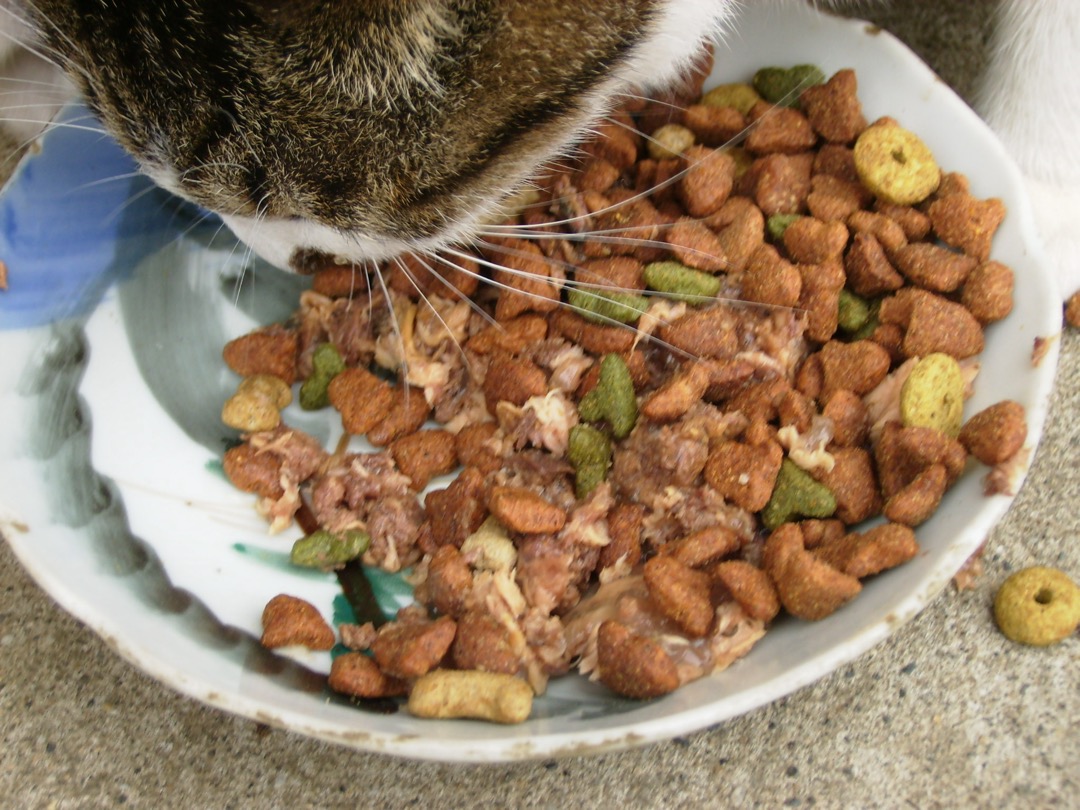
The wet-versus-dry argument is usually presented as though one camp is right and the other is feeding their cat badly. That is not how it looks from an exam room. I have healthy fifteen-year-olds who have eaten nothing but kibble, and I have cats on premium canned food who are overweight and blocked.
What the marketing never explains is what actually separates the two. They are not competing nutritional philosophies. They differ in one measurable way: how much water is in the can or the bag. Everything argued about downstream (calories, carbohydrate, cost, teeth, kidneys, whether you can leave a bowl out) follows from that single number.
The Short Answer
- A mix suits most healthy adult cats. Wet at meals for the water, measured dry for cost, convenience, and enrichment.
- Wet food wins for any urinary history, for weight loss, for seniors with dental pain or a fading appetite, and for cats who barely drink.
- Dry food wins when money is tight, when nobody is home at mealtimes, and when you want to feed through a puzzle or a timed feeder.
- Dry food does not clean teeth. Ordinary kibble has no meaningful effect on gum disease. A VOHC-accepted dental diet is a different product class, and it does work.
- Cost is a per-calorie question, not a per-can question.
- Neither format treats kidney disease. A diagnosed kidney cat needs a therapeutic renal diet, which is a separate decision.
The Only Real Difference: Water
Canned and pouched food runs roughly 70 to 85 percent moisture. Kibble runs roughly 6 to 10 percent. The arithmetic follows from there.
Water has no calories and takes up space. When three quarters of a food is water, the fat and carbohydrate that carry energy have only the remaining quarter to occupy. That is why wet food lands around 0.8 to 1.5 calories per gram while dry sits at roughly 3 to 4. A tablespoon of kibble and a tablespoon of pâté look like comparable amounts of food and are nothing of the sort. That single fact causes more accidental overfeeding than anything else I discuss at annual visits, which is why I keep the portion math separate from the format question.
The second-order consequence matters more. A cat on canned food takes in most of its daily water with its meals, without ever visiting a bowl. A cat on kibble has to cover that deficit by drinking, and cats are unreliable drinkers: the domestic cat descends from a small desert predator that got its water from prey, and the thirst drive still reflects that. Dry-fed cats drink more than wet-fed cats and still end up with lower total intake and more concentrated urine. The margin for error is narrower. Many cats drink noticeably more from moving water, which is why a cat water fountain is the first thing I suggest to dry-feeding clients.
Head to Head
| Wet food | Dry food | |
|---|---|---|
| Moisture | Roughly 70 to 85% | Roughly 6 to 10% |
| Calories per gram | Roughly 0.8 to 1.5 | Roughly 3 to 4 |
| Carbohydrate, dry matter basis | Commonly under 10% | Commonly 30 to 40% |
| Hydration contribution | Most of daily water | Minimal |
| Cost per calorie | Several times higher | Lowest of any format |
| Shelf life once opened | Two days, refrigerated | Weeks in the sealed bag |
| Safe to leave out | No, one to two hours at most | Yes |
| Free feeding | Not compatible | Compatible |
| Automatic feeders | Chilled feeders only | Any feeder |
| Effect on teeth | None | None, unless VOHC-accepted |
| Palatability for picky eaters | Usually higher | Usually lower |
| Weight management | Easier, more volume per calorie | Harder, easy to overfeed |
| Health monitoring value | High, intake is visible | Low, grazing hides changes |
Three rows do most of the deciding: hydration, calories per gram, and cost per calorie. The rest are conveniences, and conveniences are legitimate reasons to choose a food.
When Wet Food Is the Better Choice
Hydration and lower urinary tract health
Feline idiopathic cystitis and the crystal and stone problems alongside it are influenced by how dilute the urine is. More water through the gut means less concentrated mineral and less irritant sitting against the bladder wall. For a male cat with any history of straining, blood in the urine, or a previous obstruction, I recommend canned food without much hedging. Blockage is one of the few true emergencies in feline practice, and water intake is one of the few levers an owner controls at home. My roundup of the best wet cat foods flags moisture and texture on every pick, since a cat who refuses pâté will often eat shreds in gravy.
Weight management
More than half the cats I see carry extra weight, and calorie density drives most of it. At around one calorie per gram, a wet-fed cat gets a physically larger meal for the same calories, and volume in the stomach is part of what makes a cat feel fed. Higher protein preserves lean muscle while fat comes off. The portioning side is in my guide to how much wet food to feed a cat.
Picky eaters, seniors, and cats with dental pain
Cats decide a food is worth eating largely by smell, and canned food at room temperature releases far more aroma than kibble. For an older cat with a fading appetite, resorbed teeth, or missing molars, that is often the gap between eating and not eating. It matters after dental surgery too.
When Dry Food Is the Better Choice
Cost, shelf life, and free feeding
Dry food is the cheapest complete nutrition available for a cat, which is no small thing in a multi-cat home, and it keeps: an open bag stays good for weeks, an open can for two days. I would far rather see a cat on well-portioned kibble than on canned food the owner cannot keep buying, and my picks for the best dry cat foods prioritise protein content for that reason.
Dry is also the only format that tolerates sitting out. If you work long shifts, an automatic cat feeder gives you portion control without needing anyone home at mealtimes. A cat fed four small measured portions by machine is usually better off than one fed two large ones because that is when a human was available.
Puzzles and enrichment
Kibble is the only cat food you can put inside a puzzle, roll across a floor, or hide around a room. Indoor cats are hunting animals with nothing to hunt, and making them work for part of their food is one of my more effective interventions for boredom eating and night-time yowling. Run part of the day’s dry ration through a puzzle rather than adding it on top, and count treats inside the daily total for the same reason.
The Dental Myth, Properly Buried
Cats have carnassial teeth built for shearing, not grinding, and they crush most kibble on first contact. The piece shatters, so there is no sustained abrasive contact. Where the tooth does penetrate a kibble, it penetrates at the tip, the part of the tooth least prone to disease. The gumline, where plaque calcifies and where periodontitis actually starts, is untouched.
The WSAVA Global Dental Guidelines are clear that standard dry diets should not be relied on to reduce periodontal disease risk. Most cats over three have some periodontal disease regardless of what they eat, and what changes that is toothbrushing, professional cleaning under anaesthetic, and proven dental products.
The exception is worth stating precisely. Diets accepted by the Veterinary Oral Health Council (VOHC) are engineered for the job: the kibble is much larger than normal, so the tooth sinks in before the piece fractures, and the fibre inside is aligned so it wipes along the tooth surface. Those work. That is a specific product class, identified by the VOHC seal, not a property of dry food.
Kidneys, Urinary Tract, and the Nuance Nobody Mentions
The dilution benefit of wet food is real, and I have already made that case. Here is the part left out of nearly every article on this subject.
Wet food is not automatically kidney-friendly. Many canned foods run higher in sodium and phosphorus than the dry foods beside them on the shelf, partly because salt drives palatability and partly because fish and organ-heavy recipes carry a lot of phosphorus. In a cat with normal kidneys that is fine. In chronic kidney disease, dietary phosphorus restriction has some of the clearest evidence for slowing progression, and a high-phosphorus canned food works directly against it.
So a CKD cat does not need “wet food”. It needs a therapeutic renal diet, phosphorus-restricted and protein-moderated, prescribed and monitored by a vet. Those come in both canned and dry form, and the canned version is usually preferable for the water. The decision is which diet, not which format, and choosing a premium canned food over a therapeutic dry one is a mistake I see made with good intentions several times a year.
The Carbohydrate and Diabetes Question
Dry food is high in carbohydrate for a manufacturing reason. Extrusion needs starch to gelatinise and hold the piece together, so you cannot make a conventional kibble without it. Most dry cat foods land around 30 to 40 percent carbohydrate on a dry matter basis, while most canned formulas sit under 10 percent. Grain-free kibble is usually no lower, since peas and potato replace the grain but not the starch.
Cats are obligate carnivores adapted to low-carbohydrate food, and that fact gets used to support a bigger claim than the evidence carries. Here is where I draw the line.
Well supported: in cats with diagnosed diabetes, a high-protein, low-carbohydrate diet improves glycaemic control, lowers insulin requirements, and improves the odds of remission. This is standard of care, and I recommend canned food to essentially every diabetic cat I manage.
Not well supported: that dry food causes diabetes. The strongest identified risk factors are obesity, inactivity, being male, and being neutered. Dry food contributes to obesity through calorie density and free feeding, which suggests the mechanism is the calories rather than the carbohydrate. I would not tell a client their kibble gave their cat diabetes, because the data does not let me.
How to Feed Both (the ratio I actually give clients)
Most of my patients do best on a combination, and the Cornell Feline Health Center guidance of roughly half the diet as wet food is a sensible target. How I set it up:
- Work out the daily calorie total first. Not cans, not cups, calories. The arithmetic is in my guide to how much to feed a cat.
- Split it, starting at fifty-fifty. Shift toward wet for a urinary or weight problem, toward dry for cost or coverage.
- Read both labels. The calorie statement is printed as kcal per can and kcal per cup. Two similar-looking cans can differ by forty calories.
- Serve the wet portion as meals, morning and evening, and lift the bowl after an hour.
- Measure the dry portion into a puzzle or feeder as part of that total, never as an extra bowl on top. That is how combination feeding quietly becomes overfeeding.
Use separate bowls unless mixing is what gets a reluctant cat eating. Mixed food goes stale faster and leaves you throwing away kibble that has sat in gravy.
Life Stage Changes the Answer
Kittens need two to three times an adult’s calories per pound, so calorie density is on dry food’s side and kibble is a fine part of a growth diet. What I care about more is texture exposure. Cats fix food preferences young, and a kitten raised only on kibble is often the eight-year-old who refuses canned food on the day a urinary problem makes it necessary. Either way the food must be labelled for growth or all life stages, which is what my kitten food picks screen for.
Adults are the flexible middle where the fifty-fifty split fits most cleanly. The failure mode here is drift: half a can too much every day is invisible week to week and shows up as a much heavier cat a year later.
Seniors tilt toward wet, for reasons that stack. Thirst drive weakens further with age, chronic kidney disease becomes common past ten, dental disease makes chewing painful, and many older cats lose muscle and need protein that is easy to eat.
Storage and Food Safety
An opened can goes in the fridge, covered, and is used within about two days. Cold food is harder to smell, so let the portion sit out a few minutes or add a spoon of warm water. Wet food should not stay in the bowl longer than an hour or two, and less in a warm room. The most useful trick I pass on is portioning a large can into an ice cube tray and freezing it: one cube is roughly a meal for a small cat, and it turns an economical large can into single servings with no waste.
For kibble, keep the bag inside the storage container rather than pouring the food loose. The bag has a fat barrier in its lining that plastic bins lack, and it carries the lot code and date you would need in a recall. Fat is the part that goes rancid, and rancid fat is both unpalatable and destructive to the vitamins in the food, so buy a bag size your cat finishes within a month of opening.
What This Costs You
Compare cost per calorie, not cost per can. That one change makes the whole picture legible, and it is the comparison no label invites you to make. Because wet food is mostly water, you are buying far fewer calories per unit of packaging than the shelf price suggests. Feeding a cat entirely on canned food typically costs several times what feeding the same cat entirely on kibble costs, and the multiple holds across price tiers. A fifty-fifty split lands in the middle, which is part of why I recommend it so often: it buys most of the hydration benefit at a fraction of the increase. Larger cans cost less per calorie than single-serve ones, and the ice cube tray removes the waste that pushes people toward expensive small sizes. My roundup of the best cat foods sorts picks by what they deliver per calorie rather than by shelf price.
My Recommendation by Household
| Your situation | What I recommend |
|---|---|
| One healthy adult cat | Roughly half wet, half dry, both measured |
| Multi-cat household | Wet at scheduled meals, dry measured per cat, no shared free-fed bowl |
| Kitten | Either format, both textures offered early, growth-labelled food |
| Senior cat | Mostly wet, warmed, in smaller frequent meals |
| History of urinary blockage or crystals | Wet, as close to exclusively as your cat accepts |
| Diagnosed chronic kidney disease | Therapeutic renal diet, canned version preferred |
| Diabetic cat | High protein, low carbohydrate, which in practice means canned |
| Overweight cat | Wet-led, portioned by calories, dry ration through a puzzle |
| Picky eater | Wet, warmed slightly, with texture variety |
| Owner away long hours | Dry through a timed feeder, wet meals when you are home |
| Tight budget | Good dry food measured properly, plus one small wet meal a day if you can |
That last row is the one I get asked about most, and it is not a reluctant compromise. One small canned meal a day gives you the hydration contribution and keeps your cat used to the texture in case they ever need it.
Frequently Asked Questions
Do vets recommend wet or dry food, or a mix?
Most feline vets, including me, recommend a mix for healthy adult cats, with roughly half the daily calories from wet food. That captures the hydration benefit while keeping cost manageable. Vets tilt strongly toward wet for urinary cases, diabetics, overweight cats, and most seniors. There is no professional consensus that dry food harms a lean, correctly fed cat.
Is it okay to feed a cat wet food every day?
Yes. Wet food meeting AAFCO complete and balanced standards for your cat’s life stage is nutritionally complete, and feeding it every day as the entire diet is fine. The constraints are practical: cost, the need to serve it as meals rather than leave it out, and the two-day fridge limit on an opened can.
Can a cat live on dry food only?
Yes, and millions do. A complete dry food provides everything a cat needs nutritionally; the concern is water intake. A dry-fed cat must cover its entire water requirement by drinking, so urine tends to be more concentrated. Provide several water sources and watch for straining, frequent box trips, or changes in urine volume.
Does dry food actually clean cats’ teeth?
No. Standard kibble shatters when a cat bites it, so there is no sustained scraping, and the tooth penetrates only near the tip, well away from the gumline where periodontal disease begins. The WSAVA Global Dental Guidelines state that ordinary dry diets should not be relied on to reduce periodontal disease risk. VOHC-accepted dental diets, with oversized fibre-aligned kibble, are the genuine exception.
Is dry food bad for a cat’s kidneys?
Dry food does not cause kidney disease. It does leave a cat with more concentrated urine, which is a risk factor for urinary problems and gives less margin in a cat whose kidneys are already struggling. In diagnosed chronic kidney disease the variable that matters is phosphorus restriction, which means a therapeutic renal diet rather than any canned food.
Do cats live longer on wet food?
There is no good evidence that wet food by itself extends lifespan, and I would be cautious of anyone who says otherwise with confidence. What is better supported is that it helps with things that shorten lives indirectly: obesity, urinary blockages, and poor hydration. A lean, well-hydrated cat on any format is in a better position than an overweight one on the theoretically correct diet.
What are the disadvantages of wet cat food?
Cost is the main one, since you pay several times more per calorie than for dry. It cannot be left out, so it does not suit households where nobody is home at mealtimes, and an opened can keeps only about two days refrigerated. Some cats develop a strong preference and become difficult to feed anything else afterwards.
How much wet food should I mix in if my cat mostly eats dry?
Work in calories rather than volume, because they are nowhere near equivalent by weight. Start at a quarter to a third of the daily calorie target from wet, read the kcal per can figure, and reduce the kibble by the same number of calories. The full arithmetic is in my guide to how much wet food to feed a cat.
Is wet or dry food better for kittens?
Either works, as long as the food is labelled for growth or all life stages. Kittens need two to three times an adult’s calories per pound, so calorie-dense kibble is convenient, while wet food supports hydration. Feed both from the start, because cats fix texture preferences early and a kitten raised only on kibble often refuses canned food years later.
Is wet food better for an overweight cat?
Usually yes. Wet food carries roughly one calorie per gram against dry food’s three to four, so the same calorie allowance produces a physically much larger meal, and stomach volume is part of what makes a cat feel fed. Weight loss still comes down to portioning by calories and feeding to ideal weight rather than current weight, and it must be gradual, since rapid weight loss in cats can cause serious liver problems.
Related Articles
About the Reviewer

Dr. Priya Anand, DVM, ABVP (Feline)
DVM, Cornell University College of Veterinary Medicine
Dr. Priya Anand is a veterinarian board-certified by the ABVP in Feline Practice, with over a decade caring for cats in a feline-exclusive clinic. She has guided thousands of cat owners through nutrition, litter-box troubleshooting, enrichment, and senior-cat care. She founded House of Mittens in 2026 to cut through pet-aisle marketing and recommend the food, litter, and gear that actually keep cats healthy and happy — judged the way she'd advise her own patients.