Clumping vs Non-Clumping Cat Litter: A Vet's Honest Comparison
Feline veterinarian Dr. Priya Anand, DVM compares clumping and non-clumping cat litter on odor, cost, dust, and safety — including the kitten ingestion question, what clumps tell you about your cat's health, and the five situations where non-clumping is genuinely the better choice.
Updated
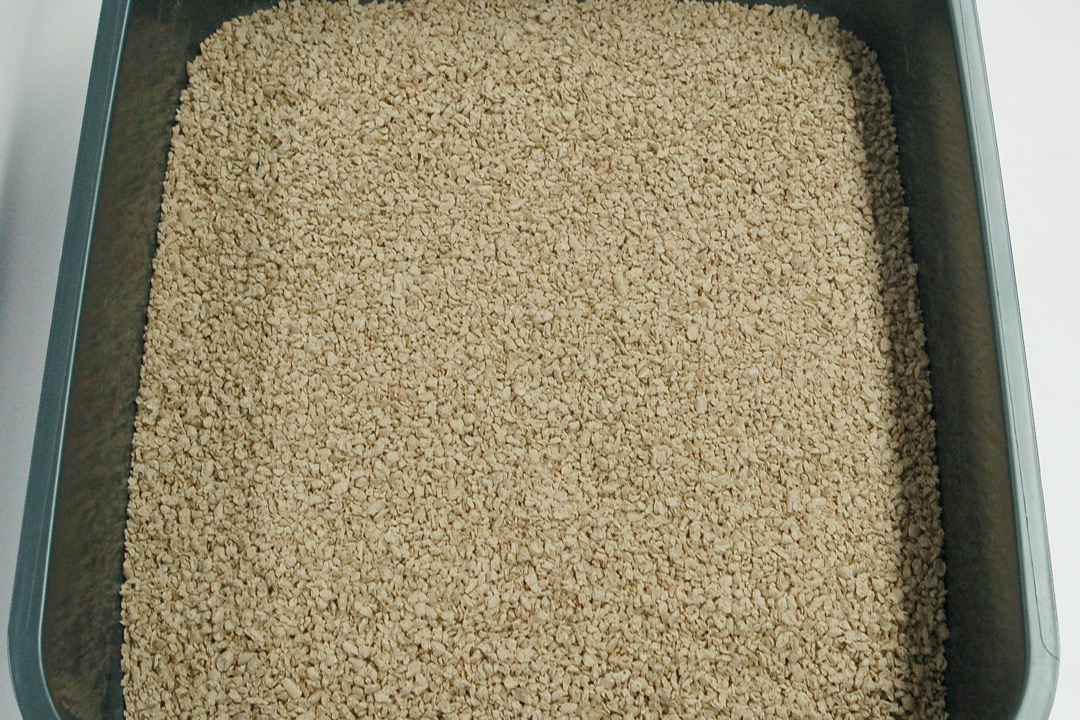
Most of the litter debate online is argued as though one type is correct and the other is a mistake people make out of ignorance. That is not how it looks from an exam room. I have clients whose cats thrive on cheap non-clumping clay and clients who have tried six premium clumping litters and still have a cat urinating on the bath mat. The litter that is right is the one that fits the cat in front of me, and that answer changes with the cat’s age, health, and household.
What I can do is take away the guesswork about what these two categories actually are, because the marketing obscures it badly. “Clumping” and “non-clumping” are not materials. They describe one specific behaviour: what happens to urine once it hits the bed. Everything people argue about downstream — odor, cost, dust, kitten safety, whether your automatic box will work — follows from that single mechanical difference. Once you understand it, the choice mostly makes itself.
The Short Answer
For readers who want the verdict before the reasoning:
- For most healthy adult cats, clumping litter is the better default. It lets you remove urine daily instead of letting it sit, which is better for odor, better for your cat’s willingness to use the box, and better for spotting illness early.
- Non-clumping is the right call for kittens under roughly three to four months, for cats recovering from abdominal surgery, and for the minority of cats who genuinely refuse clay textures.
- Clumping is more expensive per bag and frequently cheaper per month, because you remove waste rather than dumping good litter along with it.
- Automatic litter boxes require clumping litter. The rake mechanism has nothing to lift out of non-clumping litter.
- Neither type fixes a box problem. If your cat is avoiding the box, litter is one of five or six variables, and box size and cleanliness usually matter more.
The Only Real Difference: What Happens to Urine
Everything else in this comparison is downstream of one thing.
Clumping litter is built around sodium bentonite, a clay that swells to many times its dry volume when it gets wet and binds neighbouring granules into a solid mass. Urine hits the bed, the clay swells around it, and within minutes you have a discrete lump you can lift out whole. Some plant-based litters — corn, wheat, tofu, certain walnut blends — achieve the same effect with plant starches and gums rather than clay, but the working principle is identical: the waste becomes a removable object.
Non-clumping litter absorbs urine and holds it without binding. The liquid soaks down and spreads through the bed, usually reaching the floor of the box. There is no lump to remove, so what you take out daily is stool only, and the urine stays in the box until you dump the entire contents. Traditional non-clumping clay works this way, as do silica crystals, paper pellets, and most wood pellets.
That distinction matters more than the material it is made from, and it is the part most comparisons skip. A corn litter and a clay litter can both clump; a clay litter and a paper litter can both fail to. When you are standing in the aisle, read for the behaviour, not the ingredient.
Head to Head
| Clumping | Non-clumping | |
|---|---|---|
| Urine removal | Daily, as scoopable clumps | Not possible — stays in the bed |
| Odor control | Better, because urine leaves the box | Degrades as the bed saturates |
| Full change interval | Every two to four weeks (one cat) | Every three to seven days |
| Cost per bag | Higher | Lower |
| Cost per month in use | Often lower | Often higher, from frequent full dumps |
| Dust | Varies widely; clay can be dusty | Varies widely; pellets are lowest |
| Tracking | More, with fine-grain clay | Less with pellets, similar with clay |
| Bag weight | Heavy | Lighter for pellets, similar for clay |
| Automatic box compatible | Yes | No |
| Health monitoring | Excellent — clumps are measurable | Poor — urine output is invisible |
| Kittens under four months | Not recommended | Recommended |
| Post-abdominal surgery | Not recommended | Recommended (shredded paper) |
The two rows that decide it for most households are odor control and health monitoring, and both are worth explaining properly because both are routinely misrepresented.
Odor Control: Why Clumping Usually Wins
Litter box odor is ammonia, and ammonia comes from urea in urine being broken down by bacteria. The smell therefore tracks one variable above all others: how long urine stays in the box.
With clumping litter and a daily scoop, urine spends a matter of hours in the bed before it leaves in a sealed bag. With non-clumping litter, that same urine sits in the box for the entire change interval, breaking down the whole time, no matter how diligently you scoop stool out. This is why an odor-control additive or a heavy fragrance on a non-clumping litter is fighting a losing battle — it is masking a source that is still sitting there.
There is a real counterargument, and I hear it from clients who prefer non-clumping: a fresh non-clumping bed can smell better than a poorly maintained clumping bed, because a weak clumping litter that shatters when you lift it leaves urine-soaked crumbs behind with every scoop. That is a genuine failure mode, and it is an argument about clumping strength, not about the category. A litter that forms a hard clump you can lift intact is doing the job; one that crumbles is giving you the worst of both approaches. Clump strength varies enormously between products, which is most of what I am assessing when I compare litters in my roundup of the best cat litters.
The other honest point in non-clumping’s favour is that heavy fragrance is a bigger problem than most owners realise, in either category. Cats have a far more sensitive nose than we do, and scented litter is one of the more common reasons a cat quietly starts avoiding an otherwise clean box. If you are choosing between a scented clumping litter and an unscented non-clumping one, the unscented option is often the better bet for the cat.
What a Clump Tells You That a Wet Bed Cannot
This is the argument I care about most, and it almost never appears in these comparisons.
A litter box is the single best home monitoring device you own for feline urinary and kidney health. Cats hide illness with great skill, and by the time an owner notices weight loss or lethargy, a kidney problem has usually been developing for a long time. Urine output is one of the earliest measurable signals, and clumping litter turns it into something you can literally count and weigh in your scoop each morning.
Here is what I ask clients to watch for, all of which requires clumps:
- Clumps getting noticeably larger or more numerous over weeks is increased urine production. In an older cat this is a leading early sign of chronic kidney disease, and in any cat it can point to diabetes or hyperthyroidism. It is worth a vet visit before anything else changes.
- Many very small clumps scattered through the box, especially from a cat making frequent trips, suggests lower urinary tract disease. In a male cat, straining with little or no output is an emergency — a urethral obstruction can be fatal within a day or two.
- A pinkish tinge to a clump is blood, and blood in urine is never normal.
- A sudden drop in clump count matters just as much as an increase, and is easy to miss.
With non-clumping litter, all of that information dissolves into a uniformly damp bed. You would notice a cat straining, if you happened to be in the room, but you would have no way to see the gradual doubling of urine volume that gives you a six-month head start on kidney disease.
This is also why I am relaxed about the extra scooping that comes with feeding a moisture-rich diet. Cats are descended from desert animals and drink poorly by choice, so most of their water should ideally arrive in their food. Cats eating canned food produce more dilute urine, which is genuinely protective against the crystals and blockages that fill emergency appointments — the trade is bigger clumps, which I will take every time. If that is a direction you are considering, my roundups of the best wet cat foods cover formulas and textures, and a cat water fountain is worth trying for dry-fed cats, since many drink substantially more from moving water.
The Kitten Question, Answered Honestly
The standard advice is that kittens should not use clumping litter, and I do give that advice. But the reasoning deserves more care than it usually gets, because the internet states it with a confidence the evidence does not quite support.
The concern is that a young kitten who mouths and swallows clumping clay could have that clay swell and bind in the digestive tract. The claim traces back largely to a magazine article from the 1990s, and there is no controlled study demonstrating that clumping litter causes intestinal obstruction in kittens. Plenty of kittens have grown up on clumping litter without incident.
So why do I still recommend against it? Because the precaution costs essentially nothing and the downside it guards against is severe. Kittens under about three months explore by tasting, they are messy and inaccurate in the box, and they are small enough that a small obstruction is a big problem. Non-clumping clay or paper pellets work perfectly well for a kitten who is learning, and the box needs dumping every few days at that age anyway because a kitten will make a mess of it. When they stop mouthing the litter and their aim improves, typically somewhere between three and four months, switching to clumping is straightforward.
If you are at that stage, the litter is only one part of getting it right — box height, location, and the number of boxes matter as much for a kitten as the substrate. I walk through the whole sequence in my guide to litter training a kitten, and the growth-stage nutrition that runs alongside it in my roundup of the best kitten foods.
Five Situations Where Non-Clumping Is the Better Choice
Setting kittens aside, there are legitimate reasons to reach for non-clumping litter, and I recommend it in these cases without hesitation.
After abdominal surgery. For the first week or two after a spay, neuter, or any abdominal procedure, fine granular litter can stick to the incision and work its way in. Shredded paper or paper pellets are the standard recommendation for that window. Follow whatever your surgeon specifies, and go back to your normal litter once the site has healed.
Cats with feline asthma or chronic airway disease. Dust is a genuine trigger, and the lowest-dust options available are pellets, which are almost always non-clumping. A low-dust clumping litter is often fine, but if you have a cat with diagnosed airway disease, a pellet litter removes the variable entirely. This applies to allergic and asthmatic humans in the household too.
Cats who refuse clay outright. A minority of cats have a firm texture preference and will not reliably use a clay bed. Cats generally prefer fine, sand-like substrates, but “generally” is not “always”, and a cat who is using a pellet box happily is telling you something more useful than any study can. Do not fight a working arrangement.
Foster and shelter settings. Non-clumping is cheaper up front, the whole box gets dumped and disinfected between animals regardless, and with a rotating population there is no individual monitoring benefit to give up. This is why so many shelters use it, and it is a sound decision for their situation rather than an endorsement for yours.
Collecting a urine sample. If your vet has asked for a home-collected sample, neither type works — you need a non-absorbent collection product, which is a specific hydrophobic bead or plastic granule sold for the purpose. Ask your clinic rather than improvising, and never try to squeeze a sample out of a clump.
Dust, Tracking, and the Weight of the Bag
The practical annoyances rarely follow the clumping line as cleanly as people assume.
Dust is a property of grain size and processing, not of clumping. There are very dusty non-clumping clays and very low-dust clumping clays. What is reliably true is that pellet litters produce the least airborne dust of anything on the shelf, and pellets are almost always non-clumping. Pour any litter slowly and close to the bed, whichever you buy.
Tracking favours pellets for the same reason: large particles are too heavy to ride out on a paw. Fine-grained clumping clay is the worst tracker, which is a real cost to weigh against its other advantages. A large mat outside the box recovers most of the difference — my thinking on box design, entry height, and containment is in my roundup of the best cat litter boxes.
Weight is worth mentioning because it changes what people actually buy over time. Clumping clay is dense and the bags are heavy, which matters if you are carrying it upstairs or ordering it repeatedly. Paper and wood pellets are dramatically lighter for the same box volume. Lightweight clumping clays exist and solve some of this, though they tend to track more.
The Cost Question
Non-clumping litter is cheaper per bag. It is frequently more expensive per month, and the reason is straightforward arithmetic about what leaves the box.
With clumping litter, what you remove each day is waste. The rest of the bed stays in service, and a full change happens every two to four weeks for a single cat. With non-clumping litter, you cannot remove urine, so every three to seven days you dump the whole box — including a large volume of perfectly clean litter that never got used. You are paying less per pound to throw away more pounds.
The gap narrows in a multi-cat household, where every box saturates faster regardless of type, and it can reverse for very cheap non-clumping clay if you are strict about your routine. But for the typical one or two cat home, the monthly cost is closer than the shelf price suggests, and my experience is that owners who switch to a strong clumping litter usually find they are buying litter less often, not more. Either way, plan the timing around your actual routine rather than the bag’s claims — I break down realistic change intervals by litter type and cat count in my guide to how often to change cat litter.
Can You Mix Clumping and Non-Clumping Litter?
No, and this comes up often enough to answer directly.
Mixed beds produce clumps that hold together just well enough to look scoopable and then fall apart in the scoop, spraying urine-soaked crumbs back into the bed. You lose the clean removal that makes clumping worth doing, and you lose the honest full-dump discipline that makes non-clumping workable. The result is the least hygienic version of both.
The one legitimate exception is a deliberate, temporary mix during a transition, which I cover below. That is a controlled process over about a week, not a permanent arrangement.
If You Own an Automatic Box, the Decision Is Made
Self-cleaning boxes rake or sift waste into a sealed compartment a few minutes after the cat leaves, and that mechanism needs a solid object to move. Non-clumping litter gives it nothing to lift — the urine has already dispersed, and the rake passes through a wet bed and pushes damp granules around.
So if you are running an automatic box, you need clumping litter, and specifically a hard-clumping one. A litter that shatters under a rake leaves residue that builds up on sensors and in the mechanism, which is behind a good share of the complaints people have about these units. If you are still choosing a unit, I compare the mechanisms, capacities, and litter requirements in my roundup of the best automatic litter boxes, and the maintenance routine that keeps any box from souring is in my guide to cleaning a litter box.
How to Switch Without a Protest
Cats form substrate preferences early and hold them, so an abrupt switch is one of the more reliable ways to trigger house-soiling. Take a week.
- Start at about one quarter new litter mixed into three quarters of the old, keeping the total depth at two or three inches.
- Move to half and half on day three or four, provided your cat is using the box normally.
- Go to three quarters new by day five or six.
- Complete the switch after about a week.
- If your cat hesitates at any stage — perching on the rim, shaking paws, scratching outside the box, or eliminating elsewhere — drop back to the previous ratio for several days before trying again.
The safer version, if you have space, is to offer both: put a second box with the new litter next to the existing one and let your cat choose. Cats vote clearly with their feet, and this method never risks a house-soiling habit forming. It is also the standard recommendation anyway, since the general guidance is one box per cat plus one spare.
My Recommendation by Household
| Your situation | What I recommend |
|---|---|
| One or two healthy adult cats | Hard-clumping, unscented, low-dust |
| Kitten under three to four months | Non-clumping paper pellets or plain clay |
| Multi-cat home | Clumping, without exception — daily urine removal is doing the heavy lifting |
| Senior cat, or any kidney or urinary history | Clumping, so you can monitor output |
| Cat with feline asthma | Low-dust pellets, or a proven low-dust clumping litter |
| First two weeks after abdominal surgery | Shredded paper, then back to normal |
| Automatic litter box | Hard-clumping only |
| Cat who refuses clay | Whatever they will reliably use |
| Pregnancy in the household | Clumping, with someone else scooping daily if possible |
That last row deserves a note, since it is a question I get regularly. Toxoplasma oocysts shed in cat feces are not infectious the moment they are passed — they need roughly one to five days to become so. Removing stool from the box every single day therefore removes it before it can pose a risk, which is a strong argument for a setup you will actually maintain daily. If someone who is pregnant or immunocompromised must scoop, gloves and thorough handwashing afterwards are the standard precautions, and it is worth raising with their doctor as well.
Frequently Asked Questions
Is clumping or non-clumping litter better?
For most healthy adult cats, clumping is better, because it lets you physically remove urine every day rather than leaving it in the box until the next full change. That single difference drives better odor control and gives you a daily window on your cat’s urinary health. Non-clumping is the better choice for kittens under three to four months, for cats recovering from abdominal surgery, for cats with airway disease that needs a low-dust pellet, and for any cat who simply will not use clay.
Do vets recommend clumping cat litter?
For adult cats, generally yes, and the monitoring benefit is the reason. Clumps let you track how much your cat is urinating, and changes in urine volume are among the earliest signs of kidney disease, diabetes, and lower urinary tract problems. The main exceptions where I recommend against it are kittens young enough to still be mouthing litter and cats within a couple of weeks of abdominal surgery.
Why do shelters use non-clumping cat litter?
Cost and turnover. Non-clumping is cheaper per bag, the entire box is dumped and disinfected between animals regardless of litter type, and with a constantly changing population there is no individual health-monitoring benefit to lose. Those conditions do not describe a normal home, so it is a sound decision for shelters rather than a recommendation for your cat.
Is clumping litter dangerous for kittens?
The risk is that a kitten who swallows clumping clay could have it swell in the digestive tract. There is no controlled study proving this happens, and the claim originates largely from a magazine article in the 1990s, so the evidence is thinner than the internet suggests. I still recommend non-clumping for kittens under about three to four months, because the precaution costs nothing and young kittens genuinely do taste their litter while learning.
Can I mix clumping and non-clumping litter?
Not as a permanent arrangement. A mixed bed forms weak clumps that break apart in the scoop, so urine-soaked crumbs fall back into the box and you lose the clean removal that makes clumping worthwhile. The only time to mix is a deliberate transition over about a week when you are deliberately changing litters.
How often do you change non-clumping litter?
Completely, every three to seven days for one cat, and more often with multiple cats or if the box smells before then. Because urine cannot be scooped out, it accumulates in the bed from the moment the box is filled, so the schedule is set by saturation rather than by appearance. Remove stool daily throughout.
Does clumping litter control odor better?
Usually, and for a mechanical reason rather than a chemical one. Litter box odor is ammonia produced as urine breaks down, so odor tracks how long urine stays in the box. Clumping plus a daily scoop means hours; non-clumping means the entire change interval. The exception is a weak clumping litter that crumbles, which leaves urine behind and can smell worse than a well-maintained non-clumping box.
Which litter is cheaper overall?
Non-clumping is cheaper per bag and often more expensive per month. With clumping litter you throw away waste and keep the clean litter in service. With non-clumping you dump the entire box every few days, including a large volume of unused litter. In most one and two cat homes the monthly difference is much smaller than the shelf price implies.
Is non-clumping litter less dusty?
Not automatically. Dust depends on grain size and processing rather than on clumping, and there are dusty non-clumping clays and low-dust clumping clays. What is consistently true is that pellet litters — paper and wood, which are non-clumping — produce the least airborne dust of anything available, which is why they are my first suggestion for a cat with asthma.
Will non-clumping litter work in a self-cleaning box?
No. Automatic boxes rake or sift solid clumps into a waste compartment, and non-clumping litter never produces one. The rake simply drags through a damp bed. Use a hard-clumping litter in any automatic box, and avoid weak-clumping products, which leave residue on the mechanism and sensors.
Related Articles
About the Reviewer

Dr. Priya Anand, DVM, ABVP (Feline)
DVM, Cornell University College of Veterinary Medicine
Dr. Priya Anand is a veterinarian board-certified by the ABVP in Feline Practice, with over a decade caring for cats in a feline-exclusive clinic. She has guided thousands of cat owners through nutrition, litter-box troubleshooting, enrichment, and senior-cat care. She founded House of Mittens in 2026 to cut through pet-aisle marketing and recommend the food, litter, and gear that actually keep cats healthy and happy — judged the way she'd advise her own patients.