7 Best Cat Litters of 2026
Feline veterinarian Dr. Priya Anand, DVM reviews the 7 best cat litters of 2026 — clumping, tofu, and unscented options ranked by dust, odor control, and clinical safety.
Updated

I have spent years in feline practice, and few topics generate as many exam-room questions as litter. Owners arrive convinced their cat is “being difficult,” when in nearly every case the cat is communicating something specific about the box, the location, or the litter itself. Choosing the right cat litter is not a cosmetic decision about which bag smells nicest on the shelf — it is a health and behavioral decision that affects your cat’s respiratory tract, urinary health, and likelihood of using the box reliably for the rest of its life. The best cat litter is the one that keeps the box clean enough that your cat keeps using it, with the lowest dust and the least fragrance your household can live with.
For this roundup I evaluated seven litters across the factors I actually counsel owners on in the clinic: litter type, clumping ability, dust level, odor-control mechanism, the scented-versus-unscented question, and multi-cat suitability. The lineup spans premium unscented clumping clay, the strongest budget odor control, plant-based tofu, and a tofu-clay hybrid — so whether you are managing an asthmatic senior, a curious kitten, or a busy three-cat household, one of these is the right match. A cat’s litter needs shift with age, too — low-sided boxes for seniors, ingestion-safe litter for kittens — so if you’re not sure which life stage your cat is in, our cat age chart translates their age into human years and life stage in a tap. As you read, remember that litter sits inside a larger picture of feline care: a clean box pairs with the right health and wellness routine and an appropriate diet to keep your cat thriving. You can browse every litter and box option in our litter and litter box category as well.
Find the Best Cat Litter for Your Need
Jump straight to the litter that matches your situation:
- Overall best cat litters
- Best clumping cat litter
- Best for odor control
- Best for automatic litter boxes
- Best for multiple cats
- Best for kittens
- Best low-dust for asthma & allergies
- More by type & situation
How We Tested and Evaluated These Litters
Every litter in this roundup was selected on a verified, active Amazon listing with real owner-review volume, a meaningful clinical differentiator in media type or formulation, and a track record I could assess across multi-cat households. I read through owner reviews focused on the things that matter medically — clump integrity, dust, odor longevity, and whether cats actually accepted the litter — and I filtered everything through what I see in practice: the litter-aversion cases, the cystitis flares, the asthmatic cats coughing through a dusty bag. I deliberately weighted unscented, low-dust, hard-clumping formulas toward the top because that is the profile that protects feline health and box habits. Scented and specialty options are included where they earn their place, with a clear note on which cats should avoid them. The result is seven litters chosen to cover every common household need rather than to chase the flashiest marketing claim.
Best Cat Litters Overall
These are the full reviews, starting with the litter I trust most and working through the budget, upgrade, and specialty picks. Every litter below is reviewed once here; the use-case sections that follow simply point you back to the right pick for your situation.
Best Overall: Dr. Elsey’s Precious Cat Ultra Unscented Clumping Clay
Dr. Elsey’s Precious Cat Ultra is the litter I name most often in the exam room, and it earns the top spot for reasons that are clinical rather than cosmetic. The clumping performance is the foundation: this litter forms hard, fast-binding clumps that lift cleanly out of the box without crumbling or sticking to the bottom. That matters more than it sounds. A clump that holds together is a clump you can fully remove, and removing all of the urine every day is the single most effective thing you can do to control ammonia odor and keep a cat returning to a box it perceives as clean. Weak clumps leave urine soaked into the bed, where it festers and eventually drives a cat to look for somewhere else to go.
The second pillar is dust. This litter is engineered to be 99 percent dust-free, and dust is the variable I weight most heavily for any household with a respiratory-sensitive cat. Feline asthma and chronic bronchitis are inflammatory airway diseases, and a cat digs and covers many times a day — each time inhaling whatever the litter throws into the air. A near-dust-free clay means far fewer respirable irritant particles reaching the lower airways, which is exactly what an asthmatic or bronchitic cat needs. It is also a kindness to owners with their own dust sensitivities.
The third pillar, and the one owners most often resist before they understand it, is that this litter is completely unscented. Cats have roughly 200 million scent receptors to our 5 million, so a fragrance that reads as pleasant and faint to us can be overwhelming to a cat — and a documented contributor to litter-box avoidance. Unscented removes that risk entirely, which is why it is my default clinical recommendation. With more than 30,000 ratings behind it, it is also Amazon’s number one best seller in cat litter. The only real caveats are practical: it comes as an 18-pound bag rather than a bulk sack, so a busy multi-cat home will rebuy it more often, and the fine clay can track, which a litter mat and a little planning solve. For the overwhelming majority of cats, this is where I would start.

Dr. Elsey's Precious Cat Ultra Unscented Clumping Clay Cat Litter
by Dr. Elsey's
My default clinical recommendation -- hard-binding clumps for thorough scooping, 99 percent dust-free media that protects respiratory-sensitive cats, and an unscented formula that respects feline olfactory sensitivity.
Pros
- Forms exceptionally hard, fast-binding clumps that lift cleanly out of the box without crumbling -- a clump that holds together lets you scoop out every drop of urine, the single most effective way to control ammonia odor and keep a cat returning to a box it perceives as clean
- Engineered to be 99 percent dust-free, the feature I weight most heavily for any household with a cat that has feline asthma, chronic bronchitis, or a respiratory history -- low airborne dust means fewer irritant particles reaching the lower airways during digging and covering
- Completely unscented, the formulation I recommend by default in my practice -- cats have roughly 200 million scent receptors against our 5 million, and a litter that smells neutral to us can overwhelm a cat and contribute to litter-box avoidance
- Amazon's number one best seller in cat litter, backed by more than 30,000 ratings across multi-cat homes
Cons
- Sold as an 18-pound bag rather than a bulk sack, so a three- or four-cat household will be rebuying more often than with the bulk options here
- Fine clay granules can track onto smooth floors and ride out of the box on paws -- a litter mat largely solves this
Budget Pick: Fresh Step Odor Shield Multi-Cat with Gain
Fresh Step Odor Shield Multi-Cat is my budget recommendation because it is the least expensive litter on this list and still does the two things that actually matter. It solves the problem that pushes most owners toward overspending: ammonia odor in a multi-cat home. Ammonia Block technology targets that specific compound rather than layering perfume over it, and Fresh Step guarantees 15 days of odor control on the strength of it. For a household with three or more cats watching what it spends, that is the cheapest realistic path to keeping a box acceptable between scoops.
The clumping is genuinely good. ClumpLock technology locks liquid on contact and forms hard, tight clumps that scoop cleanly, which keeps daily maintenance fast and — importantly — ensures the soiled litter actually leaves the box instead of breaking apart and remaining behind. More than 50,000 ratings sit behind it, which is a deeper evidence base than most budget litters can show, and at the lowest price on this list it makes consistent daily scooping realistic for a busy household. Consistent scooping is what keeps a box acceptable to a cat.
I do want to be honest about who this litter is and is not for. It is a scented formula carrying added Gain fragrance, and while the ammonia work is real neutralization chemistry, that scent still rules it out for the cats I worry about most — those with a history of FLUTD, feline idiopathic cystitis, or any litter aversion. For those cats, the daily stress of a disliked scent is exactly the wrong variable to add, and I would point their owners to one of the unscented picks instead. The other honest caveat is size: at 14 pounds this is the smallest box on the list, so a three- or four-cat household will move through it quickly and may do better on cost per scoop with one of the bulk bags. For a healthy adult household that wants the lowest price of entry, though, it is hard to beat.

Fresh Step Odor Shield Multi-Cat Clumping Cat Litter with Gain (14 lb)
by Fresh Step
The cheapest way onto this list without giving up the fundamentals -- Ammonia Block neutralization for 15 days of multi-cat odor control and hard ClumpLock clumps, best for healthy adult cats without scent sensitivity.
Pros
- The lowest entry price of any litter on this list -- litter is a recurring purchase, and the cheapest bag that still clumps and controls odor properly is the one a budget-constrained multi-cat household will actually keep buying
- Ammonia Block technology targets ammonia specifically, the compound behind the sharp smell that develops in a multi-cat box and the one most likely to drive a cat away -- guaranteed for 15 days of odor control
- ClumpLock forms tight clumps that lock liquid on contact, so soiled litter lifts out whole instead of crumbling and staying behind
- Backed by more than 50,000 ratings, an unusually deep evidence base for a budget litter
Cons
- This is a scented litter carrying added Gain fragrance, and I would steer owners of cats with a history of FLUTD, idiopathic cystitis, or litter aversion toward an unscented option instead
- The 14-pound box is the smallest on this list, so a three- or four-cat household will get through it quickly and should compare the bulk options if storage allows
Upgrade Pick: pidan Tofu Cat Litter
The pidan tofu litter is the upgrade I recommend to owners who want a litter that is gentler on their cat, their plumbing, and the planet without giving up clumping. Made from natural pea fiber and plant starch, it is flushable in small amounts and fully biodegradable, which removes the disposal and landfill burden that comes with clay. Unlike many eco-friendly litters that ask you to sacrifice performance, this one forms cohesive plant-based clumps that hold together well enough to scoop, so you keep the waste-removal benefit of clumping clay without the clay itself.
Its standout clinical feature is near-zero dust. For a cat with feline asthma, chronic bronchitis, or any respiratory history, dust is the variable that matters most, and the plant pellets simply do not aerosolize the way fine clay does. This makes it one of the safest choices I can recommend for a respiratory-compromised cat, and it is equally kind to owners with their own sensitivities. It is also naturally unscented, which means it carries none of the fragrance risk that can trigger litter aversion.
The kitten safety angle is worth dwelling on. Young kittens explore by mouth and routinely swallow small amounts of litter while learning to dig and cover, and traditional clumping clay can be a hazard if ingested in quantity during that learning window. A food-grade pea-fiber litter is meaningfully safer for that stage of life — this is the kind of choice I encourage new kitten owners to make, alongside the rest of their early-care setup. The trade-offs are real but narrow: it costs more per pound than clay, and its odor control is weaker under heavy multi-cat loads, so it performs at its best in one- and two-cat homes. For those households, it is the most thoughtful litter on this list.

pidan Tofu Cat Litter (4-Pack)
by pidan
The premium plant-based upgrade -- flushable, near-zero dust, and food-grade pea fiber that is kinder to kittens, asthmatic cats, and the environment, best in one- to two-cat homes.
Pros
- Made from natural pea fiber and plant starch, flushable in small amounts and biodegradable -- it removes the disposal and landfill burden of clay while still clumping, a genuine upgrade for environmentally conscious owners
- Produces near-zero dust, one of the safest choices for cats with feline asthma or respiratory disease and for owners with their own dust sensitivities -- the plant pellets simply do not aerosolize the way fine clay does
- Naturally unscented and made from food-grade plant material, meaningfully safer for kittens, who explore by mouth and ingest small amounts of litter while learning to cover
- Forms cohesive plant-based clumps that hold together well enough to scoop, giving the waste-removal benefit of clumping clay without the clay
Cons
- Costs noticeably more per pound than clumping clay -- the trade-off for flushability, low dust, and a plant-based safety profile
- Odor control is weaker in heavy multi-cat use than dense clay litters, so it performs best in one- and two-cat homes
Runner-Up: Fresh Step Advanced Simply Unscented Multi-Cat
Fresh Step Advanced Simply Unscented is the litter I reach for when an owner needs serious odor control but has a cat I would never put scented litter near. Its Ammonia Block technology targets ammonia specifically — the compound responsible for the sharp, acrid smell of cat urine and the odor most likely to drive a cat away from its box. Neutralizing ammonia at the chemical level is far more effective, and far more cat-friendly, than perfuming over it, and this litter pulls it off while remaining completely unscented.
That combination — strong odor control with zero fragrance — is exactly what I most want to see in a litter, because it solves the owner’s odor problem without introducing the scent load that can trigger litter aversion. The clumps are firm and bind quickly, scooping cleanly to keep the litter bed sanitary between full changes. This litter also carries the largest review dataset of anything in this roundup, which gives me real confidence in its consistency across very different households and climates.
There are two minor caveats. The activated charcoal can leave a dark residue that occasionally shows on the pink paw pads of very light-colored cats — cosmetic, not harmful, but worth knowing if you share your home with a white cat. And it is typically sold as a two-pack rather than a single bag, which is slightly less convenient if you want to trial just one bag before committing. Neither changes the fundamentals: this is a clinically sound, strong-performing, genuinely unscented clay, and it is the litter I would recommend right behind my top overall pick.

Fresh Step Advanced Simply Unscented Multi-Cat Clumping Cat Litter
by Fresh Step
Strong odor control without any fragrance -- Ammonia Block technology neutralizes urine odor at the source, backed by the largest review base in this roundup, ideal for owners who want a clinically sound unscented clay.
Pros
- Uses Ammonia Block technology to neutralize ammonia, the specific compound responsible for the sharp, acrid smell of cat urine and the most likely odor to drive a cat away from its box -- controlling ammonia chemically beats perfuming over it
- Achieves strong odor control while remaining completely unscented, the combination I most want to see -- it solves the owner's odor problem without a fragrance the cat may find aversive
- Backed by the largest review dataset in this roundup, giving exceptional confidence in its consistency across households
- Forms firm clumps that scoop cleanly and bind quickly, keeping the litter bed sanitary between full changes
Cons
- The activated charcoal can leave dark residue that may show on the pink paw pads of very light-colored cats
- Sold primarily as a two-pack rather than a single bag, less convenient for owners wanting to trial one bag first
ARM & HAMMER Slide Platinum: The Easy-Cleanout Choice
The Arm & Hammer Slide Platinum exists to solve a specific, surprisingly important problem: a box that never quite comes clean. Its Slide non-stick formula keeps clumps and waste from adhering to the bottom and sides of the box, so cleanout is dramatically easier and the box can be kept genuinely clean. I emphasize this because a genuinely clean box is the most reliable insurance against litter-box avoidance there is — many of the “behavior” cases I see resolve the moment the box actually gets clean and stays that way.
On the maintenance side, it forms tight, fast-sealing clumps that lock in moisture and odor on contact, and it is rated 99.9 percent dust-free — a genuine advantage where either the cat or an owner has mild dust sensitivity. Its triple-action formula absorbs, locks, and controls odor around the clock, and because this is an online-only Platinum formula it carries 10 percent more odor eliminators than the base version. It is also rated for both traditional and robotic boxes, so one bag covers a household running a mix of the two. For owners who struggle with the physical work of keeping the box clean, the non-stick angle is a meaningful quality-of-life improvement.
The caveats keep it out of the top tier for me. It carries a higher price per pound than standard clumping clays, and — more importantly from a clinical standpoint — it is a scented formula. That fragrance can be overpowering for scent-sensitive cats or those with a history of urinary issues, exactly the population I steer toward unscented litters. For a healthy cat in a home with no urinary or behavioral history, though, the easy cleanout and strong odor control make it a legitimately appealing option.

ARM & HAMMER Slide Platinum Easy Clean-Up Clumping Cat Litter (27.5 lb)
by ARM & HAMMER
The easy-cleanout choice -- a non-stick Slide formula that keeps the box genuinely clean, 99.9 percent dust-free, with round-the-clock odor control, best for healthy cats in homes without scent sensitivity.
Pros
- The Slide non-stick formula keeps clumps and waste from adhering to the box, making cleanout dramatically easier -- and a genuinely clean box is the most reliable insurance against litter-box avoidance
- Rated 99.9 percent dust-free, a genuinely good choice where either the cat or an owner has mild dust sensitivity and the cat has no objection to fragrance
- Triple-action freshness absorbs, locks, and controls odor around the clock, and this online-only Platinum formula carries 10 percent more odor eliminators than the base formula
- Forms tight, fast-sealing clumps that lock in moisture and odor on contact, and is rated for both traditional and robotic boxes
Cons
- Carries a higher price per pound than standard clumping clays
- This is a scented formula, and the fragrance can be overpowering for scent-sensitive cats or those with a history of urinary issues
ARM & HAMMER Clump & Seal Platinum 34 lb: The Bulk Multi-Cat Value
The 34-pound Arm & Hammer Clump & Seal Platinum is the litter I point high-volume multi-cat households toward when reorder frequency is the problem. At 34 pounds it is the largest single bag on this list, and buying litter in volume is not only a budget consideration. It is what makes it realistic to change boxes as often as they should be changed, instead of stretching a box past the point where a cat starts objecting.
The odor work underneath is genuine chemistry rather than perfume alone. Arm & Hammer baking soda is paired with heavy-duty odor eliminators that seal in and destroy urine and feces odor around the clock, and because this is an online-only Platinum formula it carries 10 percent more of those eliminators than the base Clump & Seal. It is rated 99.9 percent dust-free with low tracking, and it is multi-cat strength and rated for both traditional and robotic boxes, so a single bulk bag covers a household running a mix of manual and automatic setups.
One caveat matters more than the others, and it is the one the Platinum name leads owners to get backwards: this is a freshly scented litter, not an unscented one. The baking-soda neutralization is real, but there is added fragrance sitting on top of it, so I would not put this bag in front of a cat with FLUTD, feline idiopathic cystitis, or any history of litter aversion. Those cats belong on one of the unscented picks above. The remaining caveats are practical: 34 pounds is genuinely awkward to lift and pour, and decanting into a smaller container is worth the trouble, and a minority of reviewers report more dust than the 99.9 percent claim suggests. For a healthy multi-cat household with no scent sensitivity, it is a strong bulk option.

ARM & HAMMER Clump & Seal Platinum Clumping Cat Litter (34 lb)
by ARM & HAMMER
The bulk pick -- baking soda plus heavy-duty odor eliminators in the largest single bag here, for high-volume multi-cat homes whose cats have no scent sensitivity.
Pros
- At 34 pounds this is the largest single bag here, which is what makes changing boxes as often as they should be changed realistic
- Pairs ARM & HAMMER baking soda with heavy-duty odor eliminators that seal in and destroy urine and feces odor around the clock, rather than layering fragrance over it
- The online-only Platinum formula carries 10 percent more odor eliminators than base Clump & Seal, and is rated 99.9 percent dust-free with low tracking
- Rated multi-cat strength and works in both traditional and robotic boxes, so one bulk bag covers a mixed household
Cons
- This is a freshly scented formula, not the unscented option the Platinum name leads many owners to assume -- steer FLUTD, cystitis, or litter-aversion cats to an unscented pick instead
- The 34-pound bag is heavy and unwieldy to lift and pour -- decanting into a smaller container helps
- A minority of reviewers report more dust than the 99.9 percent claim suggests, so results vary batch to batch
PETKIT 5-in-1 Mixed Tofu + Bentonite: The Hybrid Compromise
The PETKIT 5-in-1 mixed litter is for owners caught between two worlds: they want the eco-friendly, low-dust character of tofu but are not willing to give up the strong, reliable clumping that clay is known for. By blending plant-based tofu with bentonite clay — roughly two-thirds tofu and activated carbon against just under a third fine bentonite — it bridges that gap in a single bag. The small bentonite particles fill the gaps between the larger tofu pellets and increase the contact area, which is what gives this litter a clumping speed that pure tofu litters struggle to match.
The tofu content keeps dust low, and the pellets are made hard enough that they resist crumbling, which is what keeps particles out of the air during digging and covering. It is partially flushable in small amounts, reducing the disposal burden compared with pure clay while preserving the clumping that makes daily scooping efficient. And it is completely unscented: odor control comes from activated carbon and deodorant particles blended through the litter rather than from added fragrance. That is the approach I want to see, because it solves the owner’s odor problem without introducing the scent load that triggers litter aversion in sensitive cats.
The honest caveats are about volume and evidence rather than formulation. The two-bag pack is only 16 pounds in total, the smallest volume on this list, so a multi-cat home will move through it quickly and rebuy far more often than with the bulk bags. Its clumping, while genuinely fast, is still slightly weaker than pure premium clay, so the occasional very wet clump needs a more careful scoop. And it carries the smallest review base on this list by a wide margin, so there is less long-term real-world data behind it than the established clays can show. For an owner specifically seeking the eco-and-clumping hybrid in an unscented formula, it delivers a blend of qualities that no single-material litter offers.
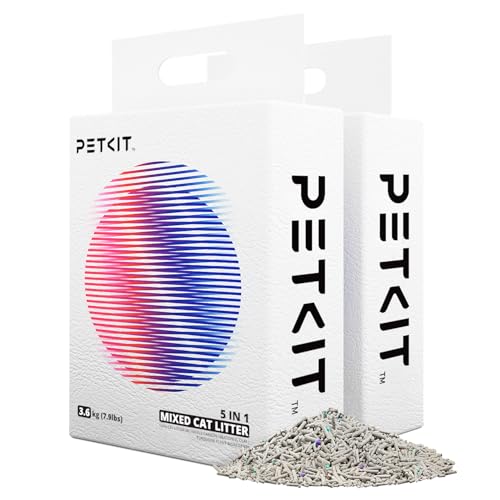
PETKIT 5-in-1 Mixed Tofu + Bentonite Cat Litter (2 x 7.9 lb)
by PETKIT
The hybrid compromise -- tofu's low dust and partial flushability fused with bentonite's fast clumping, unscented with activated-carbon odor control, for owners who want eco-friendly and clay-grade performance in one bag.
Pros
- Blends plant-based tofu with bentonite clay to bridge two worlds -- the eco-friendly, partially flushable, low-dust character of tofu with the strong, reliable clumping clay is known for
- Produces low dust thanks to the tofu component, a reasonable option for households balancing respiratory considerations with a desire for clay-grade clumping
- Completely unscented, with odor control handled by activated carbon and deodorant particles blended through the litter rather than by added fragrance
- Partially flushable in small amounts, reducing disposal burden compared with pure clay while keeping clumping performance that makes scooping efficient
Cons
- The two-bag pack is only 16 pounds in total, the smallest volume on this list, so a multi-cat household moves through it quickly and rebuys far more often
- Clumping is slightly weaker than pure premium clay, so very wet clumps occasionally need a more careful scoop
- It has the smallest review base on this list by a wide margin, so there is less long-term data behind it than the established clays carry
Best Clumping Cat Litter
Clumping is the feature that lets you scoop out all the urine and stool daily, and it is the single strongest defense against litter-box avoidance. For hard, fast-binding clumps that lift cleanly without crumbling, these three are the ones I trust most — all bentonite clays that hold together when you scoop.
| Product | Price | Buy |
|---|---|---|
| Dr. Elsey's Precious Cat Ultra Unscented Clumping Clay Cat LitterBest clumping overall Exceptionally hard, fast-binding clumps and 99 percent dust-free -- my default clinical clumping pick | $12.99 | View on Amazon |
| Fresh Step Advanced Simply Unscented Multi-Cat Clumping Cat LitterBest unscented clumping Ammonia Block neutralizes urine odor at the source while clumping firmly, with no fragrance | $28.99 | View on Amazon |
| ARM & HAMMER Clump & Seal Platinum Clumping Cat Litter (34 lb)Best bulk clumping bag Baking-soda clumping in the largest single bag here -- the fewest reorders for a multi-cat home | $31.49 | View on Amazon |
Best Cat Litter for Odor Control
The most effective, cat-friendly odor control neutralizes ammonia and sulfur compounds rather than masking them with perfume. These picks lead on Ammonia Block, baking soda, and activated-charcoal chemistry — and remember, no litter substitutes for daily scooping.
| Product | Price | Buy |
|---|---|---|
| Fresh Step Odor Shield Multi-Cat Clumping Cat Litter with Gain (14 lb)Best budget odor control Ammonia Block targets urine odor at the source for a guaranteed 15 days, at the lowest price here | $11.69 | View on Amazon |
| Fresh Step Advanced Simply Unscented Multi-Cat Clumping Cat LitterBest unscented odor control Ammonia Block technology kills urine odor without any fragrance, ideal for scent-sensitive cats | $28.99 | View on Amazon |
| ARM & HAMMER Clump & Seal Platinum Clumping Cat Litter (34 lb)Best long-lasting odor control Baking soda plus heavy-duty odor eliminators working around the clock in a 34-pound bag, though this one is freshly scented | $31.49 | View on Amazon |
Best Cat Litter for Automatic Litter Boxes
Rotating-globe and raking robots — the Litter-Robot, PETKIT, and similar units — are engineered for hard-clumping clay, which separates firm clumps from clean litter without jamming the mechanism. Avoid lightweight or crystal litter in these machines. Pair any of these with the right box from our automatic litter box guide.
| Product | Price | Buy |
|---|---|---|
| Dr. Elsey's Precious Cat Ultra Unscented Clumping Clay Cat LitterBest for automatic boxes Rock-hard clumps sift cleanly through a robot without crumbling or jamming -- and 99 percent dust-free | $12.99 | View on Amazon |
| ARM & HAMMER Clump & Seal Platinum Clumping Cat Litter (34 lb)Best bulk for automatic boxes Hard baking-soda clumps in a bulk bag, rated by the maker for robotic boxes, keep a high-traffic unit topped up | $31.49 | View on Amazon |
| Fresh Step Advanced Simply Unscented Multi-Cat Clumping Cat LitterBest unscented for automatic boxes Firm, fast-binding clumps with zero fragrance for a robot in a scent-sensitive home | $28.99 | View on Amazon |
Best Cat Litter for Multiple Cats
Multi-cat homes demand more volume, faster odor control, and hard clumping that survives heavy traffic. Choose a multi-cat-rated formula and remember the veterinary rule of one box per cat plus one extra, spread across locations.
| Product | Price | Buy |
|---|---|---|
| Fresh Step Odor Shield Multi-Cat Clumping Cat Litter with Gain (14 lb)Best budget multi-cat Multi-cat-rated Ammonia Block odor control at the lowest price of entry on this list | $11.69 | View on Amazon |
| ARM & HAMMER Clump & Seal Platinum Clumping Cat Litter (34 lb)Best bulk multi-cat A 34-pound bag with round-the-clock odor control -- the fewest-reorders pick for three-cat households | $31.49 | View on Amazon |
| Fresh Step Advanced Simply Unscented Multi-Cat Clumping Cat LitterBest unscented multi-cat Strong Ammonia Block odor control without fragrance for multi-cat homes with a sensitive cat | $28.99 | View on Amazon |
Best Cat Litter for Kittens
Kittens explore by mouth and swallow small amounts of litter while learning to cover, so for cats under about four months I steer owners away from clumping clay and toward natural, food-grade, low-dust litter until they are past the mouthing stage.
| Product | Price | Buy |
|---|---|---|
| pidan Tofu Cat Litter (4-Pack)Best for kittens Food-grade pea-fiber tofu litter with near-zero dust -- the safest choice for mouthing kittens | $50.49 | View on Amazon |
| PETKIT 5-in-1 Mixed Tofu + Bentonite Cat Litter (2 x 7.9 lb)Best kitten-to-adult transition A tofu-clay hybrid that eases the move to clumping once a kitten is past the ingestion stage | $29.99 | View on Amazon |
Best Low-Dust Cat Litter for Asthma & Allergies
For a cat with feline asthma, chronic bronchitis, or allergies — or an owner with dust sensitivities — dust is the variable that matters most. Prioritize a 99-percent-dust-free clay or a near-zero-dust plant litter, keep to unscented formulas because added fragrance is a volatile irritant for an already-inflamed airway, and always pour slowly to keep the dust cloud down.
| Product | Price | Buy |
|---|---|---|
| pidan Tofu Cat Litter (4-Pack)Best for asthmatic cats Near-zero-dust plant pellets that do not aerosolize the way clay does -- my top pick for airway-sensitive cats | $50.49 | View on Amazon |
| Dr. Elsey's Precious Cat Ultra Unscented Clumping Clay Cat LitterBest low-dust clay 99 percent dust-free unscented clay, the lowest-dust clumping clay I recommend | $12.99 | View on Amazon |
| PETKIT 5-in-1 Mixed Tofu + Bentonite Cat Litter (2 x 7.9 lb)Best low-dust hybrid An unscented tofu-bentonite blend with hardened pellets that resist crumbling, keeping airborne dust down while still clumping like clay | $29.99 | View on Amazon |
Best Cat Litter by Type & Situation
A few more specific needs come up often enough to deserve a direct pick. Each litter below appears in its full review above; this is simply the fastest route to the right one.
| Product | Price | Buy |
|---|---|---|
| pidan Tofu Cat Litter (4-Pack)Best natural / plant-based Biodegradable pea-fiber tofu -- the pick for eco-minded owners who still want clumping | $50.49 | View on Amazon |
| PETKIT 5-in-1 Mixed Tofu + Bentonite Cat Litter (2 x 7.9 lb)Best flushable litter Partially flushable tofu-clay hybrid that cuts the disposal burden of pure clay | $29.99 | View on Amazon |
| Dr. Elsey's Precious Cat Ultra Unscented Clumping Clay Cat LitterBest for cats with allergies Unscented, 99 percent dust-free clay that avoids the fragrance and dust triggers behind many allergies | $12.99 | View on Amazon |
How to Choose the Best Cat Litter
Litter Type: Clay, Crystal, or Plant-Based
The three main categories each carry a clinical profile worth understanding before you buy. Clumping bentonite clay is the workhorse — strong clumping, good value, and the litter most cats already accept — but it is heavier and dustier than the alternatives. Silica crystal litter absorbs moisture and controls odor well with low dust, but it does not clump for stool removal and carries ingestion concerns for kittens. Plant-based litters made from tofu, corn, wheat, or paper are low-dust, lightweight, frequently flushable and biodegradable, and safer for kittens, though they generally control odor less aggressively under heavy multi-cat loads. For most healthy adult cats I start with a low-dust unscented clumping clay; for kittens, asthmatic cats, and environmentally minded owners I shift toward plant-based.
Clumping Ability: The Foundation of a Clean Box
Clumping is not a luxury feature — it is the mechanism that lets you keep the box clean enough that your cat keeps using it. A litter that forms hard, fast-binding clumps lets you scoop out all of the urine and stool every day, which is the single most effective control on ammonia odor and the strongest defense against litter-box avoidance. Litters that clump weakly leave urine soaked into the bed, where it generates odor and forces more frequent full changes. When I assess a litter, clump integrity — whether it holds together when lifted instead of crumbling back into the box — is one of the very first things I check.
Dust Level and Feline Asthma Risk
Dust is the factor I weight most heavily for any cat with a respiratory history. Feline asthma and chronic bronchitis are inflammatory airway diseases, and airborne litter dust is a respirable irritant that the cat inhales every single time it digs and covers. For an asthmatic or bronchitic cat, prioritize a 99-percent-dust-free clay or a near-zero-dust plant-based tofu litter, and avoid the dustiest budget clays entirely. Pour the litter slowly to minimize the dust cloud, and keep the box in a ventilated area. Lower dust benefits owners with sensitivities too, so even between two otherwise-equal litters I choose the lower-dust option every time.
Odor Control: Neutralization Beats Masking
How a litter controls odor matters as much as whether it does. The most effective and cat-friendly approach is neutralization — baking soda or activated charcoal chemically traps or adsorbs the ammonia and sulfur compounds responsible for cat-waste smell. The less desirable approach is masking, where added fragrance simply competes with the odor. I consistently favor litters that neutralize over those that perfume, because neutralization solves your odor problem without introducing the fragrance load that can drive a sensitive cat away from the box. And no odor-control technology, however good, substitutes for daily scooping — the chemistry buys you time between scoops, it does not replace them.
Scented vs. Unscented: The Clinical Case for Unscented
This is the factor owners most often get backwards. A scented litter is marketed to the human nose, but it is the cat that has to live in it — and with roughly 200 million scent receptors, a cat experiences fragrance far more intensely than we do. Scented litter is a documented contributor to litter aversion, where a cat begins eliminating outside the box because it finds the scent objectionable. There is a urinary-health dimension too: for cats with FLUTD or feline idiopathic cystitis, the stress of a disliked litter can contribute to flares, since stress is a recognized trigger for these conditions. It is also worth distinguishing litter aversion from location aversion — a cat refusing a box in a noisy, high-traffic, or hard-to-reach spot may dislike the place rather than the litter, which is why box placement deserves as much thought as litter choice. My default clinical recommendation is unscented, reserving scented litters for healthy adult cats with no urinary or behavioral history.
Multi-Cat Suitability and Tracking
Multi-cat homes place heavier demands on a litter — more volume, more odor, and more competition for clean box space. The veterinary rule of thumb is one box per cat plus one extra, spread across different locations, precisely because a cat refusing a particular box is often expressing location aversion rather than litter aversion. For multi-cat use, choose a litter rated specifically for multi-cat odor control with strong clumping and extended neutralization, and budget for the larger volume you will inevitably go through. Tracking — granules carried out of the box on paws — is the other multi-cat reality; finer clays track more, larger pellets track less, and a litter mat under each box dramatically reduces what ends up scattered across your floors.
Buyer's Guide
After years of feline practice fielding litter-box questions in the exam room, these are the six factors I walk owners through when they ask which litter to buy -- ordered by how much they actually affect your cat's health and behavior.
Litter Type: Clay, Crystal, or Plant-Based
Clumping bentonite clay is the workhorse -- strong clumping, good value, widely accepted, but heavier and dustier than alternatives. Silica crystal absorbs moisture and controls odor with low dust, but does not clump for stool removal and carries ingestion concerns for kittens. Plant-based litters from tofu, corn, wheat, or paper are low-dust, lightweight, often flushable and biodegradable, and safer for kittens, though they control odor less aggressively in heavy multi-cat use. For most healthy adult cats I start with a low-dust unscented clumping clay; for kittens, asthmatic cats, and eco-minded owners I shift toward plant-based.
Clumping Ability
Clumping is what lets you keep the box clean enough that your cat keeps using it. A litter that forms hard, fast-binding clumps lets you scoop out all urine and stool daily, the single most effective control on ammonia odor and the strongest defense against litter-box avoidance. Litters that clump weakly leave urine soaked into the bed, generating odor and forcing more frequent full changes. Clump integrity -- whether it holds together when lifted rather than crumbling back into the box -- is one of the first things I assess.
Dust Level and Feline Asthma Risk
Dust is the factor I weight most heavily for any cat with a respiratory history. Feline asthma and chronic bronchitis are inflammatory airway diseases, and airborne litter dust is a respirable irritant the cat inhales every time it digs and covers. For asthmatic cats, prioritize a 99-percent-dust-free clay or a near-zero-dust tofu litter, and avoid the dustiest budget clays. Lower dust also benefits sensitive owners. Even in healthy cats, when two litters are otherwise equal, I choose the lower-dust option every time.
Odor Control Mechanism
How a litter controls odor matters as much as whether it does. The most effective and cat-friendly approach is neutralization -- baking soda or activated charcoal chemically traps or adsorbs the ammonia and sulfur compounds responsible for cat-waste smell. The less desirable approach is masking, where added fragrance competes with the odor. I favor neutralizing litters over perfuming ones, because they solve the odor problem without the fragrance load that can drive a sensitive cat away from the box. No odor-control technology substitutes for daily scooping -- the chemistry buys time between scoops, it does not replace them.
Scented vs. Unscented: The Clinical Case for Unscented
This is the factor owners most often get backwards. Scented litter is marketed to the human nose, but the cat has to live in it -- and with roughly 200 million scent receptors, a cat experiences fragrance far more intensely than we do. Scented litter is a documented contributor to litter aversion, where a cat eliminates outside the box because it finds the scent objectionable. For cats with FLUTD or feline idiopathic cystitis, the stress of a disliked litter can contribute to flares, since stress is a recognized trigger. My default is unscented, reserving scented litters for healthy adult cats with no urinary or behavioral history.
Multi-Cat Suitability and Tracking
Multi-cat homes place heavier demands on a litter -- more volume, more odor, more competition for clean box space. The veterinary rule of thumb is one box per cat plus one extra, spread across locations, because a cat refusing a box is often expressing location aversion rather than litter aversion. For multi-cat use, choose a litter rated for multi-cat odor control with strong clumping and extended neutralization, and budget for the larger volume. Tracking -- granules carried out on paws -- is the other reality; finer clays track more, larger pellets track less, and a litter mat under each box dramatically reduces scatter.
The Bottom Line on Cat Litter
The right litter is one of the quietest but most consequential choices you make for your cat’s health and behavior. Get it right and you will barely think about it; get it wrong and you may find yourself dealing with avoidance, respiratory irritation, or a cystitis flare that traces back to a fragrance or a dust level you never considered. For the overwhelming majority of cats, my recommendation is Dr. Elsey’s Precious Cat Ultra — an unscented, 99-percent-dust-free, hard-clumping clay that respects feline olfactory sensitivity and protects respiratory health. If budget is the priority and your cats have no scent sensitivity, Fresh Step Odor Shield Multi-Cat is the least expensive litter here and still neutralizes ammonia properly, and for kittens, asthmatic cats, and eco-minded one- and two-cat homes, the pidan tofu litter is the gentlest, safest choice on this list.
Whichever you choose, remember the principle that matters more than any brand: the best litter is the one your individual cat will reliably use in a box that is scooped daily, placed somewhere calm and accessible, and changed completely on schedule. How deep you fill it matters more than most owners realise, and it changes with the litter. Clumping clay needs three to four inches so urine clumps before it reaches the pan floor, while pellets want barely half that. Our free calculator for how much litter to put in a litter box turns your box’s dimensions into the actual weight for whichever of these litters you pick, and tells you how far a bag will go. Pair that with the right diet and a sensible health and wellness routine, and you will have covered the foundations of feline care. And if you want to dig deeper into setup, browse our full litter and litter box selection for boxes, mats, and odor-control accessories that round out the system. If your cat suddenly stops using a box it used reliably before, treat that as a medical question first — have it examined, because a change in litter habits is one of the most important early signs of urinary and other illness in cats. The daily scoop doubles as your best health check, too: our free cat poop chart scores what you find on the 1 to 7 scale vets use and tells you whether a change means watch, call, or go now.
Frequently Asked Questions
What cat litter do vets recommend?
Is clumping or non-clumping litter better?
Why do vets recommend unscented litter?
What is the best litter for a cat with asthma or respiratory issues?
What litter is safest for kittens?
Related Articles
11 Best Cat Litter Boxes of 2026
litter-boxes
8 Best Automatic & Self-Cleaning Litter Boxes of 2026
litter-boxes
Clumping vs Non-Clumping Cat Litter: A Vet's Honest Comparison
litter-boxes
How Often to Change Cat Litter: A Vet's Schedule by Litter Type
litter-boxes
How to Clean a Litter Box: A Veterinarian's Step-by-Step Guide
litter-boxes
About the Reviewer

Dr. Priya Anand, DVM, ABVP (Feline)
DVM, Cornell University College of Veterinary Medicine
Dr. Priya Anand is a veterinarian board-certified by the ABVP in Feline Practice, with over a decade caring for cats in a feline-exclusive clinic. She has guided thousands of cat owners through nutrition, litter-box troubleshooting, enrichment, and senior-cat care. She founded House of Mittens in 2026 to cut through pet-aisle marketing and recommend the food, litter, and gear that actually keep cats healthy and happy — judged the way she'd advise her own patients.