11 Best Cat Litter Boxes of 2026
Feline veterinarian Dr. Priya Anand, DVM reviews the 11 best cat litter boxes of 2026 — open, covered, top-entry, high-sided, stainless steel, and low-entry boxes ranked by size, entry height, scatter control, odor, and how likely a cat is to actually use them.
Updated
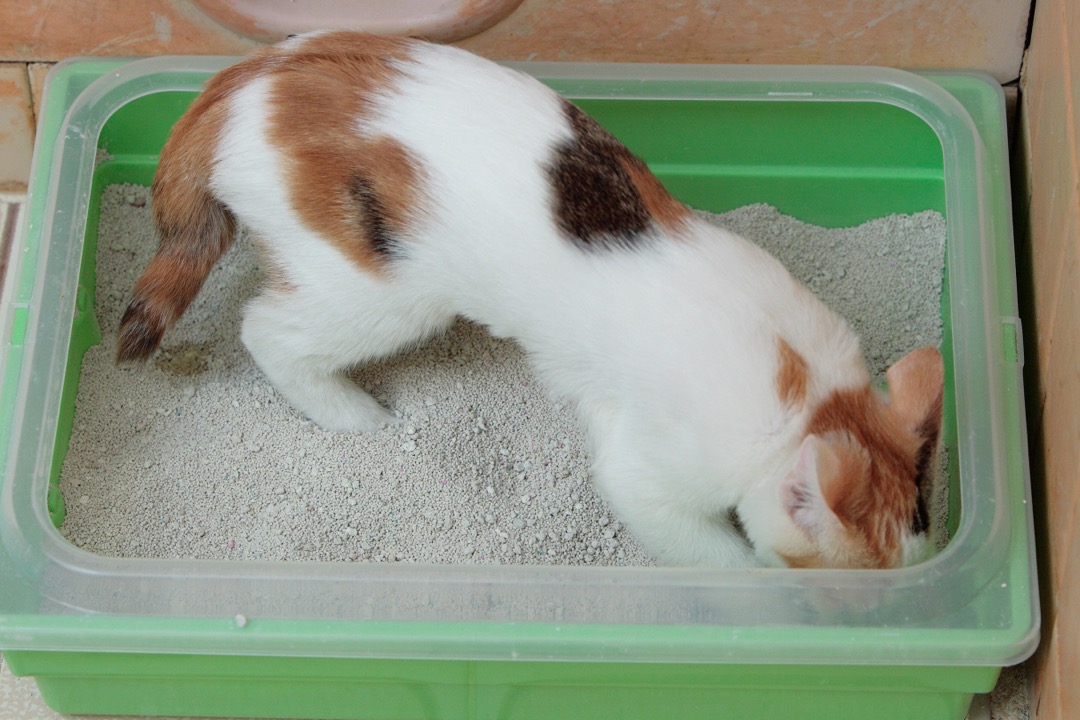
The humble litter box is, in my experience, the most underestimated purchase a cat owner makes. Owners will agonize over food and toys and then grab the first cheap pan they see — and then wonder why their cat has started going on the bathmat. After years in feline practice, I can tell you that a large share of the house-soiling cases I see trace back to a box that is too small, too tall to climb into, too enclosed for the cat’s taste, or simply not clean enough. The best cat litter box is not the one with the most features; it is the one your particular cat will step into, feel safe in, and use every single time.
For this guide I evaluated the boxes that actually solve those problems, across every design that matters — large high-sided open pans, hooded and top-entry boxes, hygienic stainless steel, low-entry boxes for kittens and seniors, pellet systems, and disposables — and weighted them the way I weight them clinically: will the cat use it, does it fit the cat’s size and age, does it contain mess, and can you keep it clean. What follows is eleven boxes chosen to cover every common household and cat, starting with the one that fits the most homes. Whichever box you choose, pair it with a low-dust, strong-clumping cat litter and, if you are still house-training, a solid litter-training foundation — the box, the litter, and the routine work together.
Find the Best Cat Litter Box for Your Need
Jump straight to the box that matches your cat and your home:
- Overall best cat litter boxes
- Best for odor control
- Best stainless steel box
- Best for large cats
- Best high-sided box for litter scatter
- Best covered box for odor
- Best top-entry box for tracking
- Best for kittens and small cats
- Best for senior cats
- More use cases
How We Chose These Cat Litter Boxes
Every box in this roundup sits on a verified, currently active Amazon listing with real owner-review volume, spanning trusted names like IRIS, Arm & Hammer, Van Ness, Purina, and Amazon Basics alongside the best of the newer stainless and specialty makers. I ranked them the way I counsel owners in the exam room: first by whether a cat will actually use the box, which comes down to size, entry height, and design; then by how well it contains scatter, spray, and odor; and finally by how easy it is to keep clean, because the cleanest-designed box in the world fails if it is a chore to maintain. I read owner reviews for the failure modes that matter — cracked seams, boxes cats reject, sides too low or too high, tracking, and lingering smell — and I deliberately covered the full range of cat situations, from a first kitten to a fourteen-year-old with arthritis to a three-cat household, rather than chasing a single “best” that fits no one perfectly.
Best Cat Litter Boxes Overall
These are the full reviews, beginning with the box that fits the most homes and moving through the specialty picks. Every box is reviewed once here; the use-case sections that follow simply point you back to the right one for your cat.
Best Overall: IRIS USA Large Open-Top Litter Box with High Sides
The IRIS USA large open-top box is the one I name first for most households, because it resolves the tension that trips up so many litter box purchases: it contains mess without enclosing the cat. The high sides and built-in scatter shield catch kicked litter and the spray from a cat that stands up to urinate, yet the top stays fully open, so you avoid the enclosure that a meaningful share of cats quietly refuse. That combination — containment plus acceptance — is exactly what makes a box one a cat keeps using instead of abandoning.
There is a clinical reason I favor an open box for the default recommendation, too. Every time you scoop an open pan, you see the urine clumps and the stool, and that daily glance is the single best early-warning window most owners have into their cat’s health. A cat urinating far more or far less than usual, straining, or producing abnormal stool is showing you the first sign of urinary, kidney, or digestive trouble — often before any other symptom — and a covered or top-entry box hides exactly that information. The large interior also gives an adult cat room to step in, turn around, and dig comfortably, which is the size threshold below which cats start looking for somewhere else to go.
The honest caveats are minor. An open top releases more odor between scoops than a hood, so it rewards prompt daily scooping and a good clumping litter, and the high front lip is a small climb that suits healthy adults but not a tiny kitten or a stiff senior. For the broad middle of cat owners, though — one or two healthy adult cats who want a box that simply works — this is where I would start, and at its price and review base it is a genuinely low-risk place to begin.

IRIS USA Large Open-Top Cat Litter Box with High Sides and Scoop
by IRIS USA
The best all-around litter box for most cats -- a large, high-sided open pan with a scatter shield that contains mess without enclosing the cat, at a price and review base that make it an easy first choice.
Pros
- The box I recommend first for most households: a large open pan with genuinely high sides and a built-in scatter shield, so it contains kicked litter and standing-up spray without enclosing the cat -- the combination that satisfies the widest range of cats and owners
- An open top that cats accept readily and that lets you see the urine and stool every time you scoop, which matters more than owners realize because the litter box is your single best early-warning window into feline urinary and digestive health
- A large interior most adult cats can step into, turn around fully, and dig in comfortably -- the size a cat needs to actually keep using the box rather than seeking out a rug or a bathtub
- Backed by more than thirty-five thousand ratings at an unusually low price, so it is a low-risk, high-value choice for a first box, a second box, or replacing a cramped one
Cons
- An open top contains less odor between scoops than a hooded or top-entry box, so it leans on prompt daily scooping and a good clumping litter to stay fresh
- The high front lip is a small step for a young kitten or a stiff senior -- fine for healthy adults, but not the pick for a cat that struggles to climb
Best Budget: Kirecoo High-Sided Stainless Steel Litter Box
The Kirecoo is my budget pick, and it wins the slot for an unusual reason: it is the only way on this page to buy the best material for under twenty dollars. Everywhere else in this guide, stainless steel is the premium option — the extra-large boxes further down cost three times as much. Steel is worth wanting because it is non-porous. A plastic pan gets scratched by claws and by scooping, those grooves hold urine, and eventually the box smells even straight out of a wash. That is the single most common reason an owner tells me a box “just always smells.” Steel cannot do it, so the pan you buy this year still smells like nothing in year four.
The non-stick surface is the part owners notice within a week. Clumps release from the base instead of welding themselves to the corners, which means a scrape and a rinse rather than the periodic scrub a plastic box starts demanding. The rolled rim and rounded corners matter more than they sound like they should, too: a full litter pan is heavy and awkward, and steel does not flex, bow, or crack at the seams when you lift it the way a thin plastic pan eventually does.
Be clear about what you give up for the price, because it is real. At 17.5 by 13.6 inches this is the smallest of the standard pans here — fine for an average adult cat to turn around in, but genuinely too tight for a large cat, who should have the IRIS instead. The sides are under six inches, so this is not the answer for a cat that kicks litter across the room or stands to urinate; that cat needs the high-walled IRIS or one of the extra-large steel boxes. And owners are consistent that the steel picks up fine scratches with use — it stays perfectly hygienic, it just stops looking new. For an average-sized cat, or for the second and third stations a multi-cat home needs, this is the most sensible money on the page.

Kirecoo Large High-Sided Stainless Steel Cat Litter Box
by Kirecoo
The value pick -- a non-porous stainless pan that never absorbs odor, for a fraction of what the extra-large steel boxes here cost, with a smaller footprint and lower sides as the honest trade.
Pros
- The cheapest way onto this page's most durable material -- stainless steel is non-porous, so unlike plastic it cannot be scratched into odor-holding grooves and never develops the ingrained smell a washed pan keeps
- The least expensive of this guide's four picks, and a fraction of what the extra-large steel boxes here cost, which makes it the sensible way to add the second and third stations the one-box-per-cat-plus-one rule demands
- The non-stick surface is the benefit owners notice first: clumps slide off the base instead of cementing to it, so a scrape and a rinse replaces the scrubbing a plastic pan eventually needs
- A smooth rolled rim and rounded corners make it comfortable to lift and empty, and steel will not flex or crack the way a thin plastic pan does once it is full of litter
Cons
- At 17.5 by 13.6 inches it is the smallest standard pan here -- right for an average adult cat, but a genuinely large cat needs the IRIS or one of the extra-large boxes instead
- The sides stand under six inches, so it handles ordinary scatter but will not contain a determined kicker or a cat that stands to urinate the way a truly high-walled box does
- Owners consistently report the steel picking up fine surface scratches over time -- it stays hygienic and odor-free, but it stops looking new
Best Upgrade: AIPERRO Stainless Steel XL Enclosed Litter Box
The AIPERRO stainless steel XL is the box I recommend to the owner whose real complaint is odor — the person who cleans diligently and still feels like the litter box smells no matter what they do. The reason that happens is the box itself, not the cleaning: plastic is porous and scratches with use, and those microscopic grooves trap urine and the ammonia-producing bacteria that live in it, so an aging plastic box holds onto smell permanently. Stainless steel is non-porous and scratch-resistant. It never absorbs odor, wipes completely clean with a rinse, and simply does not develop the ingrained smell that eventually sends every plastic box to the trash.
Beyond the hygiene, this is a genuinely capable box. The extra-large, high-sided body contains the spray and scatter that big cats and multi-cat homes produce, and the anti-leak welded corners will not seep the way a cracked plastic seam does after a year of use. It lasts for years, which is what offsets the higher up-front price — you buy it once instead of replacing a stained, smelly plastic box every season — and the smooth metal surface makes the weekly deep clean quick rather than a scrubbing session.
The drawbacks are real but small. It costs and weighs more than plastic, metal can be briefly noisy when litter or a metal scoop strikes it, and the bare surface can feel cold or unfamiliar to a cat at first, so give a nervous cat a short transition. If odor or a perpetually smelly box is the problem you are trying to solve, though, stainless steel is the most effective fix short of an automatic box, and this XL is the one I point owners to.

AIPERRO Stainless Steel XL Enclosed Cat Litter Box
by AIPERRO
The most hygienic box you can buy -- a non-porous, scratch-proof stainless pan that never soaks up odor, in an XL high-sided body for big cats and multi-cat homes; the one I recommend when odor or a plastic box that always smells is the problem.
Pros
- A non-porous stainless steel pan that never absorbs urine odor and cannot be scratched into the microscopic grooves where bacteria and smell live in aging plastic -- the single biggest hygiene upgrade you can make to a litter box
- An extra-large, high-sided body that contains spray and scatter for big cats and multi-cat homes, with anti-leak welded corners that will not seep the way cracked plastic eventually does
- Wipes completely clean with a rinse and lasts for years, so the higher up-front price is offset by never replacing a stained, smelly plastic box every season
- No plastic off-gassing or staining, and a smooth surface that makes the weekly deep clean genuinely quick
Cons
- Heavier and more expensive than a plastic box, and metal can be briefly noisy when litter or a metal scoop strikes it
- The bare metal surface can feel cold or unfamiliar to a cat at first, so give a nervous cat a short transition period
Runner-Up: IRIS USA Large Top-Entry Litter Box
The IRIS top-entry box exists to solve one specific, maddening problem: litter tracked across your entire home. Its grooved lid, which the cat must climb up and over to exit, knocks granules off the paws before they reach your floor, and it does this better than almost any other design. If you are constantly sweeping up litter from three rooms away, this is the style that fixes it, and IRIS’s version has more than thirty thousand ratings behind an affordable, proven build.
The enclosed body brings two more benefits. It gives shy cats the privacy they prefer, and it contains both odor and the mess from a cat that kicks vigorously or stands up to urinate — everything stays inside. It is also effectively dog-proof and toddler-proof, keeping curious dogs and small children out of the litter, which is a real quality-of-life improvement in a busy household with pets and kids underfoot.
The one thing I will not soften is the accessibility caveat: the jump up and down through the top makes this an adult, agile-cat box only. It is genuinely unsuitable for kittens, seniors, or any cat with arthritis or a mobility problem, and forcing it on such a cat will drive avoidance. A minority of otherwise healthy cats also simply refuse an enclosed top-entry box, so have a backup box ready and transition slowly. For an agile adult cat in a home fighting tracked litter, though, nothing here solves the problem as cleanly.

IRIS USA Large Top-Entry Cat Litter Box with Lid
by IRIS USA
The tracking-control champion -- a top-entry box whose grooved lid strips litter off your cat's paws on the way out, ideal for agile adult cats in homes fighting tracked litter, but wrong for kittens and seniors who cannot jump.
Pros
- A top-entry design that cuts litter tracking more than almost any other box -- the grooved lid the cat climbs out over knocks granules off its paws before they hit your floor, which is the whole reason to buy this style
- The enclosed body gives shy cats privacy and contains both odor and the mess from a cat that stands up or kicks vigorously
- Effectively dog-proof and toddler-proof, keeping curious dogs and small children out of the litter -- a real benefit in a busy household
- More than thirty thousand ratings on a proven, affordable design, so it is a low-risk way to solve a tracking problem
Cons
- The jump up and down through the top is genuinely unsuitable for kittens, seniors, and any cat with arthritis or mobility problems -- this is an adult, agile-cat box only
- A minority of cats simply refuse an enclosed top-entry box, so have a backup plan and transition slowly
Amazon Basics No-Mess Hooded Box: The Best Covered Box for Odor
The Amazon Basics hooded box is the covered box I recommend when odor is the priority and your cat has shown it will accept an enclosure. A full hood combined with a pre-installed activated-carbon filter gives it the best passive odor containment of any non-automatic box here, which is why it is my go-to suggestion for apartment dwellers and owners who are especially sensitive to smell. A covered box like this keeps the odor, and the scatter, inside where it belongs.
What sets it apart from lesser hooded boxes is the swinging entry door. Most covered boxes are open at the front, so odor drifts straight back out through the hole the cat walks through; this one puts a light plastic flap across the entry, adding a second barrier that holds smell in between visits and blocks the litter an enthusiastic digger flings at the opening. Underneath, the shell is genuinely roomy — about fifteen inches tall at the hood over a full-size footprint — so an adult cat can stand upright and turn around, and a cat that urinates standing up stays contained rather than spraying over a low wall.
The caveats are inherent to covered boxes and worth stating plainly. An enclosure traps ammonia if you do not scoop it daily, so a covered box rewards diligence and punishes neglect more than an open pan does. The swinging door in particular is the feature cats most often balk at, and pushing through a flap is a learned behavior some cats never accept — it lifts out in a second if yours refuses, though you give up part of the odor control you paid for when you remove it. The hood also lifts off rather than flipping open, so scooping means setting the lid aside, and the filters are a small recurring cost. If your cat is comfortable covered and odor is your battle, this is the box that wins it.
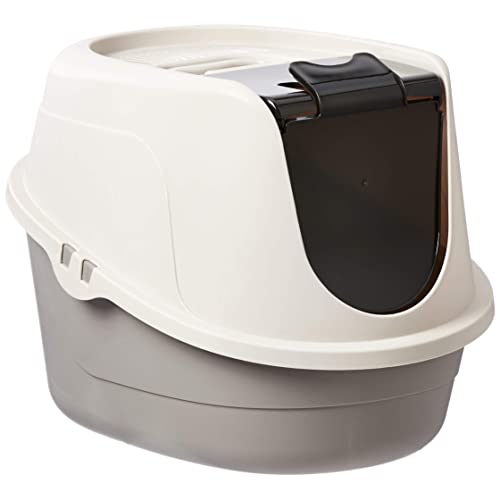
Amazon Basics No-Mess Hooded Cat Litter Box with Carbon Filter and Swinging Door
by Amazon Basics
The best covered box for odor -- a full hood, a swinging door, and a carbon filter that together contain smell and scatter better than any other non-electric box here; the pick for apartments and odor-sensitive homes, as long as you scoop daily and your cat accepts the flap.
Pros
- A full hood plus a pre-installed activated-carbon filter gives this box the best passive odor containment of any non-automatic option here, which is why I point apartment dwellers and odor-sensitive owners to a covered box like this one
- The swinging entry door is a second barrier the other covered boxes here do not have, holding odor inside between visits and blocking the litter a vigorous digger throws at the opening
- A tall enclosure -- roughly fifteen inches at the hood -- with a full-size footprint underneath, so an adult cat can stand upright and turn around, and a cat that urinates standing up stays contained
- More than eighteen thousand ratings at a 4.6 average, which makes it one of the most thoroughly proven covered boxes on Amazon and a low-risk way to try an enclosure
Cons
- A covered box traps ammonia if you do not scoop it daily, so it rewards diligence and punishes neglect more than an open pan does
- The swinging door is the single feature cats most often refuse; it lifts out easily if yours will not push through it, but removing it gives up part of the odor control you paid for, and replacement filters are a small recurring cost
KittyGoHere Senior Cat Litter Box: The Best Low-Entry Box
The KittyGoHere senior box is the first thing I recommend when an older cat has started missing the litter box, and it fixes a problem owners rarely connect to the cause. As cats age into arthritis, the simple act of climbing over a standard four-to-six-inch wall becomes painful, and a cat in pain will avoid the box rather than hurt itself — so what looks like a behavioral problem is really an accessibility one. This box has a very low entrance, roughly three inches, that a stiff senior, a post-surgical cat, or a disabled cat can step into without that painful climb.
Crucially, it does not make the usual trade of accessibility for a cramped box. The footprint is large and roomy, sized for a full-grown cat to turn around comfortably, so a big senior is not squeezed into a tiny pan just to get a low entry. The shell is smooth, sturdy, easy to clean, and made in the USA, and it is the highest-rated dedicated senior box on Amazon by a wide margin — ratings it earns because it solves a real, common, under-recognized problem so directly.
The compromises follow from the low sides: it scatters more litter than a high-walled box and has no odor hood, so pair it with a litter mat and scoop promptly. And you are paying a premium for what is, mechanically, a simple open pan — the price buys accessibility, not features. For a senior or arthritic cat, that accessibility is worth every penny, and it is often the single change that gets an older cat back to using the box reliably.
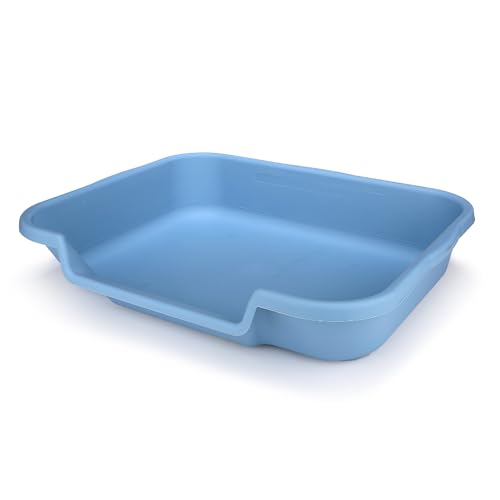
KittyGoHere Senior Cat Litter Box (Low Entrance)
by KittyGoHere
The best box for senior and arthritic cats -- a large open pan with a very low entrance that removes the painful climb, and the first thing I recommend when an older cat starts avoiding a standard-height box.
Pros
- A very low entrance -- roughly three inches -- that lets an arthritic, senior, post-surgical, or disabled cat step in without the painful climb that drives so many older cats to stop using a standard box
- A large, roomy footprint sized for a full-grown cat to turn around comfortably, so seniors are not asked to trade accessibility for cramped quarters
- A smooth, sturdy, easy-to-clean shell made in the USA that holds up to daily use and frequent washing
- The single most effective change I can recommend for an older cat that has recently started missing the box: the highest-rated dedicated senior box on Amazon, and it earns those ratings
Cons
- The low sides scatter more litter and offer no odor hood, so pair it with a litter mat and prompt scooping
- A premium price for what is fundamentally a simple open pan -- you are paying for the low-entry accessibility, not features
Van Ness Cat Pan: The Best First Box for a Kitten
The Van Ness cat pan is the box I hand new kitten owners, and its virtues are exactly the ones a kitten needs. Its sides stand about four inches, low enough for a tiny cat to step over from day one, which matters enormously while a kitten is still learning where the bathroom is — a box a kitten cannot get into is a box the kitten will not use. It carries close to thirty-eight thousand ratings at 4.5 stars, the deepest owner record of any pan at this size, on a design Van Ness has been making essentially unchanged for decades. That track record, not the price, is why it is the low-risk choice for a starter box.
Its simplicity is the point. It is lightweight and easy to dump, rinse, and refill, so keeping a kitten’s box spotless — which is essential to good litter habits from the start — takes almost no effort. It is small enough to tuck into a bathroom, a corner, or a crate, and it makes a sensible spare to keep on hand for a second station or a sick-cat setup. For the specific job of litter-training a kitten and getting the habit established, it is hard to do better.
The limitations are built into the design: kittens outgrow it within a few months, so plan to size up to a large box, like the IRIS overall pick, as your cat approaches adult size. The low sides scatter litter and there is no odor control, because this is a basic pan and nothing more. Two buying notes as well. It ships in assorted colors, so you do not get to pick the one that arrives, and stock on this listing runs thin between restocks, so if it shows as unavailable it is usually worth checking back rather than assuming it is gone. As a kitten’s first box and a lifelong spare, it is still the right tool for the job — and you will pair it naturally with our kitten litter-training guide.

Van Ness Cat Pan, Medium
by Van Ness
The best starter box for a kitten -- a low, shallow pan with four-inch sides a tiny cat can use from day one, backed by the deepest review record of any pan at this size; buy it to litter-train and as a spare, and size up to a large box as the kitten grows.
Pros
- The ideal first box for a new kitten -- four-inch sides a tiny cat can step over on day one, which is exactly what a kitten needs while it is still learning where the bathroom is
- Nearly thirty-eight thousand ratings at 4.5 stars, the deepest owner record of any starter pan on Amazon, on a design Van Ness has been making essentially unchanged for decades
- Lightweight and simple to dump, rinse, and refill, which keeps a kitten's box spotless with minimal effort, and the polypropylene surface resists staining better than the thin pans sold at this size
- At fifteen by eleven inches it is small enough to tuck into a corner, a bathroom, or a crate, and a sensible spare to keep on hand
Cons
- Kittens outgrow it within a few months, so plan to size up to a large box as your cat approaches adult size
- The low sides scatter litter and there is no odor control -- it is a basic pan, nothing more
- It ships in assorted colors, so you cannot choose the one you get, and stock on this listing runs thin between restocks
Purina Tidy Cats BREEZE System: The Best Odor-Control System
The Purina Tidy Cats BREEZE system is the box for the owner who wants the driest, lowest-odor result without going electric. It works differently from every other box here: large anti-tracking pellets sit in the top tray, and urine passes straight through them to an absorbent pad in a drawer below, physically separating liquid waste from the surface where the cat stands. The result is a box that stays remarkably dry and low-odor between changes, because the urine is not sitting in clumping litter waiting to be scooped.
The design pays off in daily effort and tracking. Because the pad absorbs the urine, you scoop only the occasional solid and swap the pad about once a week, rather than scooping wet clumps every day — less hands-on maintenance than a standard clumping box. And the large, dust-free pellets track far less than fine clay litter, which is a genuine relief in a house where you are forever finding granules underfoot. It is a proven, widely used system with a large review base and easy-to-find refills.
The trade-off is the system commitment. You buy proprietary pellets and pads rather than any clumping litter you like, which is an ongoing cost to weigh, and some cats need a gradual transition to the unfamiliar pellet texture before they will use it reliably. For an owner focused on a dry, low-smell, low-tracking box with less daily scooping, though, the BREEZE delivers a result standard boxes cannot match.
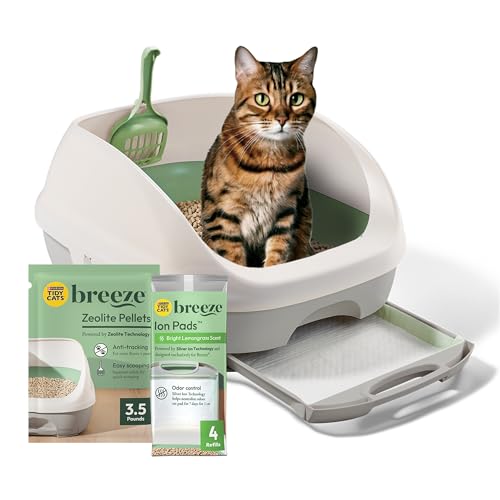
Purina Tidy Cats BREEZE Litter Box System
by Purina Tidy Cats
The best non-electric odor system -- a pellet-and-pad box that keeps urine away from the surface for an unusually dry, low-smell result with less daily scooping and far less tracking, at the cost of proprietary refills.
Pros
- A pellet-and-pad system that separates solid and liquid waste -- large anti-tracking pellets let urine pass through to an absorbent pad below, which keeps the box strikingly dry and low-odor between changes
- The large, dust-free pellets track far less than fine clay litter, a genuine relief for owners tired of granules across the house
- Low daily effort: scoop the occasional solid, and swap the pad about once a week rather than scooping urine clumps every day
- A proven, widely used system with a large review base and easy-to-find refills
Cons
- It commits you to buying proprietary pellets and pads rather than any clumping litter, an ongoing cost to weigh
- Some cats need a gradual transition to the unfamiliar pellet texture before they will reliably use it
- The pads need swapping on a schedule rather than when the box looks dirty, so a household that forgets the weekly change loses the dryness advantage the system is bought for
Kitty Sift Disposable: The Best Box for Travel and Fostering
The Kitty Sift disposable box earns its place by solving the situations where a permanent plastic box is the wrong tool. For travel, fostering, a new-cat quarantine, or post-surgical isolation, the ability to use a fresh, sanitary box and simply throw it away beats scrubbing and disinfecting a contaminated one — and when you are managing illness or introducing an unknown cat, that clean-slate hygiene genuinely matters for preventing cross-contamination.
It is also the environmentally sensible choice in its category. The box is made from sturdy recycled paperboard, so it is biodegradable rather than another slab of plastic bound for a landfill, and it eliminates the single worst chore in cat care: instead of washing a soiled box, you toss the whole thing. A six-pack lasts weeks and is honestly handy to keep around for a second bathroom, an RV, a road trip, or a cat sitter who would rather not deal with your regular setup.
The honest framing is that this is a temporary and supplementary box, not a full-time everyday one. The paper saturates over a stretch of heavy use, it is less rigid than molded plastic or steel, and the recurring cost adds up if you try to use it as your primary box. As a travel, foster, quarantine, and post-op solution — and a smart backup on the shelf — it is exactly right.
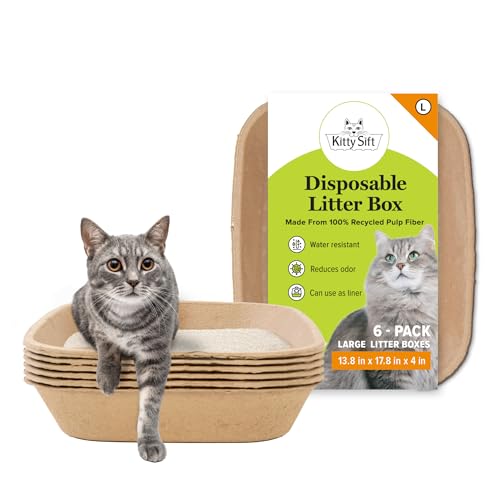
Kitty Sift Disposable Cat Litter Box (Large, 6-Count)
by Kitty Sift
The best disposable box -- a sturdy recycled-paper pan you throw away instead of scrubbing, ideal for travel, fostering, quarantine, and post-op sanitation; a smart backup to keep on hand, not a full-time everyday box.
Pros
- The box I recommend for travel, fostering, a new-cat quarantine, or post-surgical isolation, where a fresh, sanitary box you can throw away beats scrubbing a contaminated plastic one
- Made from sturdy recycled paperboard, so it is an eco-friendly, biodegradable option rather than another plastic box headed to a landfill
- Eliminates the worst chore in cat care -- when a box is soiled or you are managing illness, you toss the whole thing instead of washing and disinfecting
- A six-pack gives weeks of use and is genuinely handy for a second bathroom, an RV, or a cat sitter
Cons
- It is a temporary solution, not a permanent everyday box, and the paper saturates over a stretch of heavy use
- Less rigid than a molded plastic or steel box, and the recurring cost adds up if you use it as a primary box
URPOWER Stainless Steel XL Flip-Top: The Best Enclosed Metal Box
The URPOWER stainless steel XL is for the owner who wants two things at once that usually force a choice: the odor-proof hygiene of metal and the mess containment of an enclosure. Most stainless boxes are open, and most enclosed boxes are plastic; this one puts a non-porous stainless pan that never absorbs odor inside an enclosed, high-sided body that contains spray and scatter. If both odor and containment are on your list, it is the box that covers both.
The layout is thoughtful. A front-entry, top-exit design reduces litter tracking — the cat leaves over a lip that knocks off granules — while staying far more accessible than a pure top-entry box that demands a full jump. The flip-top lid opens completely for effortless scooping over a non-stick pan that rinses clean in seconds, and the welded, anti-leak construction will not seep or crack the way an aging plastic enclosure eventually does. It is a genuinely well-considered combination of features.
The caveats are about track record and practicality. It is a newer listing with a smaller review base than the plastic veterans on this list, so its multi-year durability is less established, and enclosed metal is heavier to move for a deep clean. The exit lip is also not ideal for kittens or frail seniors. For an adult-cat household that wants stainless hygiene and enclosure containment in a single box, though, it is the most complete option here.

URPOWER Stainless Steel XL Flip-Top Litter Box (Front Entry, Top Exit)
by URPOWER
The best of both worlds -- stainless steel hygiene inside an enclosed, high-sided, low-tracking body with an easy flip-top lid; the pick for owners who want odor-proof metal and enclosure containment in a single box.
Pros
- Combines the two things owners want most -- stainless steel hygiene that never absorbs odor, and an enclosed, high-sided body that contains spray and mess -- in one box
- A front-entry, top-exit layout that reduces litter tracking while staying far more accessible than a pure top-entry box
- A flip-top lid that opens fully for effortless scooping, over a non-stick pan that rinses clean in seconds
- Welded, anti-leak construction that will not seep or crack the way an aging plastic enclosure eventually does
Cons
- A newer listing with a smaller review base than the plastic veterans, so its long-term track record is less established
- Enclosed metal is heavier to move for deep cleaning, and the exit lip is not ideal for kittens or frail seniors
Arm & Hammer Large Sifting Box: The Best Scoop-Free Cleanup
The Arm & Hammer sifting box is the answer for owners whose real objection is not the box but the chore. It is also the most-reviewed box on this entire list, with more than fifty thousand owners weighing in, and that kind of volume on a consistently well-rated product tells you the design holds up in ordinary homes rather than just on paper.
The three-tray system is what you are buying. Instead of scooping clump by clump, you lift the top tray so the clean litter falls through the sifting layer, leaving the clumps behind to pour off — lift, shake, pour, done. Many owners find that genuinely faster and less messy than scooping, and it is the only way to get scoop-free cleanup without electricity, filters, or proprietary refills. The Microban antimicrobial protection molded into the plastic also helps hold down the odor-causing bacteria that build up on any tray surface between washes.
Two caveats, and one has changed recently. The sifting mechanism only works cleanly with hard-clumping clay or a firm clumping plant litter; lightweight crystal or non-clumping litter falls through or clogs it, so match your litter to the box. More to the point, this box has climbed in price and is no longer the bargain it once was on this page — it now costs more than several simpler pans here, including my budget pick. Buy it for the sifting system, which nothing else here replicates, and not because it is the cheap option, because it is not. If the daily chore is what you want gone entirely, a self-scooping model is the more thorough fix.

Arm & Hammer Large Sifting Litter Box with Microban
by Arm & Hammer
The easiest daily cleanup here without going electric -- a deeply reviewed three-tray sifting box you shake clean instead of scooping, best paired with a hard-clumping litter and worth it for the sifting system rather than for the price.
Pros
- The most-reviewed litter box on this entire list -- more than fifty thousand ratings behind it, from a name owners already trust in the litter aisle
- A three-tray sifting design that lets you lift, shake, and pour the clean litter through instead of scooping clump by clump, which many owners find faster and less messy day to day
- Microban antimicrobial protection molded into the plastic helps limit odor-causing bacteria on the tray surface between washes
- Simple, sturdy, and assembly-free -- the scoop-free option that needs no power, no filters, and no proprietary refills
Cons
- Sifting works cleanly only with hard-clumping clay or a firm clumping plant litter; it clogs with lightweight crystal or non-clumping litter
- The sides are standard height rather than high, so an enthusiastic digger will scatter more than with a high-sided pan
- It now sells for meaningfully more than several larger, simpler pans here, so you are paying for the sifting system rather than buying it on price
Best Litter Box for Odor Control
Odor is the complaint I hear more than any other, and the mistake owners make is treating it as a cleaning problem when it is usually a box problem. There are only three ways a litter box can actually fight smell, and the right pick depends on which one matches your situation. You can stop the box itself from absorbing odor, which is what stainless steel does and what no plastic box can do once it has been scratched up. You can trap the smell inside with a hood and a carbon filter, which works well if your cat accepts an enclosure. Or you can keep urine away from the surface entirely, which is the trick behind a pellet-and-pad system and the reason it stays dry between changes.
One honest caveat before you buy: no box out-runs a dirty box. A covered box in particular concentrates ammonia if you skip a day, so the enclosure that smells best when scooped daily smells worst when neglected. Scoop once a day at minimum, pair whichever box you choose with a strong-clumping low-dust litter, and replace any plastic pan that still smells after a wash — that ingrained odor is the plastic, not the litter.
| Product | Price | Buy |
|---|---|---|
| AIPERRO Stainless Steel XL Enclosed Cat Litter BoxBest for odor overall Non-porous stainless that can never absorb odor -- the permanent fix for a box that always smells | $56.99 | View on Amazon |
| Amazon Basics No-Mess Hooded Cat Litter Box with Carbon Filter and Swinging DoorBest covered for odor A hood, swinging door, and carbon filter that trap smell inside, for cats that accept an enclosure | $32.17 | View on Amazon |
| Purina Tidy Cats BREEZE Litter Box SystemBest odor system Pellets and a pad that keep urine off the surface, so the box stays dry and low-odor for days | $42.45 | View on Amazon |
If you want the daily scooping taken off your plate as well, a self-scooping model removes waste before it has time to smell at all — see our guide to the best automatic litter boxes.
Best Stainless Steel Litter Box
Stainless steel is the upgrade I recommend most for one problem above all: a box that always smells. Because metal is non-porous and cannot be scratched into odor-trapping grooves the way plastic is, a stainless box never develops ingrained smell, wipes clean in seconds, and lasts for years. The first two below are extra-large and high-sided, so they suit big cats and multi-cat homes as well; the third is the cheap way in, at the cost of a smaller footprint and lower walls.
| Product | Price | Buy |
|---|---|---|
| AIPERRO Stainless Steel XL Enclosed Cat Litter BoxBest stainless overall Open XL high-sided pan that never absorbs odor -- the most hygienic everyday box here | $56.99 | View on Amazon |
| URPOWER Stainless Steel XL Flip-Top Litter Box (Front Entry, Top Exit)Best enclosed stainless Stainless hygiene inside an enclosed, low-tracking body with an easy flip-top lid | $47.69 | View on Amazon |
| Kirecoo Large High-Sided Stainless Steel Cat Litter BoxBest budget stainless The same non-porous, never-smells material for under twenty dollars, sized for an average adult cat rather than a large one | $17.99 | View on Amazon |
Best Litter Box for Large Cats
A big cat — a Maine Coon, a Ragdoll, or just a large adult — needs a box at least one and a half times its body length, with high sides to contain the extra spray and scatter big cats produce. Undersizing is the most common mistake here; when in doubt, go bigger.
| Product | Price | Buy |
|---|---|---|
| IRIS USA Large Open-Top Cat Litter Box with High Sides and ScoopBest large open box A large high-sided open pan with room to turn around, at a low price | $22.99 | View on Amazon |
| AIPERRO Stainless Steel XL Enclosed Cat Litter BoxBest XL for odor An XL non-porous stainless box that contains spray and never holds odor | $56.99 | View on Amazon |
| URPOWER Stainless Steel XL Flip-Top Litter Box (Front Entry, Top Exit)Best enclosed XL An enclosed XL that adds privacy and low tracking for a big cat | $47.69 | View on Amazon |
Best High-Sided Litter Box
High sides fix two things: litter kicked across the floor by an enthusiastic digger, and urine sprayed over the edge by a cat that stands up to go. Both boxes below wall in the mess while staying easy for an adult cat to enter.
| Product | Price | Buy |
|---|---|---|
| IRIS USA Large Open-Top Cat Litter Box with High Sides and ScoopBest high-sided open A high front wall and scatter shield that contain mess without enclosing the cat | $22.99 | View on Amazon |
| AIPERRO Stainless Steel XL Enclosed Cat Litter BoxBest high-sided stainless Tall stainless walls that block spray and scatter and never absorb the resulting odor | $56.99 | View on Amazon |
Best Covered Litter Box
A covered box contains odor and scatter and gives shy cats privacy — the right pick when smell is your problem and your cat accepts an enclosure. Scoop a covered box daily, though, because a hood traps ammonia if you let it sit.
| Product | Price | Buy |
|---|---|---|
| Amazon Basics No-Mess Hooded Cat Litter Box with Carbon Filter and Swinging DoorBest hooded for odor A hood, a swinging door, and a carbon filter -- the best passive odor control of any box here | $32.17 | View on Amazon |
| IRIS USA Large Top-Entry Cat Litter Box with LidBest covered top-entry An enclosed top-entry box that adds strong anti-tracking to the privacy of a cover | $39.99 | View on Amazon |
Best Top-Entry Litter Box
If tracked litter across the house is your battle, a top-entry box is the most effective fix — the cat exits over a grooved or lipped top that knocks granules off its paws. Both are for agile adult cats only; skip these for kittens and seniors.
| Product | Price | Buy |
|---|---|---|
| IRIS USA Large Top-Entry Cat Litter Box with LidBest top-entry overall A grooved lid that strips litter off the paws on exit -- the proven anti-tracking pick | $39.99 | View on Amazon |
| URPOWER Stainless Steel XL Flip-Top Litter Box (Front Entry, Top Exit)Best stainless top-exit Front-entry, top-exit stainless that cuts tracking while staying more accessible | $47.69 | View on Amazon |
Best Litter Box for Kittens and Small Cats
A kitten needs a box with low, shallow sides it can climb into on day one and a size scaled to a tiny body. Both picks below prioritize an easy, low entrance over walls and features — start here, then size up to a large box as the kitten grows.
| Product | Price | Buy |
|---|---|---|
| Van Ness Cat Pan, MediumBest for tiny kittens A small pan with four-inch sides a kitten can use immediately while learning | $6.25 | View on Amazon |
| KittyGoHere Senior Cat Litter Box (Low Entrance)Best low-entry as they grow A large low-entry box a growing or small cat steps into without a climb | $49.95 | View on Amazon |
Best Litter Box for Senior Cats
Arthritis makes climbing into a standard box painful, and a cat in pain avoids the box — so a very low entrance is the single most helpful feature for an older cat. Both below offer an easy step-in with room for a full-size senior.
| Product | Price | Buy |
|---|---|---|
| KittyGoHere Senior Cat Litter Box (Low Entrance)Best for arthritic seniors A very low, roughly three-inch entrance sized for a full-grown senior to turn around | $49.95 | View on Amazon |
| Van Ness Cat Pan, MediumBest compact low-entry A low, shallow pan that also works for a small or mildly stiff cat | $6.25 | View on Amazon |
Best Cat Litter Boxes by Use Case
A few more specific situations come up often enough to deserve a direct pick. Each box below appears in its full review above; this is simply the fastest route to the right one.
| Product | Price | Buy |
|---|---|---|
| Kitty Sift Disposable Cat Litter Box (Large, 6-Count)Best for travel and fostering A disposable recycled-paper box you toss instead of scrubbing -- ideal for trips and quarantine | $24.99 | View on Amazon |
| Purina Tidy Cats BREEZE Litter Box SystemBest pellet odor system A pellet-and-pad system that keeps the box dry and low-odor with less daily work | $42.45 | View on Amazon |
| Arm & Hammer Large Sifting Litter Box with MicrobanBest scoop-free sifting A three-tray box you shake clean instead of scooping, with no power or refills needed | $24.99 | View on Amazon |
| Kirecoo Large High-Sided Stainless Steel Cat Litter BoxBest on a budget The cheapest stainless pan here by a wide margin, and the sensible way to add extra stations | $17.99 | View on Amazon |
| AIPERRO Stainless Steel XL Enclosed Cat Litter BoxBest for multiple cats An XL high-sided stainless box with the capacity a busy multi-cat home needs | $56.99 | View on Amazon |
Buyer's Guide
A litter box looks like the simplest purchase in cat care, but the wrong one is behind a surprising share of the house-soiling problems I see in practice. The best box is the one your particular cat will reliably use, and that comes down to a handful of factors -- size, entry height, walls, cover, material, and how many boxes you have -- weighted for your cat's age, size, and habits. Here is how I walk owners through the decision.
Size and Interior Room
This is the factor owners get wrong most often. A litter box should be at least one and a half times your cat's length from nose to tail base, so the cat can step in, turn around fully, and dig without hanging over the edge. Undersized boxes are a leading cause of cats eliminating just outside the box. For an average adult, a large box is right; for big breeds, multi-cat homes, and cats that stand to urinate, go XL or jumbo. The only exception is a young kitten, which needs a small, low pan it can actually climb into.
Entry Height
The height of the wall a cat must cross to get in is a comfort issue for adults and a genuine barrier for kittens and seniors. A tiny kitten needs low, shallow sides it can clear on day one. An arthritic or senior cat needs a very low entrance -- around three inches, like the KittyGoHere -- because the pain of climbing into a standard box is a frequent, under-recognized reason older cats stop using it. Healthy adults handle a high front lip fine, and top-entry boxes, which cut tracking, demand an agile jumper and rule out kittens and seniors entirely.
Wall Height and Scatter Control
High sides are the answer to two common complaints: litter kicked all over the floor by an enthusiastic digger, and urine sprayed over the edge by a cat that stands up to go. A high-sided open box, like the IRIS overall pick, contains both while staying easy to enter. Match the wall height to your cat's habits -- a vigorous digger or a stander needs tall walls, while a calm cat does fine with standard sides. Pair any box with a litter mat at the entrance to catch what does escape.
Covered vs. Open
A covered or hooded box contains odor and scatter and gives shy cats privacy, but it traps ammonia if you do not scoop daily, and some cats refuse to feel enclosed. An open box airs out, is easy to monitor, and suits the widest range of cats, but controls odor less between scoops. Most cats do well with a large open box; choose a covered box specifically when odor or scatter is your problem and your cat has shown no aversion to enclosure. Never force a covered box on a cat that avoids it.
Material and Cleanability
Plastic is inexpensive and light, but it is porous and scratches with use, and those grooves trap odor permanently, so a plastic box needs replacing every year or so once it starts to smell. Stainless steel costs and weighs more up front but is non-porous, scratch-resistant, never absorbs odor, and lasts for years -- the best fix for a box that always smells. Disposable paper boxes are the right call for travel, fostering, or quarantine, where a sanitary box you throw away beats scrubbing a contaminated one. Whatever the material, a smooth, easy-to-clean surface matters, because the box you clean easily is the box you keep clean.
Number of Boxes and Placement
How many boxes you provide is as important as which box you buy. The rule is one per cat plus one, spread across different rooms and floors rather than clustered in one spot, since two boxes side by side read as a single location to a cat. Enough boxes in enough places prevents the guarding, bottlenecking, and avoidance that drive house-soiling in multi-cat homes. Keep boxes away from food and water and out of high-traffic, noisy corners, and give a nervous cat a quiet, low-stress spot where it will not be startled mid-use.
How to Choose the Best Cat Litter Box
Start With Size, Then Entry Height
Before any feature, get the two fundamentals right. The box should be at least one and a half times your cat’s length so it can turn around and dig comfortably — bigger is almost always better, and undersizing is the most common mistake. Then match the entry height to your cat’s age and mobility: low, shallow sides for a kitten; a very low entrance for a senior or arthritic cat; a normal or high wall for a healthy adult. Get these two right and you have solved most of the reasons cats reject a box.
Match the Design to Your Biggest Complaint
Choose the box style around the problem you most want to solve. Litter tracked across the house points to a top-entry box; odor points to a hooded box or, better, stainless steel; scatter and over-the-edge spray point to high sides; a smelly plastic box that will not come clean points to stainless. There is no single best design for every home — there is the design that fixes your specific issue, which is why this guide is organized by use case rather than crowning one universal winner.
Respect Your Cat’s Preferences
Cats have opinions, and ignoring them backfires. Some cats refuse covered boxes; some dislike top-entry; some want privacy and some want an open sightline. If you are changing box styles, do it gradually — set up the new box alongside the familiar one and let the cat choose over a couple of weeks rather than forcing a switch overnight. A box your cat rejects is wasted money no matter how good it looks to you, and a sudden refusal of a box a cat previously used is a signal worth heeding.
Provide Enough Boxes, in the Right Places
One great box is not enough in a multi-cat home. Follow the one-per-cat-plus-one rule and spread the boxes across different rooms and floors, because cats guard resources and a single box becomes a flashpoint. Keep boxes away from food and water, out of loud or high-traffic corners, and in quiet spots where a cat will not be ambushed mid-use. Placement is part of the purchase — the best box in a bad location still gets avoided.
When a Litter Box Problem Is Really a Health Problem
The most important thing I can tell any cat owner is this: a sudden change in litter box behavior is a medical question first, not just a behavioral one. Cats hide illness, and the litter box is often where the first sign appears. A cat straining, urinating far more or far less than usual, going more frequently, producing blood-tinged urine, or suddenly eliminating outside the box may be showing the early stages of a urinary blockage, a bladder infection, kidney disease, diabetes, or arthritis pain — and a urinary blockage in a male cat is a genuine, life-threatening emergency that needs a veterinarian the same day. Before you assume a cat is being difficult or “spiteful” — a mindset I gently push back on, because cats are not spiteful — rule out pain and disease. Buy the right box, keep it clean, provide enough of them, and watch what the box tells you. When something changes, call your veterinarian; you may be catching a problem weeks earlier than you otherwise would.
The Bottom Line on Cat Litter Boxes
The best cat litter box is the one your cat will use without hesitation, and for most homes that is a large, high-sided open box — which is why the IRIS USA open-top is my overall pick, containing mess without enclosing the cat and letting you keep a clinical eye on your cat’s output. From there, choose by your situation: the Kirecoo stainless pan when you want steel’s odor resistance for the least money or need extra stations, the Arm & Hammer sifting box to make the daily cleanup scoop-free, the AIPERRO stainless steel for a box that never smells, the IRIS top-entry to stop tracking, the Amazon Basics hooded box for odor, the KittyGoHere for a senior cat, and the Van Ness pan to start a kitten.
Whichever box you choose, remember that the box is one piece of a system. Fill it with a low-dust, strong-clumping cat litter, and fill it to the right depth, which for a pan this size is a surprising amount of litter; our calculator for how much litter to put in a litter box will tell you the weight for whichever box on this list you go with. Scoop it at least once a day, provide one box per cat plus one, and if you want to take the daily scooping off your plate entirely, consider stepping up to a self-scooping model in our guide to the best automatic litter boxes. Get the box, the litter, and the routine right, and litter box problems mostly disappear — and the ones that do not become the early warnings that let you help your cat before a small problem becomes a serious one.
Frequently Asked Questions
How many litter boxes do I need for multiple cats?
Is a covered or open litter box better for cats?
What size litter box does my cat need, and is a jumbo box worth it?
Are stainless steel litter boxes worth it compared to plastic?
Do litter box enclosures or furniture units actually work?
How often should I scoop and replace my cat's litter box?
Related Articles
7 Best Automatic & Self-Cleaning Litter Boxes of 2026
litter-boxes
7 Best Cat Litters of 2026
litter-boxes
How Often to Change Cat Litter: A Vet's Schedule by Litter Type
litter-boxes
Clumping vs Non-Clumping Cat Litter: A Vet's Honest Comparison
litter-boxes
How to Litter Train a Kitten: A Veterinarian's Step-by-Step Guide
litter-boxes
About the Reviewer

Dr. Priya Anand, DVM, ABVP (Feline)
DVM, Cornell University College of Veterinary Medicine
Dr. Priya Anand is a veterinarian board-certified by the ABVP in Feline Practice, with over a decade caring for cats in a feline-exclusive clinic. She has guided thousands of cat owners through nutrition, litter-box troubleshooting, enrichment, and senior-cat care. She founded House of Mittens in 2026 to cut through pet-aisle marketing and recommend the food, litter, and gear that actually keep cats healthy and happy — judged the way she'd advise her own patients.