How to Get Cat Pee Smell Out of Clothes: A Vet's Method
Feline veterinarian Dr. Priya Anand, DVM gives the step-by-step method for getting cat pee smell out of clothes — why cat urine is uniquely hard to remove, the cold-water rule the laundry brands get wrong, the vinegar-then-enzyme sequence, how to handle wool, down and shoes, and why your cat peed on the laundry in the first place.
Updated
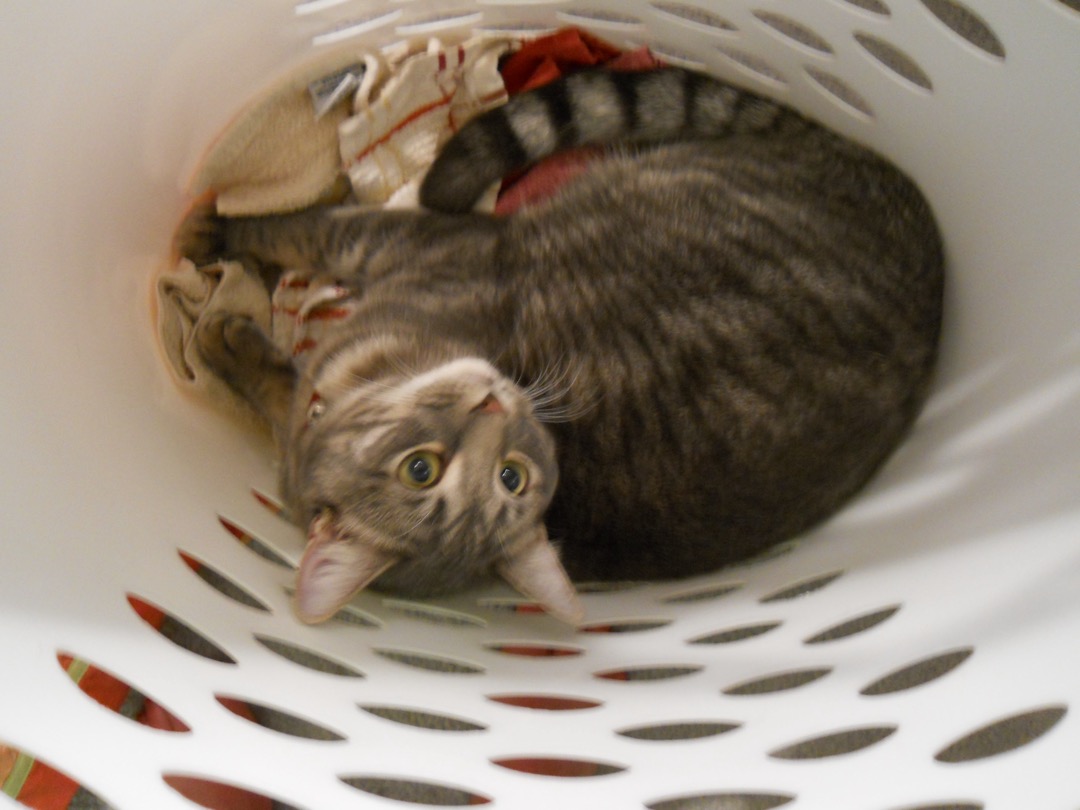
Cat pee comes out of clothes, and it comes out completely, but only if you break one habit: do not let heat anywhere near the garment until the smell is gone. That single rule is the difference between a shirt you keep and a shirt you quietly throw away, and it is the rule most laundry advice on the internet gets backwards.
I am a feline-practice veterinarian, so this problem reaches me from both ends. Owners bring me the medical half (“why is she suddenly peeing on my clothes?”) and then ask the practical half on the way out the door (“and can I save the sweater?”). The answer to the second question is almost always yes. Cat urine is chemically stubborn in a way that dog or human urine is not, but it is stubborn in a predictable way, and once you understand what you are actually trying to dissolve, the method follows.
Below is the process I give clients, the corrections I most often have to make, how to handle the garments that cannot go through a normal wash, and the part no laundry guide will tell you: what your cat was trying to communicate, and when it is a reason to call me rather than reach for the detergent.
The Short Answer
For a washable garment:
- Rinse with cold water first. Flush the area under a cold tap, or blot with a cold wet cloth. Do not scrub, and do not use warm or hot water.
- Pre-treat with an enzymatic pet-urine cleaner. Saturate the spot and keep it damp — about fifteen minutes for a fresh accident, several hours to overnight for a stain that has already dried.
- Wash cold, on its own. Regular detergent, cold water, longest cycle available, and never mixed in with the rest of the laundry.
- Boost the cycle. Add about half a cup of baking soda, or a scoop of oxygen bleach on colorfast fabrics.
- Air dry and smell it before you dry it. Hang the garment until fully dry, then check. Only once there is no trace of odor is a machine dryer safe.
- Repeat if anything lingers. A set-in stain commonly needs two passes. Repeating is normal, not a sign the garment is lost.
Everything below is the reasoning behind those six steps, and it matters, because the shortcuts people take are exactly the ones that make the odor permanent.
Why Cat Urine Is Different From Everything Else in Your Hamper
Three separate substances are doing three separate things to the fabric, and a method that only addresses one of them will seem to work and then fail a week later.
Urea breaks down quickly into ammonia. This is the sharp, eye-watering hit you get when you first find the accident. It is also the easiest part to remove, because ammonia is water-soluble and volatile. Rinsing and washing genuinely does deal with it, which is why a garment can smell fine coming out of the machine and foul again three days later. The urea was never the problem.
Uric acid is the problem. It is only weakly soluble in water, and it binds to fibers and then crystallizes in place. No amount of ordinary detergent dissolves it. When humidity rises, or when the fabric warms against your body, those crystals rehydrate and release odor again. This is the mechanism behind the sweater that smells clean in the drawer and smells like a litter box twenty minutes after you put it on. Enzymatic cleaners exist specifically to break this compound down, which is why they are not an optional upgrade over regular detergent but a different category of product entirely.
Felinine is the cat-specific part, and it is the reason your cat’s urine is so much worse than your dog’s. Cats excrete this sulfur-containing amino acid in their urine, and over the following hours bacterial enzymes cleave it into volatile thiols and mercaptans — the same chemical family as skunk spray. Fresh cat urine is unpleasant. Cat urine that has sat for a day is genuinely appalling, and it got worse rather than fading because of this reaction. It is also the clearest argument for treating the garment today instead of leaving it in the hamper until the weekend.
One more: urobilin, a bile pigment breakdown product, is what leaves the yellow mark. It is a staining problem, not an odor problem, which is why a garment can come out visibly marked but genuinely odor-free, or the reverse. Treat them as two separate jobs.
The Cold-Water Rule, and Why the Laundry Brands Get It Wrong
You will find advice from appliance manufacturers and detergent brands telling you to wash urine-soiled clothing at the hottest temperature the care label permits, or to finish with a steam-dry cycle. Do not do it. Heat denatures the proteins in urine and cross-links that residue to the fibers. Once that has happened, the uric acid is locked into a structure that enzymes can no longer reach, and the odor stops being removable at any price. A hot wash on a urine-soiled garment is the single most common way a salvageable item becomes a rag.
There is one legitimate exception, and it is worth stating because it confuses people. Heat is only dangerous while urine is still present. Once the garment has been properly treated, washed, air-dried, and confirmed odor-free by your nose, a normal hot wash for ordinary hygiene is perfectly fine. The mistake is not heat. The mistake is heat applied too early.
The same logic governs the dryer. Air dry, fully, and then smell the garment — near a seam or in the armpit, where fabric is thickest and residue concentrates. If there is any hint of odor, go back to step two. If you tumble-dry a garment that still holds urine, you have not finished the job, you have ended it.
Vinegar Works, but Not at the Same Time as Enzymes
White vinegar earns its reputation here. Cat urine residue is alkaline, vinegar is acidic, and a soak of one part white vinegar to three parts cold water for thirty minutes neutralizes a meaningful share of the odor. It is the right move when you do not have an enzymatic cleaner in the house.
What almost no guide mentions is that vinegar and enzyme cleaners actively work against each other. Household vinegar sits around pH 2.5 to 3. Enzymatic cleaners are formulated to work near neutral, and strong acid denatures the enzymes — which is to say, a vinegar-soaked garment can inactivate the exact product you are counting on to dissolve the uric acid. Never mix them in one soak, and never apply the enzyme cleaner straight onto a vinegar-wet garment.
If you want to use both, the order matters:
- Vinegar soak, thirty minutes, cold water.
- Rinse thoroughly with cold water until the vinegar smell is gone. This step is not optional.
- Then apply the enzymatic cleaner and let it dwell.
Honestly, for most accidents you can skip the vinegar entirely and go straight to enzymes. Vinegar is the fallback, not a required first stage.
What the Boosters Actually Do
Baking soda is sodium bicarbonate, a mild base that adsorbs acidic odor molecules and buffers the wash pH. Half a cup to a cup in the drum is genuinely helpful. It is a booster and nothing more — it does not break down uric acid, so it cannot replace an enzyme step.
Oxygen bleach is sodium percarbonate, sold as an oxygen booster or laundry brightener. Dissolved in water it releases hydrogen peroxide and washing soda, which lifts the urobilin staining and deodorizes without the hazards of chlorine bleach. Thirty minutes to overnight as a soak on colorfast fabrics, and spot-test first on anything dark or delicate.
Borax — sodium borate — boosts detergent performance and has mild deodorizing and antimicrobial properties. It is a reasonable addition to a wash, with two caveats nobody states: keep undissolved borax and damp borax-treated items away from your cat, since ingestion is a real risk, and skip it on wool and other protein fibers.
Never use chlorine bleach or an ammonia-based cleaner, for two distinct reasons that usually get conflated. The chemical reason: bleach in contact with the ammonia already present in urine releases chloramine vapor, a genuine respiratory irritant. The behavioral reason, which matters more in my exam room: ammonia-based cleaners smell like cat urine to a cat, so using one on the spot advertises it as an established toilet and invites your cat to use it again.
For product choice specifically, I keep a separate, tested breakdown of the best enzyme cleaners for cat urine laundry, including which big-selling laundry boosters contain no enzymes at all despite the marketing, and a broader roundup of the best cat urine enzyme cleaners for the accidents that land somewhere other than your clothes.
Stains That Have Already Dried
A dried stain is not a lost cause, but the standard fifteen-minute dwell time is not going to touch it. Crystallized uric acid has to rehydrate before enzymes can reach it at all, which is the step that takes time.
Saturate the area generously with the enzymatic cleaner — more than feels reasonable, enough that the fabric is wet through rather than dampened on the surface. Then keep it wet. Cover the spot with plastic wrap or a damp towel so it cannot dry out, and give it several hours, ideally overnight. An enzyme cleaner that dries out has stopped working; the dwell time only counts while the fabric is still moist. Then wash cold, air dry, and check. Two full cycles on an old stain is completely normal, and I would not give up on a garment until you have done the long soak properly at least twice.
Garments That Cannot Go Through a Normal Wash
Wool, cashmere, and delicates. Do not run these on a standard cycle, and skip the vinegar soak entirely — prolonged acid contact damages protein fibers. Blot with cold water, then test a well-diluted enzyme cleaner on an inside seam or hem before you touch the visible area. Work in small dabs rather than saturating, then rinse cold and dry flat, never hanging wet wool, which stretches under its own weight.
Dry-clean-only items. Blot with cold water, air the garment out, and take it in — and tell the cleaner what the stain is. Home enzyme treatment interacts unpredictably with professional solvents and can set unevenly, so an honest disclosure gets you a better result than a half-attempted DIY treatment the cleaner has to work around.
Down jackets and vests. Spot-treat only. Soaking down through the shell makes the fill clump, lose loft, and hold moisture for days, which trades a urine smell for a mildew smell. Treat the shell fabric where the urine landed, rinse minimally, and once it is genuinely clean, tumble dry on low with wool dryer balls to redistribute the fill.
Shoes and sneakers. Pull the insoles out and treat them separately — they absorb most of the urine and are the actual source of the smell. Most sneakers should not be submerged, because water breaks down the adhesives and foam. Treat the affected area, stuff the shoe with newspaper to wick moisture and hold its shape, and air dry away from heat. Anything with leather or non-removable padding should not go in the machine at all.
Why Your Cat Peed on Your Clothes
This is the half of the problem that actually prevents the next load, and it is where I would push back on the framing most owners arrive with. Your cat is not being spiteful. A pile of laundry is one of the most predictable off-box targets in feline medicine, for reasons that are either medical or environmental, and almost never personal.
The medical causes come first, always. In cats — particularly those under about ten with no other diagnosis — the most common driver of house-soiling is not a bacterial urinary tract infection but feline idiopathic cystitis (FIC), part of the feline lower urinary tract disease (FLUTD) complex. True bacterial UTIs are actually uncommon in young, otherwise healthy cats; they become more likely with age, diabetes, or chronic kidney disease. FIC causes real bladder pain and urgency, and a cat in pain often stops making it to the box, or begins associating the box itself with the pain and avoids it. Bladder stones, kidney disease, diabetes, hyperthyroidism, and arthritis that makes climbing into a high-sided box genuinely hurt all belong on the same list.
Then there is substrate preference and box aversion, which are two different things. Aversion is learned: a cat that had a painful episode in the box, or dislikes a new litter, or finds the box too dirty, decides the box is the problem. Preference is separate and simpler — soft, absorbent, loose material is exactly what a cat’s instincts read as an appropriate place to dig and eliminate, and a pile of clean laundry on the floor is a textbook example. If your cat is choosing laundry specifically, that is a substrate signal, not an insult.
Stress ties both halves together. Environmental stress is a documented trigger for idiopathic cystitis flare-ups and for behavioral marking, which is convenient, because the same fixes address both. Adequate resources are the foundation: one litter box per cat plus one spare, spread around the home rather than clustered, and scooped daily. If your setup is behind on any of that, my guides to the best cat litter boxes and best cat litters cover box size, entry height for arthritic cats, and which litters cats actually accept, and my step-by-step litter box cleaning guide covers the schedule that keeps a box from becoming the thing your cat is avoiding. For households where scooping frequency is the realistic bottleneck, a self-cleaning litter box removes that variable entirely.
Hydration matters too, because dilute urine is less irritating to an inflamed bladder — many cats drink substantially more from moving water, which is why a cat water fountain is a standard recommendation for any cat with a urinary history. For cats whose soiling is clearly stress-driven, calming treats can be a reasonable adjunct alongside environmental changes, though they are a support measure and not a treatment.
In the immediate term, the simplest intervention is also the most effective: get laundry off the floor and out of open baskets. A cat cannot re-offend on a hamper with a lid.
When to Call Your Vet Instead
Call the same day, treating it as an emergency, if your cat is straining in or near the box and producing little or no urine, making repeated short trips, or crying while trying to urinate. In cats, and especially in males, this can be a urethral obstruction — a blocked cat can become critically ill within a day, and this is the one item on this page that cannot wait.
Book a regular appointment for:
- Blood in the urine, or urine that looks unusually dark.
- Sudden onset of house-soiling in a cat with no prior history. This is a medical workup before it is a behavior problem.
- A noticeable increase in thirst or urine volume, which points toward diabetes, kidney disease, or hyperthyroidism.
- Any new soiling in a cat aged ten or over, where cognitive dysfunction and arthritis both need ruling out before you conclude it is behavioral.
- Soiling that continues after you have corrected the box setup and removed the environmental triggers.
Cleaning the clothes is the urgent-feeling part. The diagnosis is the part that stops it happening again.
Frequently Asked Questions
Does cat pee come out of clothes in the washing machine?
Yes, but not with detergent alone. The uric acid in cat urine does not dissolve in water, so a normal wash removes the ammonia smell while leaving the compound that makes the odor return. Pre-treat with an enzymatic pet-urine cleaner first, then wash cold on the longest cycle, and air dry before you use the dryer.
Will the cat pee smell ever fully go away?
Yes, on washable fabric, provided the garment has never been through heat while still soiled. Enzymatic cleaners break down uric acid rather than masking it, so once it is gone the odor does not come back. The one situation where the answer is genuinely no is a garment that was washed hot or tumble-dried with urine still in it — heat bonds the residue to the fibers permanently.
Should I wash urine-soiled clothes in hot water?
No. Heat sets urine odor into fabric by cross-linking the residue to the fibers, which puts it beyond the reach of enzyme cleaners. Wash cold. Some appliance and detergent brands recommend the hottest setting the care label allows, and on a urine-soiled garment that advice will cost you the item. Hot water is only safe after the garment is fully treated and confirmed odor-free.
How do I get cat pee smell out of clothes that have already been dried?
Assume a long soak rather than a quick pre-treat. Saturate the area with an enzymatic cleaner until the fabric is wet through, cover it with plastic wrap or a damp towel so it cannot dry out, and leave it several hours or overnight — enzymes only work while the fabric stays moist. Then wash cold and air dry. Two full rounds is normal on a set-in stain.
Can I use vinegar and an enzyme cleaner together?
Not at the same time. Vinegar is acidic enough to denature the enzymes and stop the cleaner working. If you want both, soak in diluted white vinegar first, rinse thoroughly with cold water until the vinegar smell is gone, and only then apply the enzyme cleaner. For most accidents you can skip vinegar and go straight to enzymes.
Is it harmful to smell cat urine?
For most people, briefly smelling cat urine is unpleasant but not dangerous. Sustained exposure to the ammonia in concentrated or enclosed accumulations can irritate the eyes, nose, and airways, and people with asthma or other respiratory conditions are more sensitive to it. Ventilate the area, wear gloves while cleaning, and never combine bleach with urine or an ammonia cleaner, which releases chloramine vapor.
Can I just use regular laundry detergent with extra baking soda?
It will help, but it will not finish the job. Baking soda adsorbs acidic odor molecules and buffers the wash, and it is a worthwhile addition to the cycle. Neither it nor detergent breaks down uric acid, though, so the smell tends to return in humid weather or once the fabric warms against your body. Use them alongside an enzyme cleaner, not instead of one.
Is chlorine bleach ever appropriate on cat urine?
No. Beyond the fabric damage, bleach reacting with the ammonia in urine releases chloramine vapor, a respiratory irritant. Use oxygen bleach (sodium percarbonate) instead — it lifts the yellow staining, deodorizes, is safe on most colorfast fabrics, and does not react dangerously with urine.
Why does my cat keep peeing on my clothes specifically?
Soft, absorbent piles mimic the loose material a cat instinctively looks for when eliminating, which makes laundry on the floor a classic target. That said, sudden house-soiling is a medical finding first — feline idiopathic cystitis is a far more common cause in cats than a bacterial urinary infection. Get your cat examined, then address the box setup and get laundry into a lidded hamper.
My cat is straining in the litter box and barely producing urine. Is that related?
Treat that as an emergency and call your veterinarian today, particularly if your cat is male. Straining with little or no output can mean a urethral obstruction, and a blocked cat can become critically ill within about twenty-four hours. Do not wait to see whether it resolves on its own, and do not treat it as a cleaning or behavior issue.
Related Articles
About the Reviewer

Dr. Priya Anand, DVM, ABVP (Feline)
DVM, Cornell University College of Veterinary Medicine
Dr. Priya Anand is a veterinarian board-certified by the ABVP in Feline Practice, with over a decade caring for cats in a feline-exclusive clinic. She has guided thousands of cat owners through nutrition, litter-box troubleshooting, enrichment, and senior-cat care. She founded House of Mittens in 2026 to cut through pet-aisle marketing and recommend the food, litter, and gear that actually keep cats healthy and happy — judged the way she'd advise her own patients.