10 Best Cat Dental Treats of 2026, Vet-Reviewed
Feline vet Dr. Priya Anand reviews the best cat dental treats of 2026. Only three carry a VOHC seal, and only one is accepted for both plaque and tartar.
Updated
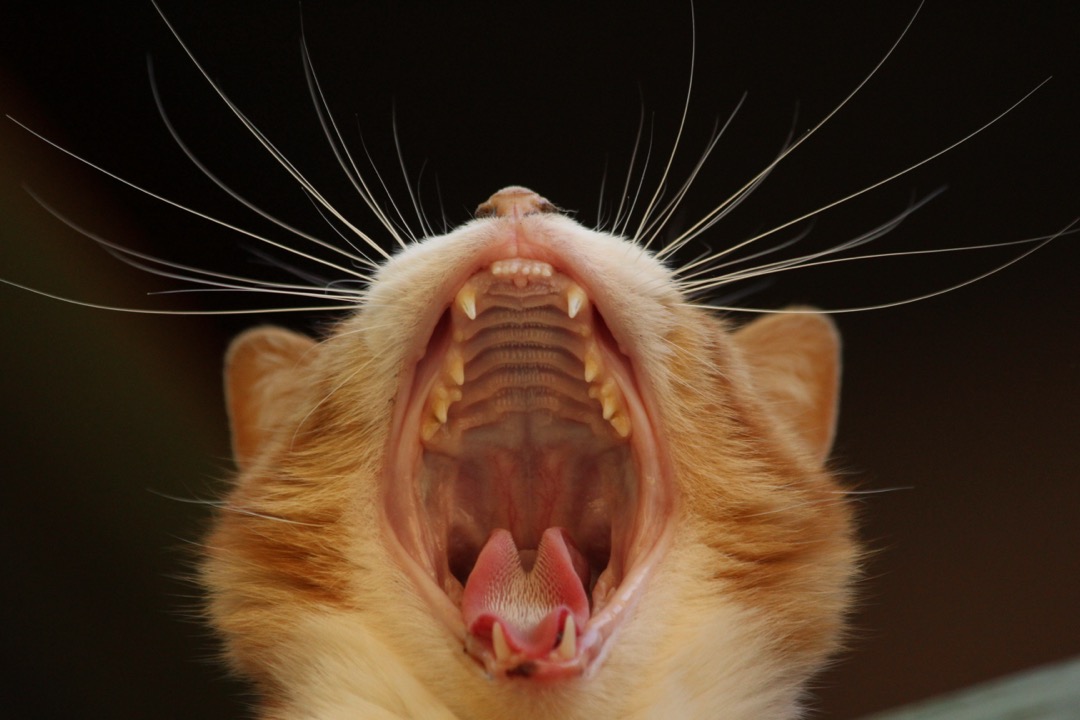
By the time most cats reach middle age, some degree of periodontal disease is already present, and the owner sitting across the consulting table from me almost never knew. That is not negligence. It is anatomy. A cat’s mouth is small, dark and not designed for inspection, cats hide oral pain with remarkable discipline, and the part of the tooth that matters most is the part you cannot see. Dental treats are the most popular response to this problem, and I want to start by being straight about what they can and cannot do, because the honest version of that answer is what makes the rest of this page useful.
A dental treat works on the visible crown of the tooth, above the gumline, and it works only if the cat chews it. Feline periodontal disease is frequently worse below the gumline, in the periodontal space between the root and the bone, and nothing you buy in a bag reaches that. Subgingival disease and feline resorptive lesions cannot be assessed without probing and dental radiographs under general anaesthetic. So a treat is a maintenance habit, an adjunct to brushing and to professional cleaning, and never a replacement for either. Anyone selling it to you as a replacement is selling you something else.
The second thing to know before you shop is that most of the authoritative-sounding language in this aisle is written by the people selling the product. “Vet recommended” is not awarded by anyone. “Clinically proven” usually means a study the manufacturer ran and holds on file. The one credential that comes from outside the company is the Veterinary Oral Health Council seal, and across the whole cat aisle on Amazon US, exactly three dental treats carry one. I checked every product on this page against the VOHC’s own accepted-products list and read the ingredient panels myself, and the results are laid out below without softening. If you are also working out the rest of the treat jar, our guides to the best cat treats and hairball treats cover the non-dental side, and the cat diet calculator will give you the daily calorie number that everything below has to fit inside.
Find the Best Cat Dental Treat for Your Situation
Jump straight to the section that matches your cat:
- Best cat dental treats overall
- Best VOHC-approved cat dental treats
- Best vet-recommended cat dental treats
- Best cat dental treats for gingivitis
- Best cat dental treats for bad breath
- Best natural cat dental treats
- Best grain-free cat dental treats
- Best chicken-free cat dental treats
- More cat dental treats by need
How We Chose These Cat Dental Treats
VOHC status was checked product by product against the Veterinary Oral Health Council’s own published list of accepted products, not against what the Amazon listing says. That single step removed several products that market themselves aggressively on dental language, and it also caught two traps worth naming: a brand whose VOHC seals cover a dog chew and a toothpaste rather than the cat treat you are looking at, and a brand whose accepted products are dog chews while the cat line has never been submitted. Ingredient panels were read directly off each listing rather than taken from the product description, which is how the fish-named, chicken-first pattern in this category became obvious.
Beyond that, I weighted review depth heavily, because in a category full of new entrants a record accumulated over years tells you more than a polished label does, and I noted honestly where a large review count is pooled across a product line rather than earned by one SKU. Calorie figures were recorded only where the manufacturer publishes one; where nothing is published I have written that instead of estimating, because a made-up number is worse than an admitted gap when you are budgeting a daily treat. Two products on this page are included with no dental claim at all, and their sections say so in the first line. They earn their place by solving a problem the rest of the category leaves unsolved.
Best Cat Dental Treats Overall
These are the full reviews, in order, starting with the pick I would put in front of most owners and working through the strongest evidence, the best value, the budget trial and the role-specific options.
Best Overall: Greenies Feline Natural Dental Treats
This is the treat I hand to most owners as a starting point, and the reasoning is boring in the way that good clinical reasoning usually is. It carries an independent VOHC seal for reduction of tartar accumulation, awarded in 2005, which means a council outside the company reviewed submitted trial data. It is under two calories a piece, which is what makes a daily habit possible inside a cat’s treat budget rather than a weekly indulgence that achieves nothing. And it has been through more households than anything else in this category, so the failure modes are well documented rather than hypothetical. The texture is the part worth understanding: a dental treat has to be porous enough to collapse around the tooth as the cat bites, dragging along the enamel, rather than snapping cleanly in half. That sustained contact is the whole mechanism, and it is why this feels different in the hand to an ordinary crunchy treat.
Now the caveats, because there are real ones. The 44,103 ratings on this listing are a pooled review base shared across the whole Feline Greenies dental line, spanning several flavours and bag sizes, so treat that number as evidence about the line rather than about this specific bag. The brand’s own on-listing claim of thirty-six percent less tartar accumulation in twenty-eight days is described as data on file, which means it is in-house research rather than the VOHC’s independent review. The VOHC seal is the credential that matters; the percentage is marketing. Palatability is also genuinely mixed even for the category leader, a share of cats refuse it outright, and a minority of reviewers report vomiting or loose stool after starting. The ingredient panel leads with chicken meal, ground wheat, brewers rice and corn gluten meal, which is a grain-inclusive formula rather than a meat-forward one.
None of that changes the verdict. If you want one dental treat that combines independent evidence, a workable calorie count and the deepest record of real-world use on this page, this is it. Introduce a few a day rather than a handful, and watch whether your cat actually chews them.

Greenies Feline Natural Dental Cat Treats, Roasted Chicken Flavor, 9.75 oz
by Greenies
The most-tested dental treat in the category and my default starting point: an independent VOHC tartar seal, under two calories a piece, and a deeper review record than anything else here, with the honest caveat that those ratings are pooled across the whole Feline Greenies dental line.
Pros
- It is the only cat dental treat here that pairs an independent VOHC seal with a review record this deep, so the trial evidence and the household evidence point the same direction
- The VOHC accepted it for reduction of tartar accumulation in 2005, which means a council outside the company reviewed submitted trial data rather than the manufacturer simply printing a claim on the bag
- Under two calories a treat, which is what makes a genuinely daily dental routine survivable inside a cat's ten percent treat budget
- The crunchy, porous texture is built to collapse around the tooth rather than shatter on first contact, and that sustained contact is the entire mechanism behind a mechanical dental treat
Cons
- The 44,103 ratings are a pooled review base shared across the whole Feline Greenies dental line, covering several flavours and bag sizes rather than this one SKU
- Palatability is genuinely mixed even for the category leader, and a real share of cats refuse it outright
- A minority of reviewers report vomiting or loose stool, and the panel leads with chicken meal, ground wheat and corn gluten meal rather than a named muscle meat
Strongest Clinical Claim: Purina Pro Plan Veterinary Diets Dental Bites
If you want the strongest independent evidence available in this entire category, it is this small pouch, and the reason is a distinction almost nobody explains. The VOHC certifies two separate claims: Reduction of Plaque Accumulation and Reduction of Tartar (Calculus) Accumulation. They are not interchangeable, and a product can hold one without holding the other. Of the three cat dental treats sold on Amazon US with a VOHC seal, this is the only one accepted for both, awarded in 2019.
That matters more than it sounds. Plaque is the living bacterial biofilm that colonises the tooth surface within hours of cleaning, and it is what inflames the gum margin and drives gingivitis. Tartar is plaque that has mineralised into a hard yellow-brown deposit, and while it looks bad and provides a rough surface for more plaque to cling to, it is the plaque underneath doing the damage. A tartar-only claim tells you the teeth will look better. A plaque claim tells you the gums have a better chance. If gum health is what you are actually worried about, this is the product with the credential to match.
I am calling it the upgrade pick on evidence first and on price second. It now sells as a two-pack rather than a single pouch, which puts it above the everyday Greenies bag, and the premium buys you the credential rather than a larger supply. That is the honest trade: the format is still the weak point, because 1.8 ounces is a small pouch and two of them do not last a multi-cat household long, so a daily routine means repurchasing often. Several reviewers also report the bites run large for small-mouthed cats, which is the same trade-off that runs through this whole category, since a piece big enough to force a chew is a piece some cats find awkward. The brand does not publish a per-treat calorie figure on the listing, so you cannot budget it precisely, which is a fair criticism of a product from a veterinary line. One note on the label itself: the Amazon listing only advertises the tartar seal, but the VOHC’s own accepted-products table records this treat as accepted for plaque and tartar both, which is the claim that earns it this spot.

Purina Pro Plan Veterinary Diets Dental Bites Cat Treats, 1.8 oz Pouch (Pack of 2)
by Purina
The only cat dental treat on Amazon US accepted by the VOHC for both plaque and tartar, which makes it the strongest piece of independent evidence you can put in a treat jar, small pouch and all.
Pros
- The only cat dental treat sold on Amazon US that holds VOHC acceptance for both claims, reduction of plaque and reduction of tartar, which is the strongest independent credential available anywhere in this category
- Plaque is the living bacterial film that actually drives gingivitis, so a plaque claim is the one that matters for gum health rather than for how the teeth look
- It comes out of Purina's veterinary line rather than the grocery line, which is why it turns up in practice more often than its review count suggests
- The seal was awarded in 2019, making it the most recently reviewed VOHC cat treat on this page
Cons
- Even as a two-pack these are small pouches at 1.8 ounces each, so a daily routine still means repurchasing often
- Several reviewers say the bites run large for small-mouthed cats
- The brand does not publish a per-treat calorie figure on the listing, which makes precise budgeting impossible
Best Value With the VOHC Seal: Purina DentaLife Savory Salmon
DentaLife earned its VOHC seal for tartar reduction in 2016, and among the three accepted options here it gives you the most treat for your money by a wide margin. That is not a trivial advantage in a category where the whole benefit depends on daily use: a bag that runs out in ten days is a routine that lapses. The 19-ounce resealable pouch is the only pack on this page genuinely sized for a multi-cat household, and if you have three cats and an intention to do this properly, it is the practical answer.
The construction is worth a note because it is the same design logic as the overall pick. These are built porous, so the tooth sinks in and the piece collapses around it rather than snapping away, which is what produces the scrubbing contact that a dental treat depends on. Added calcium, taurine and probiotics mean the formulation is doing slightly more than abrasion alone, though I would not buy it for those additions on their own.
Two honest limits. The pieces run large, which is the recurring complaint from owners of small cats and kittens and which you should expect from any treat engineered to be chewed rather than swallowed. And the listing does not publish a full ingredient panel, which is the reason I make no claim here about which protein the formula leads with. I read the panels for every other crunchy treat on this page directly off the listing; for this one that information is not there to read, and I would rather say so than repeat what the marketing copy implies. If a complete panel matters to you before you buy, that gap is a real reason to choose one of the others.

Purina DentaLife Cat Dental Treats, Savory Salmon Flavor, 19 oz
by Purina
The most affordable way to get an independently accepted dental treat into a cat's routine, in the only bag here big enough for a multi-cat household.
Pros
- VOHC accepted for tartar reduction in 2016, and it delivers the most treat per dollar of the three accepted options here
- The 19 oz resealable pouch is the only bag on this page large enough to run a daily routine across several cats without reordering constantly
- The porous crunchy structure is designed to collapse around the tooth rather than crumble away from it, which is what produces scrubbing contact instead of a clean snap
- Added calcium, taurine and probiotics, so the formulation is doing a little more than abrasion alone
Cons
- The pieces run large for small mouths and for kittens
- The listing does not publish a full ingredient panel, so you cannot check what the formula leads with before buying
- The usual palatability lottery applies, and a salmon-flavoured crunchy treat is a love-it-or-ignore-it proposition
Best Budget: Wellness WHIMZEES Cat Dental Treats
The first question in this category is not which dental treat is best. It is whether your cat will eat a crunchy dental treat at all, and a surprising number will not. This small bag is the cheapest sensible way to find out before you commit to a large pouch of anything. It is crunchy and porous, so the mechanical idea is the same as the accepted treats, and 4.5 ounces is about right for a two-week trial, which is long enough to learn whether your cat chews them or bolts them.
Say the important thing plainly, because it is exactly the kind of mistake that is easy to make in this aisle: WHIMZEES has VOHC-accepted products, and they are dog chews. The cat line does not carry a seal and has not been submitted. If you have seen the WHIMZEES name attached to a dental credential, that credential belongs to a different animal. The brand is legitimate, Wellness Pet is an established manufacturer with a traceable record rather than an anonymous white label, and the treats are made in the USA, but none of that is the same as accepted evidence.
Buy this to run the experiment, not to run the routine. If your cat takes it and chews it, move to one of the three VOHC-accepted options and get the independent evidence behind your daily habit. A small bag is poor value per ounce once you already know the answer, and the brand publishes no per-treat calorie figure, which makes it harder to budget than the options that do.

Wellness WHIMZEES Cat Dental Treats, Chicken and Salmon Flavor, 4.5 oz Bag
by Wellness Pet
A trial bag rather than a long-term routine: the cheapest way to test whether your cat will take a crunchy dental treat, with no VOHC seal behind it and a dog-line seal that does not transfer.
Pros
- The least expensive way to find out whether your cat will accept a crunchy dental treat at all before committing to a large bag of anything
- Crunchy and porous, so the mechanical idea is the same as the accepted treats even though the evidence behind it is not
- Made in the USA by Wellness Pet, an established manufacturer with a traceable record rather than an anonymous white label
- A 4.5 oz bag is the right size for a two-week trial, and 869 ratings is enough of a base to see the recurring complaints
Cons
- No VOHC seal -- the VOHC-accepted WHIMZEES products are dog chews, and the cat line has not been submitted
- The brand does not publish a per-treat calorie figure
- A small bag is poor value per ounce once you already know your cat likes it
Best Value Per Ounce: Minties Dental Treats for Cats
Minties has the most interesting formulation on this page, and also the biggest gap between its front label and its ingredient panel. Start with what is genuinely good: sodium hexametaphosphate appears near the end of the panel, and it is not decoration. HMP is a calcium-chelating agent, which means it binds free calcium in saliva. Tartar forms when salivary calcium mineralises the plaque biofilm into a hard deposit, so reducing the available calcium interferes with that hardening step directly. It is a real second mechanism working alongside abrasion, and it is the same chemistry used in several veterinary dental products. It is also the best cost per ounce of anything here outside the VOHC tier, which matters for a treat that only works if it is given every day.
Now the two things the packaging does not tell you, both verified by reading the panel. First, it is not grain-free: brown rice flour is the second ingredient, right behind chicken meal. Owners assume dental treats with clean labels are grain-free and this one is routinely mistaken for one. Second, despite “Salmon Flavored” on the front of the bag, it is a chicken-first treat, and salmon meal sits eleventh on the panel behind chicken meal, brown rice flour, tapioca starch, ground pea, pea protein, chicken fat, natural chicken flavour, beet pulp, tuna and white fish. If you are buying it because your cat prefers fish, that is fine, since the flavour is genuinely fishy. If you are buying it because your cat cannot have chicken, this is the wrong product entirely.
It carries no VOHC seal, so the anti-tartar mechanism here is plausible chemistry rather than accepted trial evidence, and I would not pretend otherwise. With 3,332 ratings it has the second deepest record on this page, and those reviews broadly support its positioning as a lower-cost alternative to the category leader.

Minties Dental Treats for Cats, Salmon Flavored, 10 oz
by Minties
The best cost per ounce outside the VOHC tier and the only treat here using sodium hexametaphosphate to chelate salivary calcium, provided you know going in that it is neither grain-free nor salmon-first.
Pros
- Sodium hexametaphosphate is a genuine calcium-chelating agent: it binds salivary calcium so plaque has less free mineral available to harden into tartar, which is a real second mechanism rather than a flavour claim
- The best price per ounce of anything here outside the VOHC tier, which is what makes a daily routine affordable
- The panel is short enough to read end to end, leads with chicken meal, and uses rosemary extract rather than artificial preservatives
- 3,332 ratings, the second deepest record on this page, broadly support its positioning as a lower-cost alternative to the category leader
Cons
- No VOHC seal, so the anti-tartar mechanism is plausible chemistry rather than accepted trial evidence
- It is not grain-free despite the clean-label positioning, since brown rice flour sits second on the panel
- Despite 'Salmon Flavored' on the front it is a chicken-first treat, with salmon meal eleventh
Best for Picky Cats: Pet Honesty Teeth Cleaning Bites
Let me deal with the name first, because it is the single most likely thing on this page to be misread. “Vet Approved” appears in the product title, and it is unregulated marketing language. There is no body that approves treats and no certification behind the phrase. It is not the VOHC seal, it is not equivalent to one, and this product does not appear on the VOHC’s accepted list. That has nothing to do with whether the product is any good, and everything to do with reading the shelf accurately.
What it actually offers is the most texture-forgiving construction here: a crunchy outer shell over a creamy centre. For a cat that takes one bite of a hard treat and walks away, that softer interior is often the difference between a routine and a bag in the cupboard. The listed actives are clinically-studied postbiotics, kelp and parsley rather than abrasion alone, so this is a genuinely different mechanism to try when crunchy treats have already failed. It is NASC certified, which unlike “vet approved” is a real supplement-industry quality programme with auditing behind it, though it speaks to manufacturing standards rather than to dental efficacy.
Be realistic about the trade-off. A softer treat is easier for a cat to accept and does less mechanical work on the tooth, which is the same tension that runs through every dental product for a fussy animal. A minority of reviewers report digestive upset, and no calorie figure is published, which makes precise budgeting impossible. I would use this when the harder options have been refused, not instead of trying them.

Pet Honesty Vet Approved Cat Teeth Cleaning Bites for Fresh Breath, 30 Day
by Pet Honesty
A dual-texture treat with a soft centre for cats that refuse hard ones, working through postbiotics and kelp rather than abrasion, with the important caveat that 'Vet Approved' on a bag is not a certification.
Pros
- A crunchy shell over a creamy centre, which is the most texture-forgiving construction here and the one most likely to be taken by a cat that spits hard treats back out
- The listed actives are clinically-studied postbiotics, kelp and parsley rather than abrasion alone, so it is a genuinely different mechanism to try when crunchy treats have failed
- NASC certified, which is a real supplement-industry quality programme with audits behind it rather than a phrase invented for the label
- 756 ratings at 4.5 stars is a usable evidence base for a product this recent
Cons
- 'Vet Approved' in the product name is unregulated marketing language, not a VOHC seal or any third-party certification
- A minority of reviewers report digestive upset
- No calorie figure is published, which makes it hard to fit precisely into a daily treat budget
Best Grain-Free: Emerald Pet Grain-Free Dental Treats
This is the one product on the page whose grain-free claim survives a read of the panel. Chicken meal leads, followed by pea flour, tapioca starch, pea protein and salmon, with no grain anywhere. That is a genuinely grain-free formula rather than a marketing position, which distinguishes it from at least one other treat here that is widely assumed to be grain-free and is not.
Two details make it a better dental treat than the seal-free label suggests. The pieces are larger than most, and that matters more than owners expect: the entire mechanism depends on the cat breaking the treat down rather than swallowing it, so a piece big enough to force a chew is doing real work that a small one cannot. And sun-cured alfalfa supplies chlorophyll, which is the identifiable breath ingredient here rather than a flavour spray added at the end. The listing also publishes 2 kcal a piece, which puts it in the minority of this category that discloses a calorie figure at all and lets you actually plan a daily dose.
The honest limitations are the price and the name. It carries the highest sticker price on this page, though the large tub means it is not the priciest per ounce, and it carries no VOHC seal, so its dental benefit rests on mechanism rather than accepted trial data. And despite “with Salmon” on the front, chicken meal leads the panel with salmon fifth. That is the same trap as the salmon-named treat above, and it is worth internalising: in this category, a fish name usually describes flavour, not the primary protein.

Emerald Pet Grain-Free Cat Dental Treats with Salmon, 11 oz Tub
by Emerald Pet
The one treat here whose grain-free claim survives a read of the ingredient panel, with a published calorie figure and chlorophyll for breath, though it is chicken-first despite the salmon on the front.
Pros
- Genuinely grain-free: pea flour and tapioca starch replace grain entirely, so this is one of the few grain-free claims on this page that survives a read of the panel
- 2 kcal a piece is published on the listing, which puts it among the minority of this category that discloses a calorie figure at all
- The pieces are large enough to force a chew rather than a swallow, which is the single biggest determinant of whether a mechanical dental treat does anything at all
- Sun-cured alfalfa supplies chlorophyll, so the breath claim has an identifiable ingredient behind it rather than a flavour spray
Cons
- No VOHC seal, so the dental benefit rests on mechanism rather than on accepted trial data
- The highest price per ounce of the crunchy picks here
- It is chicken-first despite 'with Salmon' on the front, with chicken meal leading the panel and salmon fifth
Best for Bad Breath: Tartar Shield Daily Dental Cat Treats
Bad breath is the reason most owners arrive in this category, and reviewers here consistently report a noticeable improvement within a few days, which is a stronger and more specific pattern than the vague enthusiasm most dental treats attract. It also publishes 1 kcal per treat, the lowest published figure on this page, which leaves more room in a daily budget than any other option that discloses one. For a cat already at the top of its calorie allowance, that is a real advantage.
I have to be precise about the brand’s credentials, because the listing invites a misunderstanding and this is a page about getting those right. Tartar Shield does hold VOHC acceptances, and they cover a dog rawhide chew and a pet toothpaste. They do not cover this cat treat. The “clinically proven” language and the forty-two percent tartar reduction figure on the listing are the company’s own in-house data, not independently reviewed evidence. That does not make the number false, and I have no reason to think the company invented it. It makes it a different kind of claim than a VOHC seal, and the whole point of the seal is that somebody outside the company checked.
Taken on its own terms this is a well-made specialist product from a brand that does dental care rather than treats generally, with pieces sized to be chewed and a solid 4.5-star record across 578 ratings. The cost per ounce is high for a small bag, so it works better as a targeted purchase for a breath problem than as the everyday routine treat. And a word of caution that belongs here more than anywhere: a sudden or severe change in a cat’s breath is a clinical sign, not a cosmetic one.

Tartar Shield Daily Dental Cat Treats, Chicken Flavor, 4.5 oz
by Tartar Shield Pet Products
The lowest published calorie figure on this page and the strongest reviewer-reported breath improvement, as long as you read its clinical language as in-house data rather than a VOHC seal.
Pros
- 1 kcal a treat is the lowest published calorie figure on this page, which leaves the most room in a daily budget of any option here that discloses one
- Reviewers consistently report a noticeable improvement in breath within a few days, which is the reason most owners walk into this category in the first place
- A dedicated dental brand rather than a treat brand that added a dental line, and the pieces are sized to be chewed rather than swallowed
- 578 ratings at 4.5 stars is a solid record for a small specialist product
Cons
- No VOHC seal for this SKU -- Tartar Shield's actual VOHC acceptances cover a dog rawhide chew and a pet toothpaste, not this cat treat
- The 'clinically proven' and '42% tartar reduction' language on the listing is in-house data rather than independently reviewed evidence
- Premium price per ounce for a small 4.5 oz bag
For Chicken-Allergic Cats: Emerald Pet Wholly Fish! Tuna
I want to be completely clear before anything else: this is not a dental treat, it makes no dental claim, and there is no dental testing behind it. It is a crunchy, allergen-friendly treat, and it is on this page for exactly one reason. Every VOHC-accepted cat dental treat is chicken-based, and so is every mainstream fish-named dental treat I checked. A cat with a genuine chicken allergy therefore has no certified dental option at all, and pretending otherwise would be the easiest and least useful thing I could do here.
What it does offer is a genuinely poultry-free and grain-free panel: tuna, pea protein, tapioca starch, chickpeas, natural fish flavour, fish oil, sweet potato, lactic acid and mixed tocopherols. Nine items, no chicken anywhere, no grain, and mixed tocopherols rather than artificial preservatives. It is hard, so a cat that chews it gets some mechanical resistance on the way down, in the same trivial sense that any hard food does. That is the entirety of the dental case, and I would not stretch it further than that.
The evidence base is thin and I will not dress it up. There are 113 ratings, by a wide margin the fewest on this page, and the 4.0-star average is the lowest here. For a chicken-allergic cat whose owner wants something crunchy that will not trigger a flare, it is the option I could find. For that cat’s actual oral care, see the chicken-free section further down, because the answer there is brushing and vet-directed products rather than a bag.

Emerald Pet Wholly Fish! Chicken-Free Feline Treats, Tuna Recipe, 3 oz
by Emerald Pet
Not a dental treat and it does not claim to be. It is here for one reason: it is the only genuinely poultry-free crunchy treat I could find for a chicken-allergic cat, in a category where every accepted product is chicken-based.
Pros
- Genuinely poultry-free and grain-free: tuna, pea protein, tapioca starch and chickpeas, with no chicken anywhere on the panel
- The only genuinely chicken-free crunchy cat treat I could find, in a category where every VOHC-accepted product is chicken-based
- Because it is hard, it gives some mechanical resistance on the way down, even though no dental benefit is claimed for it
- A short, readable nine-item panel finished with mixed tocopherols rather than artificial preservatives
Cons
- It is not a dental treat and makes no dental claim -- do not buy it expecting plaque or tartar reduction
- Only 113 ratings, the thinnest evidence base on this page by a wide margin
- 4.0 stars is the lowest rating here
A Poultry-Free Alternative: Vital Essentials Salmon Bites
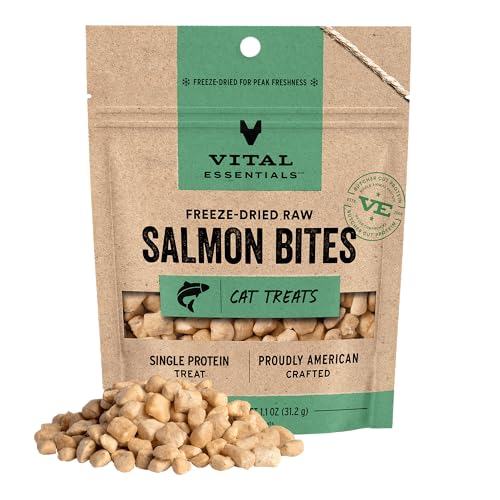
The same disclosure applies, and more strongly. These are freeze-dried single-protein salmon bites, they are not a dental treat, and freeze-dried fish is brittle: it fractures and crumbles under pressure rather than resisting the tooth and dragging along the enamel. That resistance is the entire mechanism of a mechanical dental treat, so the honest position is that these offer little to nothing in the way of cleaning. Do not buy them expecting a dental effect.
They are here as the second poultry-free option, and on that job they do well. Single-protein salmon and grain-free means a clean fit for a cat on an elimination diet or avoiding chicken entirely, with nothing on the panel that needs explaining away. With 2,211 ratings they have a far deeper record than the other poultry-free treat on this page, which is worth something when the alternative has barely a hundred. And the aroma is strong, which makes them a genuinely high-value reward for a cat that has stopped finding ordinary treats interesting.
The practical caveats are the ones you would expect from freeze-dried fish. The 1.1-ounce bag is tiny and empties fast, and the smell is strong enough to linger on your hands and in the cupboard. Used as a reward rather than as oral care, it is a good product. Used as a dental treat, it is the wrong purchase, and it is not sold as one.
Vital Essentials Freeze Dried Cat Treats, Salmon Bites, 1.1 oz Bag
by Vital Essentials
A single-protein freeze-dried salmon treat for a chicken-allergic cat that offers essentially no mechanical cleaning: a poultry-free reward rather than a dental product, and I would rather say so than sell it as one.
Pros
- Single-protein freeze-dried salmon, which makes it a clean fit for a cat on an elimination diet or avoiding poultry entirely
- Grain-free, with nothing on the label that needs explaining away
- 2,211 ratings, a far deeper record than the other poultry-free option on this page
- The aroma is strong enough to work as a high-value reward for a cat that has stopped finding ordinary treats interesting
Cons
- No dental benefit to speak of -- freeze-dried salmon is brittle and crumbles under pressure rather than scraping the tooth surface
- The 1.1 oz bag is tiny and empties fast
- The fish smell is genuinely strong and lingers on hands and in the cupboard
Best VOHC-Approved Cat Dental Treats
Here is the distinction that decides this whole category, and that almost nothing else written about cat dental treats gets right. The Veterinary Oral Health Council certifies two separate claims, not one: Reduction of Plaque Accumulation and Reduction of Tartar (Calculus) Accumulation. A product can be accepted for one and not the other, and the seal on the bag will look the same either way. Of the cat dental treats sold on Amazon US, three carry a seal. Only one of them holds both claims.
That distinction is clinically meaningful. Plaque is the living bacterial biofilm that re-forms on a tooth within hours and inflames the gum margin, and it is what actually drives gingivitis and progresses to periodontal disease. Tartar is plaque that has mineralised into a hard deposit. Tartar is what you notice, because it is visible and discoloured, and it gives fresh plaque a rough surface to grip, but the inflammation is the plaque’s doing. A tartar-only claim means the teeth will look cleaner. A plaque claim reaches the process that causes disease. If your concern is your cat’s gums rather than the colour of the teeth, buy the plaque claim.
| Product | Price | Buy |
|---|---|---|
| Purina Pro Plan Veterinary Diets Dental Bites Cat Treats, 1.8 oz Pouch (Pack of 2)Only VOHC plaque and tartar claim Accepted 2019 for both claims, which is the strongest independent credential in the category. Sold as two small pouches. | $13.98 | View on Amazon |
| Greenies Feline Natural Dental Cat Treats, Roasted Chicken Flavor, 9.75 ozBest VOHC tartar claim overall Accepted for tartar in 2005 and backed by the deepest review record here, though those ratings are pooled across the Greenies dental line. | $10.98 | View on Amazon |
| Purina DentaLife Cat Dental Treats, Savory Salmon Flavor, 19 ozBest value with a VOHC seal Accepted for tartar in 2016, in the only bag large enough to sustain a daily routine across several cats. | $13.99 | View on Amazon |
Best Vet-Recommended Cat Dental Treats
“Vet recommended” on a bag means nothing on its own. There is no body that awards it, no standard behind it, and no way for a shopper to check it, which is precisely why it appears on so much packaging. One product on this page goes further and puts “Vet Approved” in the product name itself, and that is marketing language too. Treat the phrase as decoration and look at what is underneath it.
What actually gets handed across the counter in practice is narrower than the aisle suggests. It is usually the Purina veterinary bite, because it is the only cat treat carrying a VOHC plaque claim and it comes from the same line as the prescription diets we already use. It is Greenies, because it has the tartar seal and, being the most widely stocked product in the category, is the one an owner can reliably find. And it is occasionally a specialist brand like Tartar Shield when the presenting complaint is breath. What earns those recommendations is an independent seal and a formulation you can check, not the phrase on the front of the bag.
| Product | Price | Buy |
|---|---|---|
| Greenies Feline Natural Dental Cat Treats, Roasted Chicken Flavor, 9.75 ozMost widely recommended Easy to find, VOHC tartar seal, and under two calories a piece so a daily habit stays affordable. | $10.98 | View on Amazon |
| Purina Pro Plan Veterinary Diets Dental Bites Cat Treats, 1.8 oz Pouch (Pack of 2)Best clinical evidence The only cat treat with a VOHC plaque claim, from Purina's veterinary line rather than the grocery line. | $13.98 | View on Amazon |
| Tartar Shield Daily Dental Cat Treats, Chicken Flavor, 4.5 ozMost often suggested for breath A dental-specialist brand with the lowest published calorie count here, though this SKU carries no VOHC seal. | $13.99 | View on Amazon |
Best Cat Dental Treats for Gingivitis
Gingivitis is inflammation of the gum margin, and it is driven by plaque, not by tartar. That single fact reorders this category. Plaque is a living bacterial biofilm that re-colonises a clean tooth within hours, and it is the bacteria at the gum line that provoke the redness, the swelling and eventually the loss of attachment. Tartar contributes by giving plaque a rough surface to hold onto, but removing tartar without disrupting plaque treats the appearance rather than the process. So for a cat with gingivitis, the only product here with an accepted plaque claim leads, and it is not close.
The caveat matters as much as the pick, so I will put it bluntly. Established gingivitis is a veterinary problem, not a treat problem. Feline chronic gingivostomatitis, which is a severe immune-mediated inflammation of the mouth, is genuinely debilitating and is managed with dental extraction and medical therapy, not with anything you can buy in a bag. If your cat’s gums are red at the margin, if there is drooling, dropped food, a change in eating posture or reluctance to be touched around the face, book an examination. Our free cat gum color chart is the quickest way to work out how fast that appointment needs to happen, because a red gum line with everything else normal is a different problem from red gums in a cat who is also panting. A treat is what you use to slow accumulation on a mouth that is already under control.
| Product | Price | Buy |
|---|---|---|
| Purina Pro Plan Veterinary Diets Dental Bites Cat Treats, 1.8 oz Pouch (Pack of 2)Best for gingivitis The only VOHC plaque claim available, and plaque is what drives gum inflammation. | $13.98 | View on Amazon |
| Greenies Feline Natural Dental Cat Treats, Roasted Chicken Flavor, 9.75 ozBest daily option with a seal A VOHC tartar seal and a low calorie count, which makes it workable as the everyday habit alongside brushing. | $10.98 | View on Amazon |
| Pet Honesty Vet Approved Cat Teeth Cleaning Bites for Fresh Breath, 30 DayBest for a sore or sensitive mouth A softer centre for a cat that will not chew hard treats, working through postbiotics rather than abrasion. No VOHC seal. | $14.99 | View on Amazon |
Best Cat Dental Treats for Bad Breath
Halitosis is the symptom that brings most owners into this aisle, and a treat can genuinely help with the mild, chronic, plaque-related version of it. What helps is either mechanical disruption of the bacterial film that produces the volatile sulphur compounds you can smell, or an ingredient like chlorophyll that masks and binds odour. Both approaches are represented here, and reviewer-reported improvement within a few days is a consistent pattern across the picks below.
The clinical warning belongs at the front rather than in a footnote. Breath that becomes suddenly foul, or that has a distinctly different character than before, is a sign and not a cosmetic problem. It can mean a resorptive lesion, which is common in adult cats and genuinely painful, an established periodontal infection, an oral mass, or in some cases a systemic problem such as chronic kidney disease, where the smell is not coming from the teeth at all. A cat whose breath has changed noticeably needs an examination, not a new bag of treats, and the treat is what you use afterwards to hold the ground you gained.
| Product | Price | Buy |
|---|---|---|
| Tartar Shield Daily Dental Cat Treats, Chicken Flavor, 4.5 ozBest for breath The strongest reviewer-reported breath improvement here, and 1 kcal a treat leaves the most budget room. No VOHC seal on this SKU. | $13.99 | View on Amazon |
| Greenies Feline Natural Dental Cat Treats, Roasted Chicken Flavor, 9.75 ozBest evidence-backed daily option A VOHC tartar seal and under two calories a piece, which is the sustainable daily habit behind any breath improvement. | $10.98 | View on Amazon |
| Purina DentaLife Cat Dental Treats, Savory Salmon Flavor, 19 ozBest for a multi-cat household A VOHC tartar seal in the only bag large enough to keep several cats on a routine at once. | $13.99 | View on Amazon |
Best Natural Cat Dental Treats
“Natural” is not a legally defined term on a pet treat label. There is no threshold to meet and no body enforcing it, which means the word tells you about the marketing department and nothing about the food. What you can actually check is the panel: whether the formula is short, whether it uses a named protein, whether the preservatives are tocopherols and rosemary extract rather than synthetic, and whether the functional ingredients are identifiable things you could point to.
Judged that way, the picks below hold up for different reasons. One has a genuinely grain-free panel with chlorophyll from sun-cured alfalfa as its breath ingredient. One has a short, readable list preserved with rosemary extract, though it is grain-inclusive and chicken-first behind a salmon name. One is a small trial bag from an established manufacturer with US production. None of them carry a VOHC seal, and that is the trade-off worth understanding: in this category, the cleanest-looking labels and the strongest independent evidence are on different products.
| Product | Price | Buy |
|---|---|---|
| Emerald Pet Grain-Free Cat Dental Treats with Salmon, 11 oz TubCleanest panel of the crunchy picks Genuinely grain-free with chlorophyll from alfalfa, a published calorie figure, and pieces big enough to force a chew. | $15.99 | View on Amazon |
| Minties Dental Treats for Cats, Salmon Flavored, 10 ozShortest readable panel Short panel with rosemary extract rather than synthetic preservatives, plus HMP chelation. Grain-inclusive and chicken-first. | $9.03 | View on Amazon |
| Wellness WHIMZEES Cat Dental Treats, Chicken and Salmon Flavor, 4.5 oz BagBest small-bag trial A US-made trial bag from Wellness Pet, useful for testing acceptance before committing to a larger pack. | $5.59 | View on Amazon |
Best Grain-Free Cat Dental Treats
Two things need saying before the picks. First, the treat most often assumed to be grain-free in this category is not: Minties lists brown rice flour second on its panel, right behind chicken meal, and the clean-label positioning leads a lot of shoppers to guess otherwise. Read the panel rather than the front. Second, grain-free is usually a preference rather than a medical need. The food allergens documented most often in cats are proteins, chiefly beef, fish and chicken, not grains, and grain-free formulas replace grain with peas, chickpeas and tapioca, which are still carbohydrate. Unless your vet has identified a specific problem, going grain-free changes the ingredient list more than it changes the diet.
Where it genuinely matters is a limited-ingredient or elimination trial, where every single thing entering the cat has to be accounted for. In that situation a short, verifiable panel is worth more than a dental claim, and the picks below are ordered accordingly.
| Product | Price | Buy |
|---|---|---|
| Emerald Pet Grain-Free Cat Dental Treats with Salmon, 11 oz TubBest grain-free dental treat Pea flour and tapioca replace grain entirely, and it is the only grain-free claim here that survives a read of the panel. | $15.99 | View on Amazon |
| Emerald Pet Wholly Fish! Chicken-Free Feline Treats, Tuna Recipe, 3 ozBest grain-free and poultry-free Tuna-based, chicken-free and grain-free, but it is not a dental treat and makes no dental claim. | $6.99 | View on Amazon |
| Vital Essentials Freeze Dried Cat Treats, Salmon Bites, 1.1 oz BagBest single-protein grain-free One protein, freeze-dried salmon, with no grain. Also not a dental treat, and it offers no meaningful cleaning. | $6.99 | View on Amazon |
Best Chicken-Free Cat Dental Treats
This is the finding I most want owners to take away from this page, because it is the one the rest of the internet gets wrong. There is no chicken-free cat dental treat with a VOHC seal. Not one. All three accepted products are chicken-based. And the fish-named dental treats that a chicken-allergic owner would naturally reach for are chicken-first once you read the panel rather than the front of the bag.
The evidence, verified directly from the listings: Greenies Tempting Tuna leads with chicken meal, ground wheat and corn gluten meal, with tuna flavour tenth. Minties Salmon Flavored leads with chicken meal, with salmon meal eleventh. Emerald Pet’s Salmon and Ocean Fish dental treats both lead with chicken meal. In other words, the entire fish-flavoured shelf in this category is chicken underneath, and buying by the picture on the front is how a chicken-allergic cat ends up flaring on a product bought specifically to avoid chicken.
So here is the honest workaround. The two products below are genuinely poultry-free crunchy treats, and neither is a dental treat or claims to be. They give you something safe to hand your cat, and the hard one gives a little mechanical resistance in the trivial sense that any hard food does. What they do not give you is oral care. For a chicken-allergic cat, real dental care has to come from daily brushing with a pet toothpaste, from VOHC-accepted products that are not treats such as gels and water additives, and from professional cleaning under anaesthetic on your vet’s schedule. That is a less satisfying answer than a bag, and it is the true one.
| Product | Price | Buy |
|---|---|---|
| Emerald Pet Wholly Fish! Chicken-Free Feline Treats, Tuna Recipe, 3 ozBest crunchy chicken-free option Tuna-first with no chicken and no grain on a nine-item panel. Hard enough to give some resistance, but no dental claim and only 113 ratings behind it. | $6.99 | View on Amazon |
| Vital Essentials Freeze Dried Cat Treats, Salmon Bites, 1.1 oz BagBest single-protein chicken-free option Single-protein freeze-dried salmon with a far deeper review record, but brittle rather than abrasive, so effectively no cleaning effect. | $6.99 | View on Amazon |
More Cat Dental Treats by Need
If your situation is narrower than the sections above, this is the shortcut. Each row is the pick I would name for that specific need, drawn from the reviews further up the page.
| Product | Price | Buy |
|---|---|---|
| Wellness WHIMZEES Cat Dental Treats, Chicken and Salmon Flavor, 4.5 oz BagCheapest way to trial the category A small bag to find out whether your cat will chew a crunchy dental treat before you buy a large one. | $5.59 | View on Amazon |
| Minties Dental Treats for Cats, Salmon Flavored, 10 ozBest cost per ounce The lowest cost per ounce outside the VOHC tier, with HMP chelation alongside the abrasion. | $9.03 | View on Amazon |
| Pet Honesty Vet Approved Cat Teeth Cleaning Bites for Fresh Breath, 30 DayBest for cats that reject hard treats A crunchy shell over a creamy centre, plus a non-abrasive mechanism for a mouth that will not chew. | $14.99 | View on Amazon |
| Purina DentaLife Cat Dental Treats, Savory Salmon Flavor, 19 ozBest for multi-cat households The only 19 oz resealable pouch here, and it carries a VOHC tartar seal. | $13.99 | View on Amazon |
| Tartar Shield Daily Dental Cat Treats, Chicken Flavor, 4.5 ozLowest calorie per treat 1 kcal a treat, the lowest published figure on this page, for a cat with no calorie budget to spare. | $13.99 | View on Amazon |
Do the Calorie Math Before You Commit to Daily Treats
A dental treat only works if it is given every day, which makes it the one treat category where the calorie arithmetic is not optional. Here is the worked version, because almost nobody publishes it.
A typical ten-pound indoor adult cat eats somewhere in the region of two hundred to two hundred and fifty calories a day. The standard guidance is that treats stay under ten percent of daily intake, with the other ninety percent coming from a complete and balanced food that supplies the vitamins, minerals and amino acids a treat does not. Ten percent of that range is a budget of roughly twenty to twenty-five calories a day. That is the number every product on this page has to fit inside.
Now put real treats against it. At under two calories apiece, ten treats costs you around twenty calories, which is essentially the entire daily allowance for a cat at the lower end of that intake range. At two calories a piece, ten to twelve treats spends the budget. At one calorie a piece you have genuine room, which is the practical argument for the lowest-calorie option when a cat is already carrying extra weight. A manufacturer’s full recommended daily dose for a cat this size will often land right at or slightly past that ceiling on its own, which means the dental treat is not something you add alongside the rest of the treat jar. It is the treat jar.
The part owners most often get wrong is the direction of the adjustment. Treat calories must be subtracted from the day’s meal portion, not added on top of it. A carefully measured diet plus twenty-five calories of daily dental treats is not a measured diet, it is a surplus of roughly ten percent, and sustained over a year that is exactly how a cat arrives in my consulting room a pound heavier than it should be with an owner who is certain nothing changed. The second common failure is arithmetic across people: three members of a household each giving “just a couple” triples the number nobody is tracking. Put the day’s allowance in a small dish in the morning, and when the dish is empty the day is done.
One more thing this exercise exposes. Several products in this category publish no per-treat calorie figure at all, which makes this calculation impossible for them. That is not a small gap, it is a reason to prefer the products that do disclose. Use our cat diet calculator to get your cat’s daily calorie target, and the body condition score tool to check whether the current plan is landing where you think it is.
What to Do When Your Cat Refuses Dental Treats
Refusal is the normal outcome, not the unusual one, and there is more to try than switching brands. Work through these in order.
Check whether your cat is swallowing them whole. This is the failure nobody notices, because from the outside it looks like success: the treat disappears, the cat seems happy, and nothing whatsoever is being cleaned. Mechanical dental treats work only when the tooth sinks into the piece and drags along it, so a treat swallowed intact does exactly nothing. Watch and listen while your cat eats three or four. If there is no audible crunch, move to a product with larger pieces, which is precisely why the better dental treats feel too big for a cat’s mouth. Offering one piece at a time rather than a handful also slows a gulper down.
Rotate the flavour, and give each one a fair trial. Cats form flavour preferences early and hold them firmly, and a cat that ignores a fish-flavoured dental treat will often take a chicken one from the same brand. Give any new treat several days before you write it off. Novelty can suppress interest as easily as it creates it, and a cat that sniffs and walks away on day one sometimes takes it on day four.
Warm it, or offer it on an empty stomach. Warmth releases aroma, and aroma is most of what makes a cat interested in food. Ten seconds in a warm hand or a few moments near something warm can be enough. Timing matters too: offer dental treats before a meal rather than after, when the cat is genuinely interested rather than pleasantly full. Making the treat part of a routine, at the same time each day, helps more than owners expect.
Try a softer or differently constructed product. A dual-texture treat with a creamy centre gets taken by cats that reject a uniformly hard one, and while it does less mechanical work, a softer treat eaten daily beats a harder treat left in the bowl.
Then consider that refusal may be information. A cat that used to take crunchy treats and now will not is telling you something. Pain is the most common reason a cat stops chewing, and resorptive lesions are common enough in adult cats that this should be near the top of your list rather than the bottom. If refusal is new, book an examination.
And know when to stop chasing treats. If nothing is accepted, move to the approaches with better evidence anyway. Daily brushing with a pet-specific toothpaste is the standard, and cats can be trained to it with patience, starting by letting the cat lick the paste off a finger for a week before a brush ever appears. Dental gels, wipes and VOHC-accepted water additives are all real options that do not require chewing, and a water additive in particular asks nothing of the cat at all. There is no failure in a cat that will not eat dental treats. There is only a failure in stopping there.
Cats With Missing Teeth or Tooth Resorption Need a Different Approach
This is the section I most want on this page, because it is where the standard advice goes quietly wrong. Feline odontoclastic resorptive lesions are extremely common in adult cats. The cat’s own cells break down the tooth structure, usually starting at or below the gum line, and the exposed dentine is genuinely painful. The lesions are often invisible on a conscious examination and are found on dental radiographs under anaesthetic. Many of the cats reading owners are shopping for have one and nobody knows yet.
If you want to know where to look, the two teeth to check first are the third premolars in the lower jaw, 307 and 407. They are the teeth resorption destroys most often, and one study found that radiographs of just those two would have caught the disease in nine of every ten affected cats. Our free interactive cat tooth chart will show you exactly which teeth those are, and lets you mark what you can see and print the chart to take to the appointment.
That changes the advice completely. Every mechanical dental treat on this page works by making the cat bite down hard on something that resists. For a cat with an active resorptive lesion, a recently extracted tooth, or advanced periodontal disease, that is asking it to press a painful tooth into a hard object twice a day. The best case is that the cat refuses and you have wasted money. The realistic case is that the cat learns treats hurt, becomes wary of food offered by hand, and you lose one of the more useful tools you had for managing that animal. Cats with several extractions are usually comfortable and eat well, including dry food, but they cannot generate the sustained chewing that a mechanical treat depends on, so a hard dental treat gives them nothing while a soft one at least gets eaten.
What to use instead, in rough order of how much they ask of the cat. A VOHC-accepted water additive asks nothing at all: it goes in the bowl and works on the plaque biofilm without any chewing. Dental gels applied to the gum line with a fingertip take seconds and need no pressure on the tooth. Dental wipes do similar work with a little more contact. Brushing with a soft pet brush and a pet-specific toothpaste is still the standard where the mouth is comfortable enough to allow it, and after extractions many cats tolerate it better than they did before, because the source of pain is gone. Never use human toothpaste, which contains fluoride and sometimes xylitol and is not made to be swallowed.
Above all, this is the group where professional care does the real work. Dental radiographs under general anaesthetic are the only way to see resorption, root disease and bone loss, and treatment is extraction of the affected teeth rather than management with anything from a bag. If your cat drools, drops food from one side, chatters or flinches when eating, has stopped grooming, or has become reluctant to be touched around the face, that is an examination this week. Once the mouth is comfortable, come back to the maintenance question and pick the gentlest thing on the list above that your cat will accept. For treats generally in a mouth that cannot chew, our cat treats guide covers the soft and lickable options in more detail.
How to Choose the Best Cat Dental Treats
Buyer's Guide
This is a category where the front of the bag and the back of the bag frequently disagree, and where the phrases that sound most authoritative carry the least weight. These are the six things I actually weigh when an owner asks me which dental treat to buy, ordered by how much difference each one makes to the cat rather than by how prominently it appears on the packaging.
The VOHC Seal, and Which of the Two Claims It Covers
The Veterinary Oral Health Council is the only independent body that reviews submitted trial evidence for pet dental products, and its seal is the single most meaningful thing you can look for. What almost nobody explains is that it certifies two separate and non-interchangeable claims: Reduction of Plaque Accumulation and Reduction of Tartar (Calculus) Accumulation. A product can hold one without the other. That distinction is clinically real, because plaque is the living bacterial biofilm that inflames the gums and drives gingivitis, while tartar is plaque that has already mineralised into a hard deposit. Tartar is what you see and what makes teeth look bad; plaque is what causes the disease. Of the cat treats sold on Amazon US, exactly three carry a VOHC seal, and only one of those, the Purina Pro Plan veterinary bite, is accepted for both plaque and tartar. If gum health is your concern rather than appearance, that difference should decide your purchase.
Size and Hardness: The Treat Has to Force a Chew
Every mechanical dental treat works the same way. The tooth sinks into the treat, the treat resists and drags along the enamel, and that sustained contact wipes accumulating plaque off the crown. Everything about that mechanism depends on the cat chewing, and a treat small enough to swallow whole delivers nothing at all. This is why piece size is the specification I check before ingredients: a larger piece that a cat must break down is doing more than a small one it can inhale, and it is also why some of the better dental treats feel awkwardly big for a cat's mouth. There is a limit, of course, and several products here draw complaints that the pieces run large for small cats and kittens. The right test is behavioural, not dimensional. Watch your cat eat three or four, and if they disappear without any audible crunching, the treat is not working regardless of what the bag says. The texture matters too: a genuine dental treat is porous, so it collapses around the tooth rather than snapping cleanly in half on first contact.
Calories and the Ten Percent Rule
A dental treat is only useful if it is given daily, and a daily treat is the fastest way to quietly overfeed a cat. Treats should stay under ten percent of daily calories, with the remaining ninety percent from a complete and balanced diet. For a ten-pound indoor adult eating roughly two hundred to two hundred and fifty calories a day, that is a ceiling of about twenty to twenty-five treat calories, which a full manufacturer-recommended dental dose can consume almost entirely. Two practical consequences follow. First, treat calories must be subtracted from the meal portion rather than added on top of it, or a carefully measured diet becomes a surplus without anyone noticing. Second, prefer a product that publishes a per-treat calorie figure, because a surprising number of dental treats do not, and you cannot budget against a number that does not exist. Our cat diet calculator will give you the daily target, and the body condition score tool will tell you whether the current plan is landing where you think it is.
The Ingredient Panel Versus the Front of the Bag
Front-of-bag language in this category is close to worthless. 'Natural' has no legally defined meaning on a pet treat label, 'vet approved' is not a certification and is not awarded by anyone, and 'clinically proven' most often refers to a study the manufacturer ran and holds on file rather than to anything independently reviewed. The panel on the back is where the truth is, because ingredients are listed by pre-cooking weight and the first few entries tell you most of what you need. The trap specific to this category is fish naming. Dental treats are overwhelmingly chicken-based, and a fish name on the front usually describes a flavour rather than the primary protein: a salmon-named treat here leads with chicken meal and lists salmon meal eleventh, and a grain-free treat sold 'with Salmon' leads with chicken meal and lists salmon fifth. If your cat has a genuine poultry allergy, that difference is the whole ballgame, and you have to read the panel to find it.
Texture Matched to the Mouth in Front of You
The best dental treat for a given cat is the hardest one that cat will comfortably chew, and that ceiling drops with age and disease. A healthy adult with a full set of teeth can handle any crunchy treat on this page. A cat with active gingivitis, resorptive lesions, several extractions, or advanced periodontal disease often cannot, and pushing a hard treat onto a painful mouth achieves nothing except teaching the cat that treats hurt. Those cats need a softer or dual-texture product, or an approach that bypasses chewing entirely: a gel, a wipe, a water additive, or brushing if it is tolerated. Kittens sit at the other end of the same problem, with mouths too small for pieces designed for adult cats. Be honest about which cat you have. A treat that is refused, or that is swallowed whole because chewing hurts, is not a dental treat at all.
What Dental Treats Cannot Do
This is the factor I most wish were printed on the bag. Dental treats act on the visible crown of the tooth, above the gumline. Feline periodontal disease is frequently worse below the gumline, in the periodontal space between root and bone, and that is where the pain and the tooth loss come from. Nothing edible reaches it. Feline odontoclastic resorptive lesions, which are extremely common in adult cats and are genuinely painful, are also invisible from the outside and are diagnosed by probing and dental radiographs under general anaesthetic, not by inspection in a consult room. So the honest framing for this entire category is adjunct, never replacement: a VOHC-accepted treat given daily slows accumulation on the surfaces it touches, brushing does more, and professional cleaning with radiographs under anaesthetic is the only thing that addresses what is happening underneath. If your cat is drooling, dropping food, pawing at its face, has suddenly foul breath or has stopped grooming, that is an examination, not a shopping decision.
The Bottom Line on Cat Dental Treats
If you want the strongest independent evidence in this category, buy the Purina Pro Plan Veterinary Diets Dental Bites: it is the only cat dental treat on Amazon US accepted by the VOHC for both plaque and tartar, and plaque is what drives the gum disease you are actually trying to prevent. If you want the practical everyday habit, buy Greenies Feline Natural: a VOHC tartar seal, under two calories a piece, and the deepest record of real-world use here, with the honest caveat that those ratings are pooled across the whole Feline Greenies dental line. If you are feeding several cats or want the most treat per dollar with a seal behind it, Purina DentaLife in the large resealable pouch is the value answer. And if you do not yet know whether your cat will chew a crunchy dental treat at all, spend the least you can on the small WHIMZEES bag and find out before you commit, remembering that its brand’s VOHC seals belong to dog chews.
Everything else on this page is honest about what it is not. Two of the ten make no dental claim whatsoever and are here only because a chicken-allergic cat has no certified dental option at all. Several carry impressive-sounding clinical language that turns out to be the manufacturer’s own data. That is the state of the category, and knowing it is worth more than any single purchase.
The frame that matters most is the one I opened with. A dental treat works on the visible crown of the tooth and only when the cat chews it, while feline periodontal disease is often worse below the gum line where nothing edible reaches. Treats are an adjunct to daily brushing and to professional cleaning with radiographs under anaesthetic, never a replacement for either, and any product marketed otherwise is overselling itself. Give one daily, subtract its calories from the meal portion, watch for the crunch, and get the mouth examined on your vet’s schedule. For the rest of the treat jar, see our guides to the best cat treats and hairball treats, and if dry food is part of the routine, our dry cat food guide covers the kibble side of the same question.
Cover photo by David Montolio, CC0, via Wikimedia Commons.
Frequently Asked Questions
Do cat dental treats actually work?
Is there a lawsuit against Greenies?
What are the side effects of giving Greenies to cats?
How many dental treats can a cat have per day?
Do dental treats replace brushing my cat's teeth?
Related Articles
About the Reviewer

Dr. Priya Anand, DVM, ABVP (Feline)
DVM, Cornell University College of Veterinary Medicine
Dr. Priya Anand is a veterinarian board-certified by the ABVP in Feline Practice, with over a decade caring for cats in a feline-exclusive clinic. She has guided thousands of cat owners through nutrition, litter-box troubleshooting, enrichment, and senior-cat care. She founded House of Mittens in 2026 to cut through pet-aisle marketing and recommend the food, litter, and gear that actually keep cats healthy and happy — judged the way she'd advise her own patients.