How to Give a Cat a Pill: A Feline Veterinarian's Step-by-Step Guide
Feline veterinarian Dr. Priya Anand, DVM explains how to give a cat a pill: the food method, the direct hand-pilling technique step by step, the towel wrap for a cat that swats, and the water chaser rule that prevents esophageal injury from doxycycline.
Updated
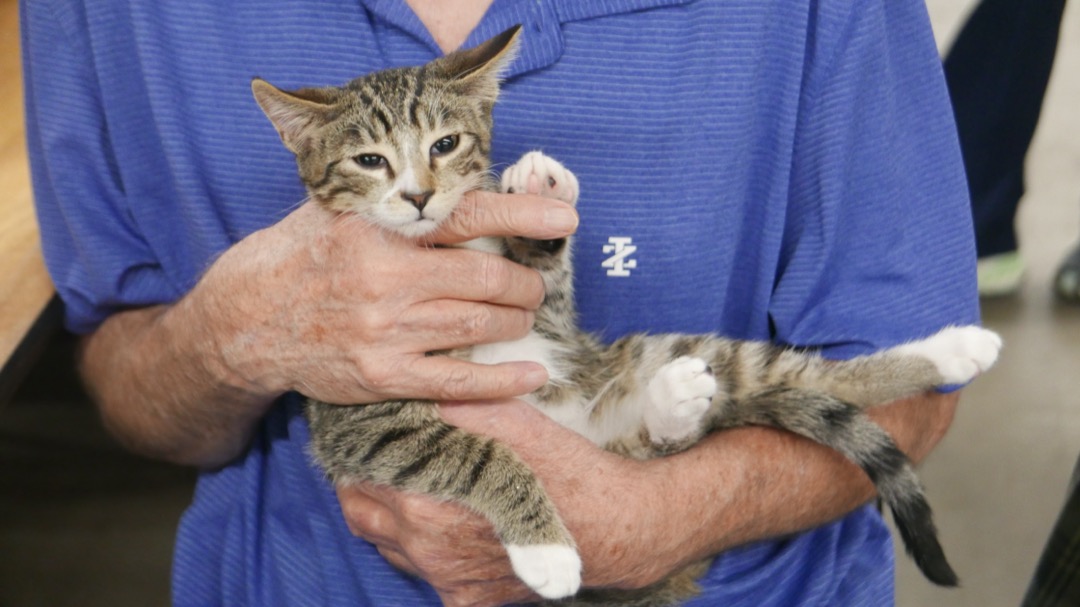
The recheck I dread is the one where the owner sets the bottle on the exam table and it is still almost full. The cat has not improved, and the explanation is always a version of the same sentence: “We tried, but she just wouldn’t take it.” They fought the cat twice a day for four days, got maybe half the doses in, and quietly stopped.
That matters more than most owners realize. A ten-day course of antibiotics that half went in is a treatment failure, and with some drugs it actively selects for the bacteria you were trying to kill. The same holds for thyroid and cardiac medication.
Almost every pilling failure I see is a preparation and technique problem rather than a stubborn cat: a drug never suited to home dosing, a hold that fights the cat’s anatomy instead of using it, and a first attempt that went badly enough to teach the cat what to expect. All three are fixable before you open the bottle.
Why Cats Are Harder to Pill Than Dogs
The anatomy works against you. A cat’s tongue is covered in backward-facing keratinized papillae, the hooks that make a lick feel like sandpaper. They move material backward, but they also let a cat work a tablet forward and out once it learns the trick. The oropharynx is narrow, so a tablet placed slightly off center lands in a cheek pouch, where the cat can hold it a long time before depositing it under the sofa.
Behavior is the bigger obstacle. Cats form aversions fast, often from a single bad experience, and generalize them broadly. A dog that had an unpleasant pill usually still trusts you five minutes later. A cat that was cornered, scruffed, and held with its head back remembers the person, the room, and the sound of the bottle cap. I have met cats who vanish when a particular cupboard opens, because that is where the medication lives.
Which is why the first dose matters most. A calm, successful first attempt buys you the rest of the course; a clumsy one costs you the cat’s cooperation for the whole treatment.
Four Questions to Ask Before the First Dose
The highest-yield sixty seconds of the appointment happens while you are still at the counter, and almost nobody spends it. Ask your veterinarian or pharmacist these four things.
Can this tablet be split or crushed? Some cannot, because an enteric coating exists to carry the drug past the stomach, or because the tablet is extended-release. Some are technically crushable but taste so foul uncoated that you will only get away with it once.
Can it be given with food, or does it need an empty stomach? This decides whether the hide-it-in-food method is available to you at all.
Is there a flavored compounded liquid, a mini-tablet, or a transdermal version? For many common feline drugs there is, and nobody volunteers it unless you ask. This question resolves more home dosing problems than any technique I can teach you.
Does this drug need a water or food chaser? For a small number of drugs the answer is an emphatic yes, for the reason below.
The Water Chaser Rule
This is the part almost every pilling guide leaves out, and it carries the most serious consequences.
A tablet placed at the back of a cat’s tongue does not reliably reach the stomach on its own. Studies in cats using imaging found the same thing: given dry, most capsules were still sitting in the esophagus thirty seconds later, and a substantial share remained there five minutes on. Following the dose with roughly five to six milliliters of water by syringe, or a small amount of food, moved nearly all of them through within about thirty seconds.
A tablet parked against the esophageal lining for minutes is a chemical burn waiting to happen. Two drugs are strongly associated with this in cats: doxycycline, particularly the hyclate salt, and clindamycin. Both can cause esophagitis and, at worst, an esophageal stricture, a fibrous narrowing that leaves the cat regurgitating food it cannot get down. That is far worse than most of the infections these drugs treat, and fixing one means repeat anesthetized balloon dilations.
The rule is simple. Never dry-pill a cat. Follow every tablet and capsule with five to six milliliters of water from a needleless syringe, or a lick of wet food or purée the cat will swallow. With doxycycline and clindamycin the chaser is part of the dose, not an optional extra: if it did not go in, the dose is not finished. Compounded liquid versions of both sidestep the problem entirely.
Method 1: Hide It in Food (Try This First)
Always start here. A pill the cat eats voluntarily costs you nothing in trust, which is the resource you are managing across a whole course.
Commercial pill pockets are the obvious first attempt: a soft, strongly flavored treat with a hollow center you press the tablet into. A ball of pâté-style wet food rolled around the tablet works too. Offer it from your finger so you can watch it go down.
The most reliable vehicle I know is a squeezable purée tube. The cat licks continuously rather than taking discrete mouthfuls, so it never gets the pause it needs to isolate the tablet and spit it out. My roundup of lickable cat treats covers the textures that hold a tablet best.
The three-treat trick helps with a suspicious cat: a plain treat, the loaded one, then another plain one, fast, from your hand. The cat is anticipating the third while swallowing the second. The best cat treats for this are whichever ones your cat takes fastest.
Three rules decide whether this works. Use a tiny, high-value portion, never the regular meal in the regular bowl: a cat that finds a bitter tablet in its dinner can develop a lasting aversion to that food, and if you are managing kidney disease or diabetes, that diet is part of the treatment plan. Watch the cat swallow, then check the floor, because cats are very good at eating the wrapper and leaving the tablet clean and dry. And when a cat that took the loaded treat for three days starts refusing treats, the association is made: move on rather than escalating.
Method 2: The Direct Approach, Step by Step
When food fails, this is the technique. Done properly it takes about five seconds, and hesitation is what loses you the cat, so rehearse the sequence before you pick the cat up.
- Get everything ready first: tablet in hand, syringe of water drawn up, treat waiting. Once you touch the cat you should not be opening packaging.
- Put the cat on a non-slip surface at waist height, or on your lap facing away from you. Sliding feet make a cat fight.
- Hold the tablet between the thumb and index finger of your dominant hand.
- Lay your other hand over the top of the head, thumb and middle finger on the cheekbones at the corners of the mouth, palm across the skull rather than the eyes.
- Tilt the nose up to about forty-five degrees. Not vertical: a head tipped straight back raises aspiration risk and panics most cats. At forty-five the lower jaw relaxes and starts to drop on its own.
- Open the lower jaw the rest of the way with the middle finger of your pilling hand, pressing gently on the front incisors.
- Drop the tablet over the base of the tongue. Drop it, do not push it: fingers deep in the mouth is how people get bitten.
- Close the mouth, hold it gently shut, and lower the head to level.
- Trigger the swallow: stroke down the front of the throat, or blow a short puff of air across the nose.
- Watch for the lick. A cat that licks its nose has almost always swallowed.
- Give the water chaser, then the treat, every time, including the times it went badly.
If two attempts fail, stop and try again in half an hour. Repeated failed attempts teach the cat far more than one success does, and that lesson takes weeks to unteach. A dose delayed by half an hour is clinically irrelevant; a cat that now hides from you is not.
Method 3: The Pill Popper
A pill popper, also sold as a pill gun, is a slim tube with a soft tip that grips the tablet and a plunger that releases it. Three situations where it beats fingers: a cat that bites, an owner with arthritis or reduced hand dexterity, and any case where the tablet needs to go past the tongue base without your fingers going behind the carnassial teeth.
Dip the tip in water or a little purée before loading, because a dry tablet sticks in a dry tip. Set up as for hand pilling, same forty-five degree tilt, then aim over the base of the tongue rather than straight at the back of the throat. Plunge once, withdraw, close the mouth, chaser.
One hard rule: use a soft rubber-tipped popper and check the tip before every use. A hard plastic tip, or a rubber one that has split, can lacerate the soft palate, which bleeds impressively and ends any chance of medicating that cat at home.
Method 4: The Towel Wrap
For a cat that swats, kicks with the back feet, or bites, the towel wrap (the “purrito”) is the safest option for both of you.
Lay a large bath towel flat on a table. Place the cat about a third of the way in from one short end, facing across the towel. Bring the near side firmly across the chest and tuck it under the far side of the body, then bring the other side over the top so all four feet are enclosed. The head stays out. Firm enough that a front leg cannot come free, loose enough that breathing is unrestricted.
AAFP and ISFM low-stress handling guidance favors a towel over scruffing and full-body restraint. Scruffing an adult cat does not induce calm: the limp response seen in kittens is a neonatal reflex that does not carry into adulthood, and what you get instead is a defensive freeze.
With a second person, one holds the wrapped cat’s shoulders steady while the other pills.
Liquids Are Not Pills
Liquid medication has different mechanics and a different risk, and the technique that works for a tablet is actively dangerous with a syringe.
Slide the syringe tip into the pouch of the cheek, behind the canine and outside the teeth, aimed toward the back of the mouth. Not over the tongue. Keep the head level and never tilt it back for a liquid. Deliver slowly in small amounts, half a milliliter or so, pausing to let the cat swallow.
All of that exists because of aspiration. Liquid delivered faster than the cat can swallow, with the head back so the airway lines up with the stream, goes into the trachea instead of the esophagus, and aspiration pneumonia is a genuine hospitalization.
Afterward, watch for coughing, gagging that does not settle, labored or rapid breathing, or unusual lethargy, and call your veterinarian the same day if you see any of them. A cough that settles immediately is usually nothing.
Crushing, Splitting, and Compounding
Never crush or split a tablet without checking first. Enteric coatings exist to protect a drug from stomach acid, or the stomach from the drug. Extended-release tablets release over hours, and a broken one delivers the full day’s dose at once. Some are unbearably bitter uncoated, and the result is a cat foaming, drooling ropes of saliva, backing away from you. Harmless in itself, but the most efficient way I know to destroy a cat’s willingness to be pilled again.
Compounding pharmacies solve much of this. Flavored liquids, mini-tablets, and chewables made to your cat’s exact dose turn impossible cats into manageable ones, and I reach for them early. The trade-off is that compounded formulations are not held to the same stability and potency testing as a manufactured product.
Transdermal deserves an honest answer. Methimazole in a pluronic lecithin organogel, rubbed into the inner ear flap, is the real feline success story and works well for hyperthyroid cats. What does not follow is that any drug can be made transdermal: absorption through skin is drug-dependent and often poor, and most antibiotics do not reliably get in that way.
The trade-off will be familiar from choosing between an oral flea treatment and a topical flea treatment. Some molecules work through skin and some only work swallowed. Ask which yours is.
When It Goes Wrong: Spat Out, Vomited, or Missed
Every owner hits at least one of these.
Spat out, found intact and dry. Re-give it. Nothing has been absorbed.
Chewed, wet, partly dissolved, or lost. Do not re-dose blind. Call the clinic: with a narrow-margin drug, an unknown partial dose plus a full second dose is a real overdose risk.
Vomited within a few minutes with the tablet visible. Usually safe to re-give once, but ask rather than assume, particularly with cardiac and thyroid drugs.
Vomited later, or vomiting repeatedly. Stop and call. Persistent vomiting can be the drug itself, and the answer may be a dose change, giving it with food, or a different drug. Forcing doses into a cat that keeps vomiting is how a treatable problem becomes a hospitalized one.
A missed dose. Give it when you remember, unless it is nearly time for the next one, in which case skip it. Never double up.
One absolute rule: never substitute or top up with a human painkiller. Paracetamol, sold as acetaminophen in the United States, and ibuprofen are both lethal to cats. Cats lack the liver pathway that lets humans process acetaminophen safely, and a single regular-strength tablet can kill an average-sized cat. If the prescribed drug is not controlling your cat’s pain, that is a phone call.
If Your Cat Needs Pills for Life
Hyperthyroid, kidney, diabetic, and cardiac cats take thousands of doses over their remaining years. At that scale, preventing aversion matters more than any single technique: no technique survives a cat that has decided medication time is a fight.
Practice mouth handling while the cat is well and nothing is at stake. Touch the muzzle, treat. Lift a lip, treat. Open the mouth briefly, treat. Fifteen-second sessions a few times a week, always stopping before the cat objects. A cat that already tolerates mouth handling for dental treats and toothbrushing is noticeably easier to medicate.
Pair dosing with the same pleasant thing, at the same time, in the same place. A cat that knows what is coming and that it ends with a purée tube walks toward you rather than away. Rotate methods before the cat burns out on one.
Hydration is its own priority in chronic kidney disease. Wet food does most of the work; beyond that, a cat water fountain increases intake in many cats because moving water is more appealing to them.
On calming products I will be straightforward: they work at the margins. Alpha-casozepine and L-theanine supplements can take some edge off a mildly anxious cat, which is why they appear in my roundup of cat calming treats, but they will not make a defensive cat cooperative. For that cat, ask about short-term gabapentin rather than escalating supplements.
And if your cat consistently cannot be medicated at home, say so plainly. That is a clinical problem with clinical solutions: a different drug in the same class, a compounded liquid, a transdermal where one absorbs, or a long-acting injectable. A treatment plan the owner cannot execute is a bad treatment plan.
Frequently Asked Questions
How do you give a cat a pill when they refuse to swallow it? Close the mouth, hold it gently shut, and either stroke down the front of the throat or blow a short puff of air across the nose. Both trigger a swallow reflex. Watch for a nose lick, which almost always means the tablet went down, then follow with five to six milliliters of water by syringe. If the cat is still holding it in a cheek pouch after two attempts, stop and try again later.
Can I crush my cat’s pill and mix it into food? Only after checking with your veterinarian or pharmacist. Enteric-coated tablets need their coating intact to survive the stomach, and crushing an extended-release tablet releases a full day’s dose at once. Some drugs are extremely bitter uncoated, which produces dramatic foaming and usually ends the cat’s cooperation for good. If crushing is approved, use a tiny portion of high-value food rather than the regular meal.
How do you open a cat’s mouth to give a pill safely? Rest your non-dominant hand over the top of the head with the thumb and middle finger on the cheekbones, then tilt the nose up to about forty-five degrees. The lower jaw relaxes on its own at that angle. Open it the rest of the way with the middle finger of your pilling hand on the front incisors, then drop the tablet over the base of the tongue rather than pushing it in. Do not tilt the head fully back, which raises aspiration risk.
What should I do if my cat spits the pill out or throws up afterwards? If the tablet comes out intact and dry, re-give it. If it is chewed, wet, partly dissolved, or you cannot find it, call your clinic before re-dosing, because an unknown partial dose plus a full second dose can be a genuine overdose with narrow-margin drugs. Vomiting within a few minutes with the tablet visible is usually safe to repeat once, but ask first. Vomiting later, or repeatedly, means stopping and calling.
Is there a way to avoid pills altogether? Often yes, and it is worth asking when the drug is prescribed rather than after a week of failed attempts. Many common feline medications come as flavored compounded liquids or mini-tablets, and methimazole for hyperthyroidism works well as a transdermal gel applied to the inner ear flap. Transdermal is not universal: absorption is drug-dependent and most antibiotics do not reliably get through skin. Some medications also have long-acting injectable versions.
Related Articles
How to Introduce Cats to Each Other: A Feline Veterinarian's Step-by-Step Guide
health-wellness
How to Introduce a Cat to a New Home: A Feline Veterinarian's Day-by-Day Guide
health-wellness
8 Best Wet Cat Foods of 2026
cat-food
11 Best Cat Treats of 2026, Vet-Reviewed
cat-food
14 Best Lickable Cat Treats of 2026, Vet-Reviewed
cat-food
About the Reviewer

Dr. Priya Anand, DVM, ABVP (Feline)
DVM, Cornell University College of Veterinary Medicine
Dr. Priya Anand is a veterinarian board-certified by the ABVP in Feline Practice, with over a decade caring for cats in a feline-exclusive clinic. She has guided thousands of cat owners through nutrition, litter-box troubleshooting, enrichment, and senior-cat care. She founded House of Mittens in 2026 to cut through pet-aisle marketing and recommend the food, litter, and gear that actually keep cats healthy and happy — judged the way she'd advise her own patients.